






- Fire breaks out on Pacifica Hillcrest Apartments; no casualties reported
- AICC appoints Simon Alex Saran as Secy for Telangana
- Bengal govt initiates preparation for 2027-28 state budget, sets Nov 23 deadline for proposals
- PM Modi to inaugurate First SCO Civilisational Dialogue Forum in Delhi tomorrow
- 'Moily revealed that UPA-era allegations against PM Modi, HM Shah were politically motivated': BJP
- Boost wages to drive consumer demand, sustain growth momentum: Economic Affairs Secretary
- PM Modi Urges Ministers To Promote Savings, Says ‘Khao, Peeyo, Mauj Karo’ Not Part Of Indian Culture
- Rahul calls Indian democracy 'sick' in US; BJP says he is against India's democratic fabric
AI-enabled cyber attacks in future should put us on high alert
In Short
In this perspective, India has to stay extra alert. Because India’s dependence on foreign technology platforms- especially that from the US- is very high

Share :
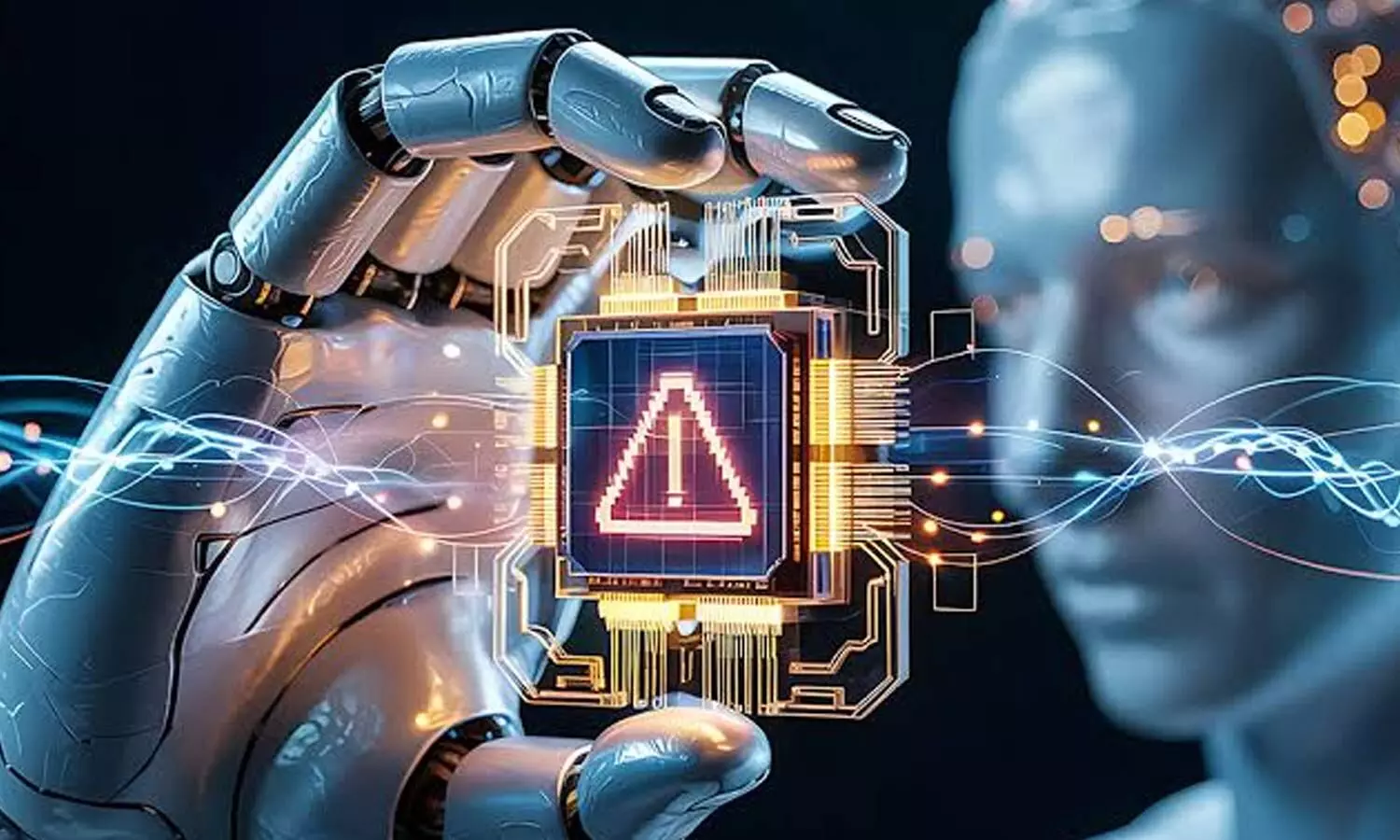
AI-enabled cyber attacks in future should put us on high alert
The world has slowly started to witness the negative sides of AI (artificial intelligence) with hundreds of cyberattacks getting mounted that are AI-enabled now. The most significant one was the Microsoft outage that rocked the technology world. The outage was so widespread that it affected around 430 million people across 70 countries including India. It led to a loss of billions of dollars to businesses, which couldn’t execute project work as Microsoft’s Office suite was not working.
Last week also saw several high-profile outages and cyberattacks involving the Federal Aviation Administration (FAA) of the US; cloud hyperscaler, Amazon Web Services (AWS), and financial giant- JP Morgan Chase among others. Such high-profile incidents have raised alarm bells across the world. Though all these outages and cyberattacks can’t be attributed to AI alone, but experts are of the opinion that these are all AI-enabled. Now, cyber attackers and rogue state-sponsored elements have begun to leverage AI for mounting attacks. So, intelligence to crack a technology system is given by the same AI, which has helped it to create it.
In this perspective, India has to stay extra alert. Because India’s dependence on foreign technology platforms- especially that from the US- is very high. This weakness was exposed during the recent Microsoft outage when ticketing function got affected at IndiGo and Air India. Indian IT industry was estimated to have lost around $200 million because of loss of billable hours, arising from the Microsoft outage.
Several other businesses couldn’t function properly for 24 hours during the Microsoft outage. It means Indian private sector and several government agencies are dependent on Microsoft’s platforms in their daily operations. If same kind of outage happens with other global platforms like Google, Apple, or any other; then the similar impact is likely to be repeated. Because most of the American tech platforms count India as their largest base.
Therefore, it is important to reduce such large vulnerability of the country by developing and operating indigenous tech platforms. Currently, Indian users’ data is stored by foreign tech platforms in cloud outside the country. So, any attack on these platform leads to leakage of Indian users’ data to the dark web. Such pattern has been seen many a time before. In the AI era, the frequency of such attack has increased manifold.
Against this backdrop, an Indian tech platform will store data within the country. In case of an attack, that data can be retrieved or ameliorating measures can be taken up. As powerful AI models have now enabled cyber attackers to devise sharp attacks on key sectors, it is important that India devises tight cybersecurity measures with frequent stress test being done by CERT-In.
Due to AI & ML, most of the physical infrastructure are also operated through technology. For instance, dams, power stations, to airports; are now operated heavily with the help of technology. That is the reason that India has seen several attempts of cyberattacks on these critical infrastructure projects during period of conflicts. Moreover, India has developed a robust digital infrastructure ecosystem over the years.
From UPI to Aadhaar; the country’s digital platforms are being used by crores of people on daily basis. These digital infrastructure platforms have emerged as key national assets and have to protected from all forms of cyberattacks. Increasingly, cyber warfare is counted as a form of statecraft. As India grows, enemy nations will try to weaken the country through such attacks, which India can only protect through developing domestic tech platforms and thorough preparedness.
Akvan Impact: Rough Seas Force 80 Andhra Fishermen to Take Shelter in Odisha
Modi to India Inc: Chart 10-Year Roadmap to Make India a Viksit Bharat by 2047
Gadkari asks engineers to come up with proper DPRs
CM Revanth Reddy urges Gadkari to green light TG’s multiple road devpt projects
Rumblings in Congress over Raj Gopal Reddy’s outbursts
CM Revanth Reddy blasts KCR, Harish for AP pacts


