




- Two students killed in MVSR Engg College Dandiya event mishap
- DGP Anand flags off rally for drug-free India
- Congress seeks TJS support for Graduate MLC elections
- 10 arrested in Rs 1.30 cr kidnap-for-ransom case
- Suspended inspector had amassed 2.8 cr assets
- Nalgonda pitted against MBNR on water issue
- Saddula Bathukamma: A floral celebration of Telangana’s culture and traditions
- FSSAI mulls ban on added sugars in infant foods
Karna’s inner world reimagined in ‘Main Karn’
In Short
Particularly compelling is Kejriwal’s refusal to imprison Karna within the immovable categories of mythology.

Share :
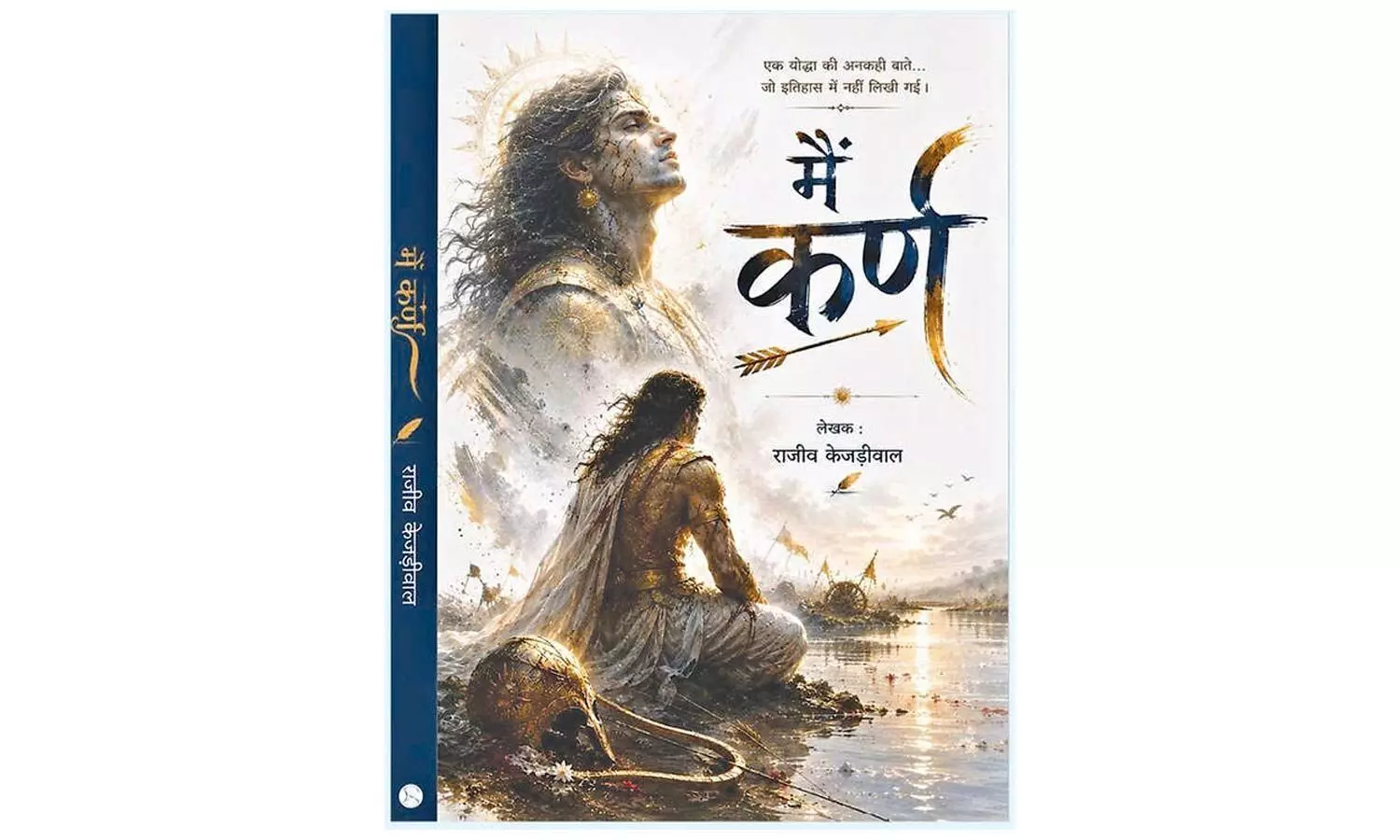
Karna’s inner world reimagined in ‘Main Karn’
Rajeev Kejriwal, one of India’s eminent bilingual poets and columnists, has established a distinctive literary identity through his fecund imagination and refined sensibilities. His forthcoming Hindi book, ‘Main Karn’, revisits one of the Mahabharata’s most compelling figures, transforming a familiar epic character into an intimate voice of introspection. Across centuries, Karna has been remembered as an indefatigable warrior, an unwavering friend, a formidable rival, a generous benefactor, a king, and a son caught between competing loyalties. Yet, beneath these inherited identities lies a question that mythology rarely permits him to answer independently: who was Karna when he stood alone, beyond the judgments of others?
Rather than offering another conventional retelling of the Mahabharata, Kejriwal turns inward, exploring the psychological landscape of a man whose life was shaped by recognition denied and belonging perpetually deferred. The book’s distinctive strength lies in allowing Karna’s inner consciousness to become the principal site of its narrative. Its language is spare, lyrical, and intensely personal, frequently unfolding through brief, almost breath-like passages. The resulting fragmentation is not merely stylistic ornamentation; it reflects the discontinuities of memory and the unresolved tensions of a life divided between what one knows oneself to be and what the world insists one must become. Here, silence acquires narrative significance, and pauses become spaces in which unspoken anguish gathers meaning.
Particularly compelling is Kejriwal’s refusal to imprison Karna within the immovable categories of mythology. Heroism, in ‘Main Karn’, need not exclude vulnerability, just as loyalty cannot be understood independently of its consequences. Karna’s generosity, often celebrated as an unquestionable virtue, acquires additional complexity when examined alongside his longing for acceptance and his commitment to relationships that demand extraordinary sacrifices. His tragedy consequently extends beyond the battlefield. It emerges from the painful contradictions of a man whose moral convictions, emotional attachments, and search for dignity do not always lead him towards freedom. The legendary warrior becomes recognisably human, not because his greatness diminishes, but because its emotional cost comes into sharper focus.
The book appears less concerned with answering “Who was Karna?” than with investigating “Who did Karna believe himself to be?” This distinction lends the narrative its philosophical resonance. The tension between an externally imposed identity and an inwardly experienced self remains one of the enduring dilemmas of human existence. Karna’s predicament thus transcends its epic setting, speaking to anyone who has experienced the distance between personal worth and social recognition. The ancient narrative becomes a meditation on identity, exclusion, memory, and the difficult pursuit of self-definition.
In its effect, ‘Main Karn’ approaches prose poetry while retaining the narrative momentum of a novel. Its contemporary relevance lies in making an ancient figure emotionally accessible without stripping him of his mythological complexity. Kejriwal invites readers to reconsider not merely Karna’s celebrated deeds, but also the private consciousness concealed behind them. The book’s most persuasive achievement may therefore be its invitation to encounter the Mahabharata differently: not through the spectacle of war alone, but through the inward struggle of a solitary individual seeking to understand himself. Sometimes, the most revealing epic is not the story a civilisation talks about its heroes, but the story a hero might talk about himself.
Kolkata stampede: Death toll rises to 19, CM Adhikari announces Rs 2.5 lakh compensation, job for victim’s families
Scheduled power cuts for Telangana industry soon?
Naidu sets higher vote-share target
Negligence During Municipal Polls: SEC warns officials of suspension, transfers
Tensions rise amid TDP-YSRCP showdown in AP local polls
CM Revanth Reddy greets Telangana women on ‘Saddula Bathukamma’


