




- CM’s daughter Nymisha Reddy’s property row: HC directs police to issue notice to BRS social media convenor
- Insulting institutions won't strengthen democracy: Rijiju
- In Protest Against CEC…Rahul takes centre stage of street politics
- Modi completes 25 years as head of govt in public office
- Haryana expands Chirayu-Ayushman Bharat scheme to cover more families
- Make Karnataka free of unsafe open borewells: Minister
- Police stations have become Congress offices, BJP-JD(S) complain to Guv
- FIR filed over alleged misuse of Form-7 applications in Jayanagar
Fermented food for beauty
In Short
Fermented foods are gaining attention not just for gut health, but also for their potential beauty benefits, supporting healthy skin and hair from within. From yoghurt and buttermilk to idli batter and kimchi, these everyday foods are finding a place in beauty routines too

Share :
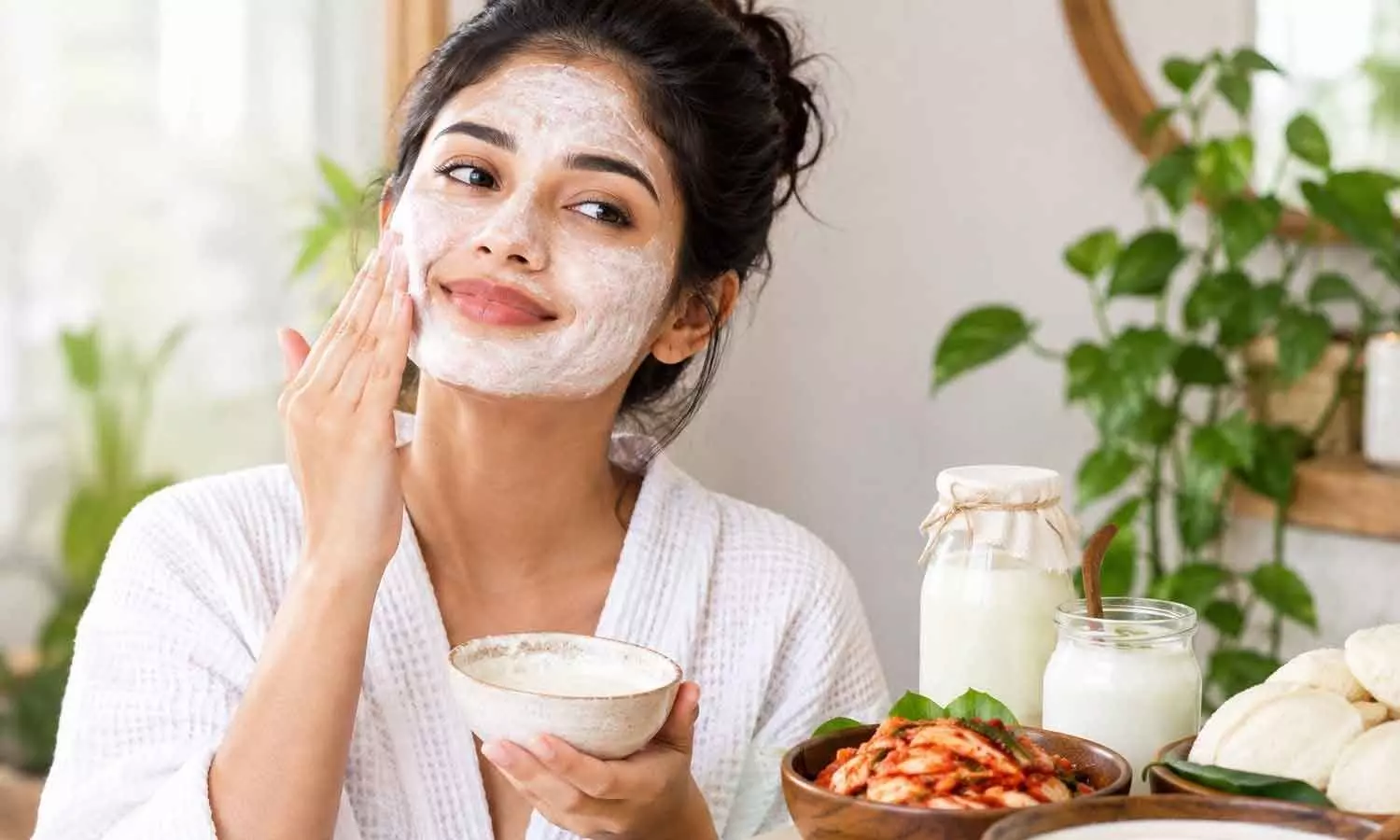
Fermented food for beauty
You’ve been eating fibre—lentils, oats, vegetables, seeds—the whole checklist, every day, for years. Your nutritionist said fibre is the answer to radiant skin and lustrous hair. That wasn’t wrong. It just wasn’t complete.
The latest trend in skincare is using fermented foods—for both skincare and haircare.
• Fermented foods improve skin health and beauty from the inside out by balancing the gut microbiome and reducing systemic inflammation.
• Fermented foods are a potent form of anti-ageing nutrition that may help improve inflammatory skin conditions and boost overall skin health.
• Fermented foods naturally support the gut and nurture a healthy inner ecosystem.
The probiotic-rich foods are an essential component in maintaining clear, healthy skin, as well as a clear, healthy mind.
Eating fermented food leads to a healthier gut and, in turn, may help reduce blemishes and rash outbreaks while supporting the body’s natural cell-repair processes.
Applying the juice from fermented plant-based foods directly to the skin may help nourish the outer layers, leaving the skin looking more vibrant and youthful.
1. Idli and Dosa Batter
A classic fermented rice and lentil batter staple popular in India, idli and dosa batter offers light, easily digestible carbohydrates.
Applying idli and dosa batter as a DIY face mask or scrub is a viral zero-waste beauty hack. It is said to act as a natural brightener, gentle physical scrub, and tightening face mask that may help with dull or wrinkled skin.
Apply leftover residue from the vessel after making breakfast, sometimes mixing it with coconut oil or turmeric. Massage it onto the skin, let it dry partially, and rinse it off.
For dull skin: Use dosa batter. Apply the mixture to your skin and massage well. Keep it on for a while. Once the skin is partially dry, dampen it and rinse it off. Massage the face regularly for better results. It may also help enhance the appearance of the skin.
Wrinkled skin: Dosa batter is considered one of the traditional remedies for wrinkled skin. Massage your face with the batter and rinse with cold water.
Gentle exfoliation: The coarse texture of ground rice and lentils can physically scrub away dead skin cells.
2. Yoghurt
Yoghurt, a fermented food, is widely used in kitchens for cooking, desserts, soups, and various cuisines, and it adds flavour to many dishes. It contains probiotic bacteria that are beneficial for gut health and may help keep harmful bacteria at bay. Fermented yoghurt provides natural lactic acid, probiotics, zinc, and B vitamins that may help gently exfoliate, moisturise, brighten, hydrate, and clear the skin.
Fermented yoghurt is a skincare powerhouse whether you apply it topically or include it in your diet, as yoghurt is inherently fermented.
It may soothe conditions such as eczema and reduce redness. It may also help combat UV-induced damage, reducing erythema and scaling.
Massage yoghurt onto your face for 15 minutes before rinsing it off. This may help remove dead skin cells and smoothen the appearance of fine lines and wrinkles. It can also hydrate dry skin, tighten the appearance of pores, and give your face a healthy glow.
Mix ½ cup of plain yoghurt, 2 tablespoons of honey, and 1 tablespoon of fresh lemon juice. Section your damp hair, massage the mixture directly onto your scalp, and work it through the lengths. Leave it on for 20 to 30 minutes before washing it out with a mild shampoo.
Mix 2 tablespoons of plain yoghurt with 1 tablespoon of raw honey. Apply it to a clean face, leave it on for 15 to 20 minutes, and rinse with lukewarm water. Use these 1 to 2 times a week.
Regular intake of yoghurt and its probiotics may support overall skin health and help maintain stronger, healthier skin, potentially delaying the appearance of fine lines and wrinkles.
Skin irritation: The level of fermentation in the batter varies, meaning the acids and bacteria may cause redness, swelling, or stinging.
Infection risk: Fermented foods contain active yeasts and bacteria that may harm compromised skin barriers or worsen acne.
It may help diminish the appearance of wrinkles and give the skin a more youthful, graceful look.
3. Traditional Buttermilk
Buttermilk is traditionally made from the liquid left after churning butter, but modern commercial versions are more likely to be made by adding lactic acid bacteria to milk. Real traditional buttermilk is the cultured liquid left over from butter-making and is packed with gut-friendly lactic acid bacteria. Buttermilk is one of the traditional natural products used for various skin benefits.
Buttermilk works as a natural beauty treatment because it is rich in lactic acid, an alpha hydroxy acid (AHA) that gently exfoliates, brightens, and cleanses the skin. Because of its acidic and astringent nature, it may help treat the appearance of age spots and freckles and may also help tighten the skin.
Buttermilk can be used to cleanse impurities from the skin’s surface, remove dead skin cells, and control bacterial growth. Mix buttermilk with olive oil and a few drops of almond oil. Add a few drops of rose water to the mixture. Apply it evenly to your face and exposed areas with a cotton ball, and leave it on for a few minutes before washing it off with warm water.
Mix buttermilk and oats to form a thick paste. Apply it evenly over your face and neck, massage for a few minutes, and let it dry naturally. Wash with plain water and pat dry.
It provides moisturisation and nourishment to the skin.
For exfoliation, mix 4 tbsp of buttermilk, 1 tbsp of rose water, 1 tbsp of organic honey, and 1 tbsp of aloe vera gel in a jar.
Blend them into a smooth, fine paste. Apply the paste to your face and neck for a few minutes and then massage it. Rinse with water after 20 minutes.
4. Kimchi
Kimchi is a delicious fermented Korean dish that may help promote healthy, glowing skin and support the prevention of premature skin ageing.
Kimchi contains various antioxidants, including vitamins A, C, and K, as well as minerals such as calcium and iron, which are essential for overall health. These nutrients contribute to collagen synthesis and support overall skin health. Antioxidants help protect the skin from damage caused by free radicals, environmental stressors, and UV radiation.
Kimchi is a salted, fermented vegetable mixture made with spices and vegetables such as carrots, garlic, ginger, cabbage, radishes, leeks, cucumbers, or sweet potatoes. It was developed in Korea almost 1,000 years ago as a way to preserve vegetables.
Although typically a salty and sour mixture, this traditional Korean food is now popular across East Asia and around the world. Kimchi tends to have a spicier, tangy, and garlicky flavour.
The fermentation process, mainly involving Lactobacillus bacteria, is thought to enhance the nutritional value of kimchi. The process produces beneficial lactic acid bacteria that contribute to kimchi’s reputation as a health food.
Kimchi must be kept in a cool and dry place, which is why it is traditionally made in winter. Large earthen vats of kimchi are buried in the ground and sealed to allow the fermentation process to take place.
(The author is international fame beauty expert and is called the herbal queen of India.)


