




Riding the rugged road of Borderline Personality Disorder
In Short
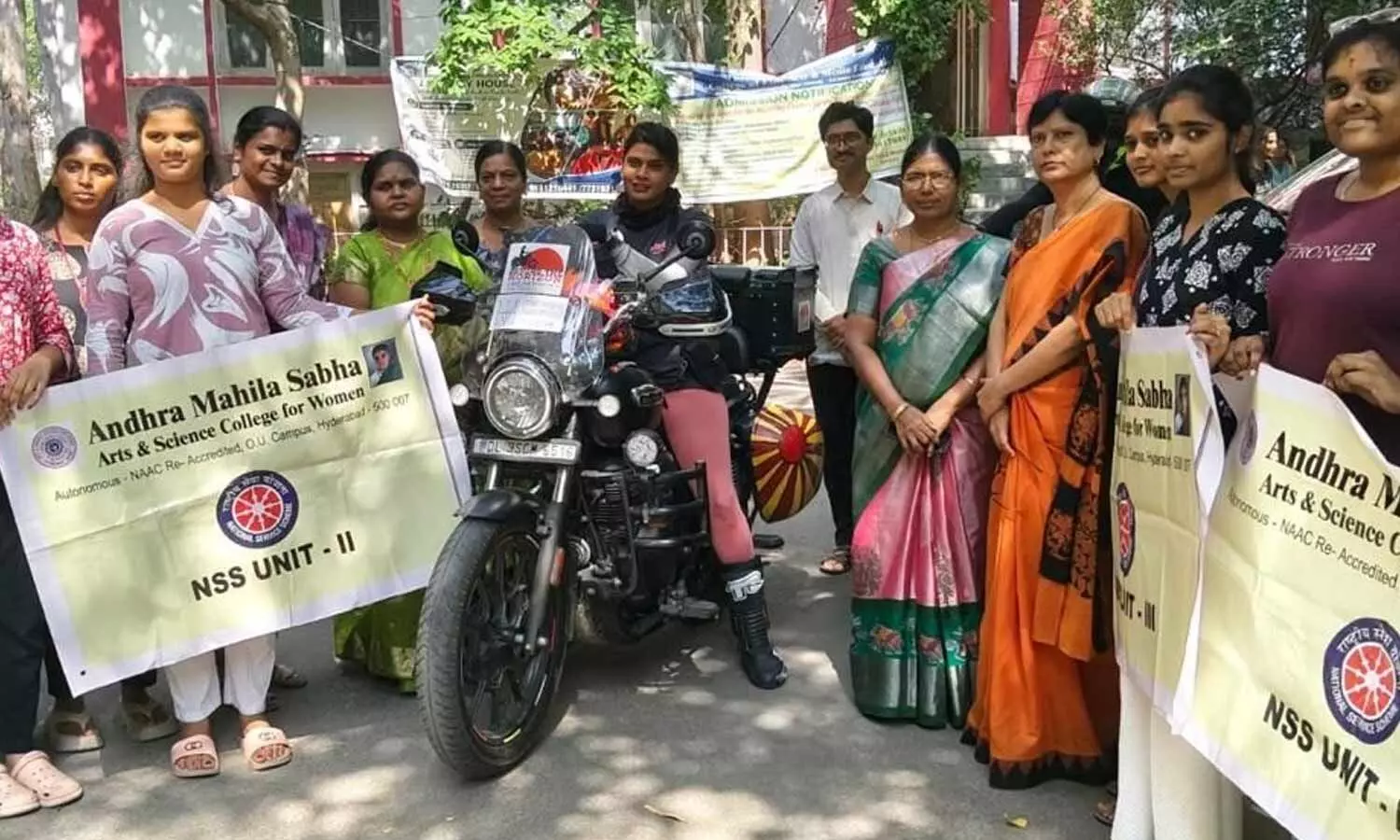
Riding on a 350kg motorcycle from Delhi to Kanyakumari across 7,000 km to break the silence and eradicate this stigma around mental illness is 31-year-old Seher Hashmi

Share :
Riding the rugged road of Borderline Personality Disorder
Borderline Personality Disorder (BPD). Three words that scare even mental health professionals; very few accept clients diagnosed with it. Couple it with depression and one’s bound to be labelled dangerous, difficult, destructive, toxic, the list goes on.
Riding on a 350kg motorcycle from Delhi to Kanyakumari across 7,000 km to break the silence and eradicate this stigma around mental illness is 31-year-old Seher Hashmi. On paper, her campaign ‘Beyond the Horizon’ (in association with Pehchan and Mariwala Health Initiative) is about championing a cause through resilience. Sit across from Seher though, and she reveals a far rawer reality.
“It’s extremely difficult to deal with BPD. What I find dangerous is people are self-diagnosing using Google or ChatGPT. They’ve never been to a psychiatrist or counsellor and say, ‘We have this.’ Don’t do that ever,” she cautions. “I myself was misdiagnosed a lot. But giving up is not an option,” she asserts, recalling that she was diagnosed with BPD and clinical depression at 20. She’s touched on something significant. The misdiagnosis and having to kiss frogs to reach the “prince.” A therapist who just… ‘gets’ you. Moreover, boundary testing happens with many mental health disorders and one is lucky to have a therapist hold a client’s hand through it.
“I went through about 12 mental health professionals till I found the right one along with a combination of medicines that worked. But even with my therapist, it’s never a smooth road. I abused her, blocked her,” she says.
Noting the urban-rural divide after her journey, she observes, “While city youth battle isolation, those in smaller towns lack even the vocabulary to speak up at all.”
“By the end of the campaign, Seher would have met about 13,000 to 14,000 young people. Every participant gets a flyer in English, Hindi, Marathi, Gujarati, Tamil, Telugu, Kannada, and Malayalam. We also share helpline options for future assistance,” says Shabnam Hashmi, her mother and campaign organiser.
One wonders if Seher considers herself recovered? “Healing happens in a lot of baby steps; a lot of medication and therapy. Of course, having a support system and for me, the bike!”
The bike? “Yes. In Indian society, women are treated pathetically and considered weak. I ride this massive machine proudly. When I ride, I just flow. It was the turning point in my recovery journey when I rode it,” she shares.
Opening up on the campaign struggles, she adds, “After one session in Hyderabad, I started crying horribly. I was sharing the details of my suicide attempt and it was like it was happening right in front of me. I started to shiver. After the session, I called my therapist to just speak to her. It’s 56 days of constantly putting myself in those triggering spaces.”
So why go through it? “I need to help those lonely eyes that have tears hiding and who don’t know how to get those out. That’s why I do this. It’s high time we create a sensitive society,” concludes the champion.


