




- MFU helps in collecting scientific evidence: SP
- Mobile forensic vehicle flagged off
- Rs 1,500 cr development push for Pithapuram
- Probe demanded into liquor scam under Jagan rule
- Command control centre set up
- UPI payments: Small traders exempt from MDR, says NPCI
- Urban infrastructure works worth Rs 140 cr launched
- CCLA orders takeover of disputed Bhoodan lands in Suryapet
India’s electronics revolution: From import dependence to global manufacturing powerhouse
In Short
ESDM sector records six-fold rise in production, eight-fold growth in exports and creates 25 lakh jobs in a decade

Share :
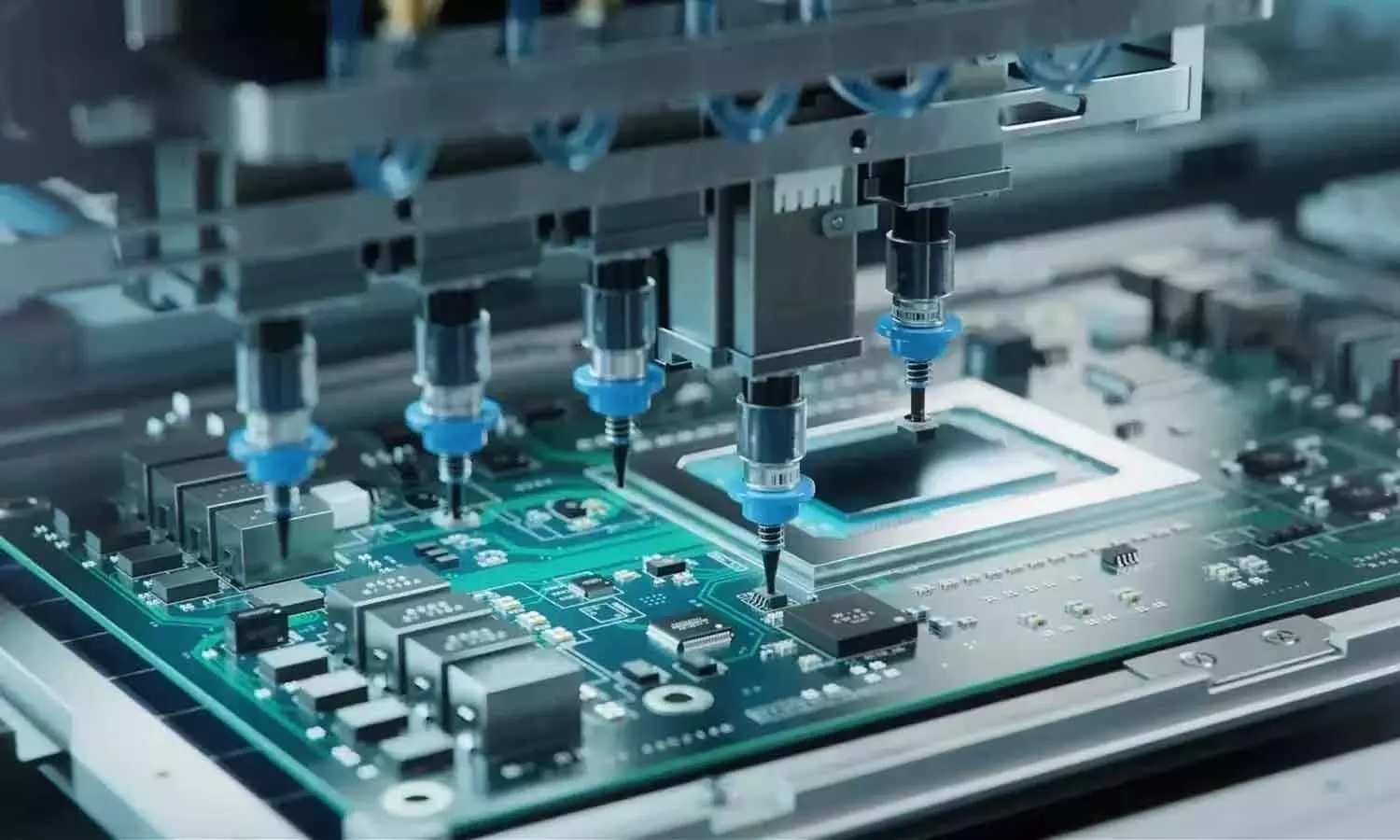
India’s electronics revolution: From import dependence to global manufacturing powerhouse
India’s Electronics System Design and Manufacturing (ESDM) sector is rapidly becoming a powerful engine of industrial growth, technological development and employment. Rising domestic demand, government incentives and the global shift towards diversified supply chains are transforming India from a major electronics consumer into an increasingly important manufacturing and export hub.
The numbers tell the story. Electronics production jumped from ₹1.9 lakh crore in 2014–15 to ₹11.3 lakh crore in 2024–25, nearly a six-fold increase. Electronics exports grew almost eight-fold, from ₹38,000 crore to ₹3.27 lakh crore over the same period. The sector has generated around 25 lakh direct jobs in the last decade and attracted more than $4 billion in foreign direct investment since 2020–21.
Mobile phones lead the revolution:
India’s mobile-phone industry has become the most visible symbol of this transformation. From importing most of its requirements a decade ago, India has emerged as the world’s second-largest mobile-phone manufacturer.
Mobile-phone production increased from just ₹18,000 crore in 2014–15 to ₹5.45 lakh crore in 2024–25, which translates to a remarkable 28-fold rise. Manufacturing units have expanded from only two in 2014 to more than 300 today. India now produces around 330 million mobile phones annually, while nearly a billion devices are estimated to be in active use.
Exports have grown even faster—from about ₹1,500 crore in 2014–15 to ₹2 lakh crore in 2024–25. Global companies, including Apple and other major smartphone manufacturers, have significantly expanded production and exports from India. Smartphone exports crossed ₹1 lakh crore in the first five months of FY2025–26, underlining the country’s growing role in global supply chains.
This is more than a manufacturing success. It represents a fundamental change in India’s electronics trade profile—from import dependence towards substantial domestic production and export capability.
ESDM is bigger than smartphones:
The ESDM ecosystem extends across consumer electronics, electronic components, telecommunications, IT hardware, automotive electronics, medical devices, defence, aerospace, solar photovoltaics, chip design, VLSI, embedded systems and PCB design. Electronics are now integral to almost every sector of the economy.
Smart vehicles rely on sensors and electronic control systems; hospitals increasingly use digital diagnostic and monitoring equipment; factories are adopting automation; and households are embracing connected appliances. The rapid growth of electric and connected vehicles is creating fresh demand for automotive electronics, while advances in medical technology are expanding the use of digital health and diagnostic devices.
Policy support accelerates growth:
India’s electronics boom has been reinforced by targeted government policies. The Production Linked Incentive (PLI) scheme, covering 14 sectors with an overall outlay of ₹1.97 lakh crore, has encouraged investment, production and exports in electronics and IT hardware.
The Scheme for Promotion of Manufacturing of Electronic Components and Semiconductors (SPECS) aims to strengthen domestic component manufacturing and reduce supply-chain vulnerabilities.
The Electronics Components Manufacturing Scheme (ECMS), approved in May 2025 with a fiscal outlay of ₹22,919 crore, is expected to deepen the domestic electronics ecosystem by attracting investment in components and sub-assemblies and generating large-scale employment.
The India Semiconductor Mission adds another strategic dimension by promoting semiconductor fabrication, packaging and related capabilities—essential for technological and economic security.
Global opportunity, domestic challenge:
The global “China+1” strategy has created a major opportunity for India. Multinational companies are seeking alternative manufacturing locations to diversify supply chains, and India’s large domestic market, skilled workforce, improving infrastructure and policy incentives make it an attractive destination.
Several states are competing aggressively for this investment. Tamil Nadu has emerged as a major electronics manufacturing and export hub, while Karnataka remains a leading centre for chip design and technology R&D. Uttar Pradesh has developed into a major mobile and consumer-electronics manufacturing centre. Gujarat and Andhra Pradesh are also strengthening their electronics and semiconductor ecosystems.
From assembly to innovation:
India’s biggest challenge is now to move beyond assembly. High production volumes alone will not make the country a global technology leader. The next phase must focus on domestic manufacturing of components, semiconductor capabilities, product design, intellectual property, research and development and high-value engineering.
Electronic components are the foundation of smartphones, automobiles, medical equipment, industrial systems and defence technologies. A strong domestic component ecosystem can reduce import dependence while retaining greater economic value within India.
India has set an ambitious target of creating a $500 billion domestic electronics manufacturing ecosystem by 2030-31. Achieving it will require sustained investment, technological innovation, skilled manpower, robust infrastructure and consistent policy support.
The ESDM sector is no longer merely another manufacturing industry. It is becoming a strategic pillar of India’s economic security, digital transformation and technological future.
The real measure of success will be whether India can evolve from a country that assembles products for the world into one that designs, develops, manufactures and exports the technologies that power the world


