






- Ten years after demonetisation: Time for an honest assessment
- We went for a peaceful protest: Shiv Charan
- Congress approaches Women’s Commission against Owaisi
- Telangana: Rs 5L cover for 1 member aged between 18 and 59
- Shared civilisational heritage key to stronger SCO cooperation: Gajendra Singh Shekhawat
- PM Modi praises Nitish Kumar's leadership, says Bihar's development journey continues under CM Samrat Choudhary
- ‘It was a great pleasure’: PM Modi after meeting Nitish Kumar at Patna airport
- Google Creates a Fake Internet to Test Its AI
Ten years after demonetisation: Time for an honest assessment
In Short
India has undoubtedly become a major digital-payment economy, but it is far from being cashless

Share :
Ten years after demonetisation: Time for an honest assessment
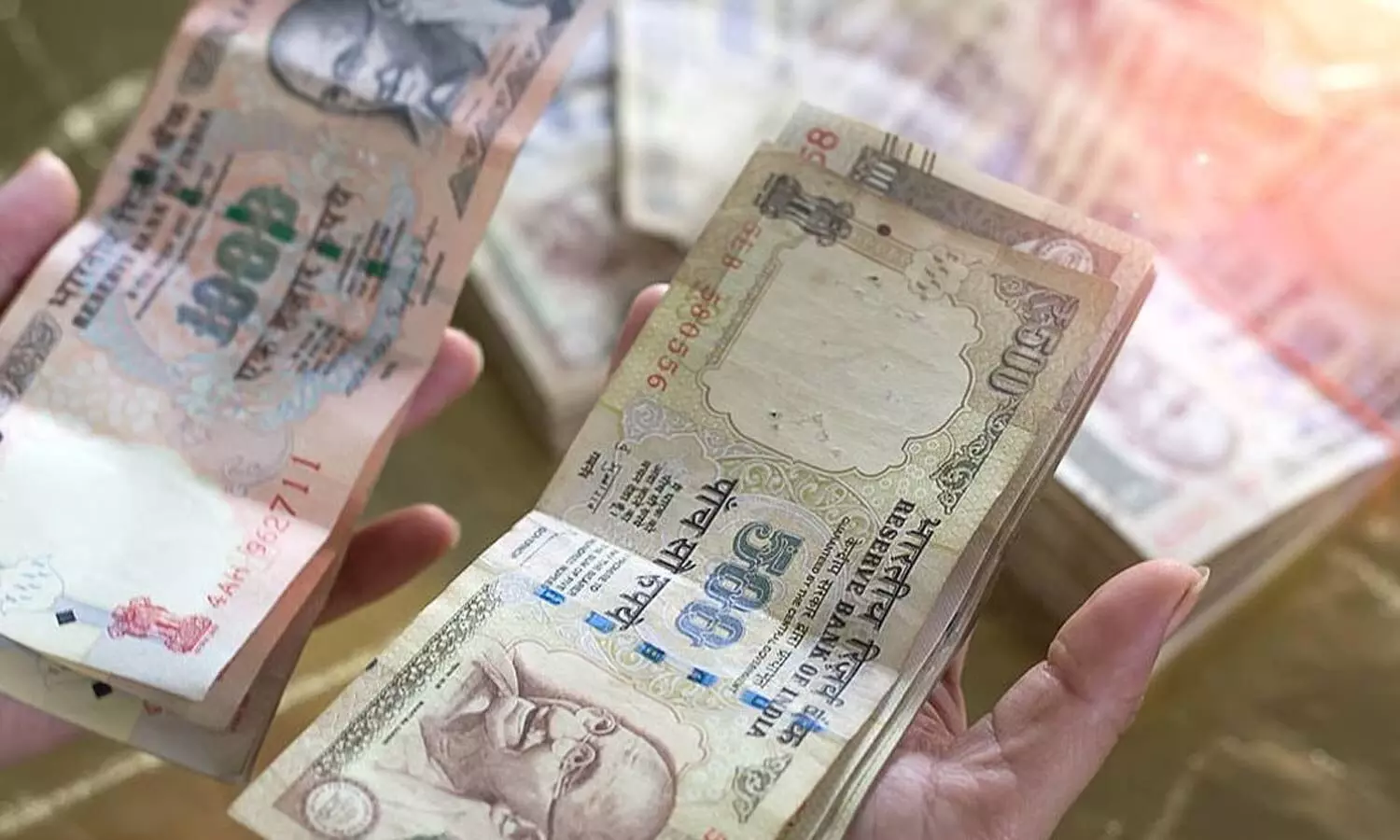
On the evening of November 8, 2016, the Union Government withdrew the legal tender status of existing ₹500 and ₹1,000 notes, which together accounted for approximately 86 per cent of the currency in circulation. People were asked to deposit or exchange their old notes within a specified period. Banks and ATMs witnessed long queues, businesses struggled to obtain cash, and millions of workers dependent on daily wages faced uncertainty. Ten years later, however, India has yet to see a comprehensive, independent public evaluation of whether this policy achieved its stated objectives and whether its economic and social costs were justified.
What was promised?
The government advanced four principal objectives: eliminating black money, curbing counterfeit currency, disrupting terrorist financing and promoting a less-cash economy. Subsequently, formalisation of the economy, improved tax compliance and expansion of digital payments also became important arguments in its favour. These objectives were individually important. However, the central question is whether demonetisation was an appropriate and effective instrument to achieve them. An examination of the available evidence presents a mixed picture.
Black money: the promise remains unfulfilled
The principal justification for demonetisation was that large amounts of unaccounted cash would not return to the banking system, generating a financial gain for the government. However, RBI figures show that of the ₹15.42 lakh crore in withdrawn notes, ₹15.3 lakh crore, or 99.3 per cent, was returned. Thus, the anticipated windfall never materialised. This exposed a major weakness in the policy’s assumptions: black wealth is not held entirely in cash but largely in land, property, gold and other assets. Tax evasion also occurs through under-reporting of income, manipulated transactions and corporate arrangements. Although returned deposits could be scrutinised by tax authorities, identifying suspicious transactions is not the same as eliminating black money. Demonetisation therefore failed to deliver on its principal promise.
Fake currency: Limited success
Demonetisation was also expected to eliminate counterfeit notes and disrupt the financial networks supporting terrorism. The introduction of new banknotes with improved security features could certainly make counterfeiting more difficult temporarily. Available RBI data indicate a decline in counterfeit notes across denominations, although the trend cannot be attributed exclusively to demonetisation. Improvements in currency design, security features, detection systems and enforcement also matter. Moreover, the detection of counterfeit ₹500 notes in the new series has increased in recent years. The RBI’s assessment before demonetisation was that counterfeit currency represented a relatively small proportion of the total currency stock. Disrupting terrorist financing is a legitimate national security objective, but the government has not provided a sufficiently comprehensive public assessment establishing the lasting impact of demonetisation on terror financing.
Digital payments grow, but cash remains
One of the significant changes associated with demonetisation has been the expansion of digital payments. UPI, launched in April 2016, has transformed everyday transactions. By 2025-26, it accounted for about 85 per cent of digital payment transactions by volume, recording nearly 24,162 crore transactions worth ₹314 lakh crore. However, this growth cannot be attributed entirely to demonetisation.
Affordable smartphones, low-cost mobile data, Aadhaar-enabled banking, improved digital infrastructure and the Covid-19 pandemic also accelerated adoption. Moreover, digital payments have not reduced the demand for cash. Currency with the public, which was 11.9 per cent of GDP in 2015-16, increased to around 12.1 per cent in 2025-26, while currency in circulation reached approximately ₹43 lakh crore. The withdrawal of ₹2,000 notes in 2023, after their introduction following demonetisation, further raises questions about currency management. India has undoubtedly become a major digital-payment economy, but it is far from being cashless.
Economic and social costs: The unequal burden
Demonetisation severely disrupted cash-dependent sectors such as agriculture, construction, small manufacturing, retail trade and transport. Research by Chodorow-Reich, Gopinath, Mishra and Narayanan, published in the Quarterly Journal of Economics, found that districts facing greater cash shortages experienced declines in employment, economic activity and bank credit. Employment and output fell by at least two percentage points relative to counterfactual trends during the fourth quarter of 2016. Although these effects subsequently eased, the disruption imposed measurable economic costs. The burden fell disproportionately on daily-wage workers, small traders, agricultural labourers and low-income households with limited access to banking and digital payments. Women also faced difficulties in exchanging or depositing their household savings, affecting their financial privacy and autonomy. Subsequent shocks, particularly GST and the Covid-19 pandemic, added to the difficulties of small businesses and informal workers, although their effects must be distinguished from those of demonetisation.
Accountability and the way forward
The strongest defence of demonetisation is that it accelerated formalisation and encouraged digital payments. These developments are important, and the expansion of UPI represents a major achievement in India’s financial infrastructure. Improved tax compliance and wider use of formal banking channels are also desirable outcomes. However, these gains do not automatically establish that demonetisation was necessary, proportionate or the most cost-effective way of achieving them.
An independent expert committee should undertake a comprehensive evaluation using RBI, tax administration, banking, employment and enterprise-level data. It should examine the actual recovery of unaccounted wealth, changes in counterfeit currency, the impact on employment and informal enterprises, the consequences for bank credit, and the independent contribution of demonetisation to digital payments and tax compliance. Its findings should be placed before Parliament and made available to the public.
Conclusion
Ten years is sufficient time for an honest assessment. Demonetisation has accelerated digital transactions, but it did not eliminate cash, nor did it establish a lasting solution to black money. Its most important legacy should be a stronger commitment to transparency, institutional accountability and evidence-based policymaking. Economic policies must be judged not by the scale of their announcements or the intentions behind them, but by measurable outcomes, costs and benefits.
(The writer is an Economist and visiting Professor at CESS, Hyderabad and formerly at OU, IBS and EPSU as a Professor)
An autobiography without introspection: A journey of lies
It has damaged trust and credibility of Hyderabad: KTR
AICC summons Raj Gopal Reddy
French co to invest Rs 4K cr in Telangana
Maha CM Fadnavis inaugurates high-tech facilities for Brihanmumbai Police Commissionerate
PM Modi says appeal to cut gold purchases helped bring down prices, credits citizens for heeding advice


