




- Madras High Court upholds resignation of 6 AIADMK MLAs
- IIT Hyderabad, Japan’s Mie University join hands for semiconductor research
- Depriving citizens of the right to vote endangers democracy
- Punjab assures time-bound resolution of farmers' demands
- Kerala's electoral roll revision puts spotlight on CEO's multiple charges
- L Murugan Resigns As Union Minister, Says He Wants To Strengthen BJP In Tamil Nadu
- Kumaraswamy urges Siddaramaiah to fight sting operation conspiracy
- 'Want to strengthen BJP in Tamil Nadu': L. Murugan seeks to quit as Union Minister and Rajya Sabha member
What does adulteration really cost?
In Short
Nature did not deliberately contaminate our water or introduce chemicals into our food to increase somebody’s profit

Share :
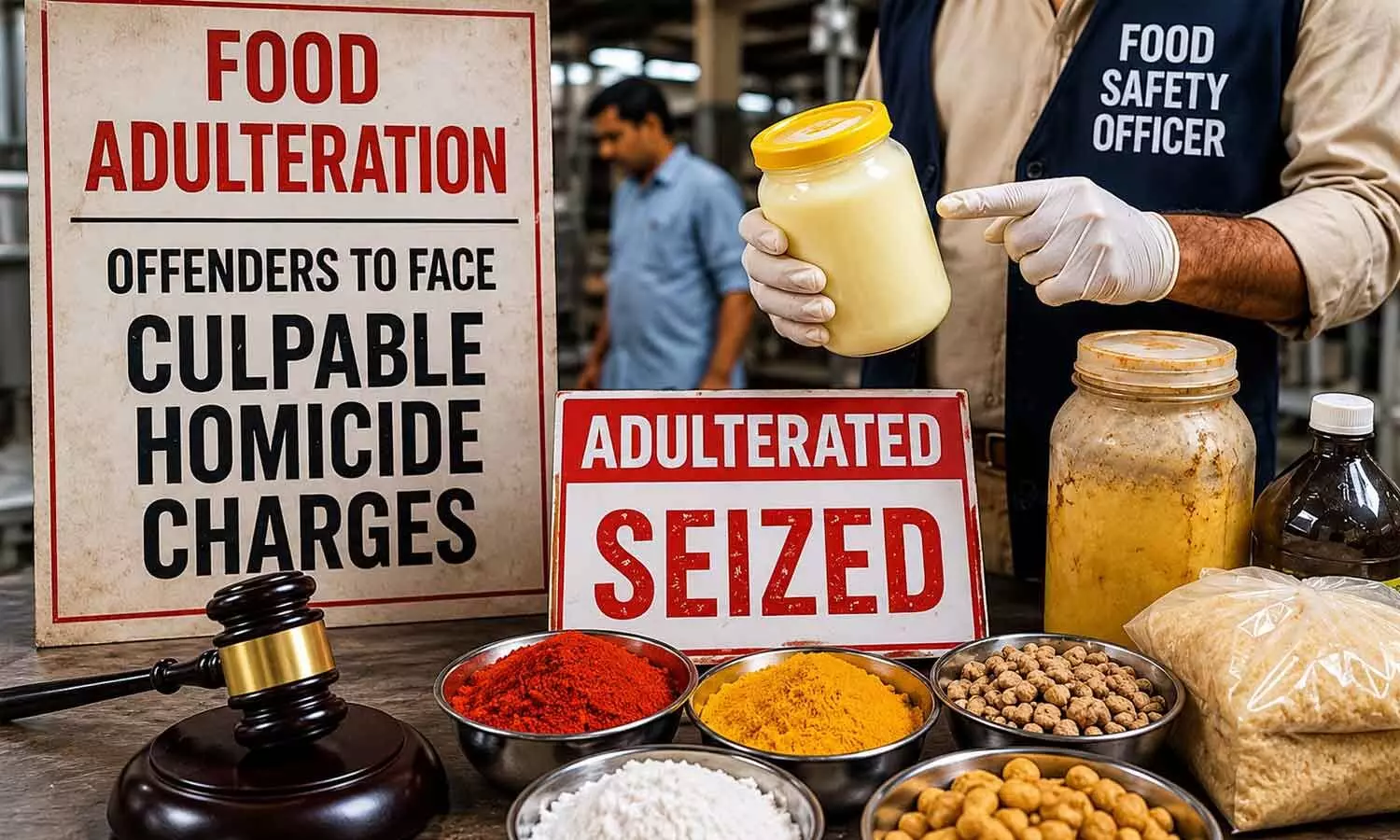
What does adulteration really cost?
Human life depends on a few necessities: food to satisfy hunger, water to quench thirst, air to breathe, milk for nourishment and fruits for essential nutrients. Nature has provided these gifts generously. Yet, how many of us can consume them without apprehension today? When food becomes a potential source of illness, drinking water raises doubts about its safety and the air we breathe threatens our health, an uncomfortable question confronts us: where can human beings seek refuge when even nature’s gifts are no longer trusted?
What does adulteration really cost? The question appears to concern business economics, but it exposes a disturbing failure of public health and social responsibility. What does it cost to dilute a litre of milk? How much does a trader save by mixing inferior substances with edible oil? What is the expense involved in artificially ripening fruits or adding colours to make inferior food products attractive? More importantly, how much additional profit does adulteration generate, and who ultimately pays for it?
Milk adulteration is particularly alarming. Reported cases of synthetic milk production have involved substances such as urea, detergents and other chemicals intended to imitate natural milk. Urea has legitimated agricultural uses but adding it to milk for human consumption can pose serious health risks. When a product regarded as essential nourishment for children becomes a potential source of harm, parents are left wondering whom they can trust. Why are testing facilities, regular inspections and stringent enforcement not sufficiently effective in preventing such practices?
For the adulterator, such an exercise may generate additional profits. For the consumer, it creates an invisible burden. The seller collects the money, while the buyer bears the consequences. Medical expenses, lost working days, prolonged illness and financial distress become the hidden costs of an ordinary purchase. The profit remains private, but the damage spreads across families and society. Compromising food quality to increase earnings is not commercial ingenuity; it is the exploitation of public health for private gain.
The problem extends beyond milk and edible oils. Consumers worry about whether fruits have ripened naturally or been treated with chemicals, whether vegetables contain harmful residues and whether drinking water has been contaminated by industrial waste. Meanwhile, vehicle emissions, industrial pollutants and construction dust degrade air quality. Food adulteration, poor product quality and environmental pollution are distinct problems, but their consequences converge on human health. When people must question the safety of everything they eat, drink and breathe, what assurance does modern life really offer?
Another disturbing consequence is the rising cost of securing quality. Products marketed as organically grown or produced under superior standards often command higher prices. Should healthy food become a privilege reserved for the affluent? Must families unable to afford expensive alternatives accept greater uncertainty about what they consume? When citizens must spend extra money to obtain safe food, clean water and cleaner air, can that truly be called development? Or does it expose a system that has failed to protect life’s basic necessities?
Obtaining unadulterated food from nature is not impossible. Healthy soil, uncontaminated water and responsible agricultural practices provide the foundation for safe produce. Proper storage, transportation and distribution are equally important. Organic labels alone cannot guarantee safety; scientific testing, credible certification and effective monitoring remain essential. Nature cannot continue providing abundance if human activities steadily destroy the conditions that sustain it.
Government intervention is indispensable. Food safety laws must not remain confined to official notifications and occasional raids. Testing laboratories, trained personnel and inspection mechanisms need strengthening. Results must be delivered promptly, adulterated products withdrawn and offenders punished under the law. Commercial influence must not become a shield against prosecution. Consumer complaints should be investigated transparently, with action taken made public. Inspections must become a continuous system of accountability rather than an occasional response to public outrage.
Consumers also have a role. They should examine labels and expiry dates, remain cautious about suspiciously cheap products and report suspected adulteration. But individual vigilance cannot substitute for effective regulation. Ordinary people cannot scientifically test every purchase. Producers must maintain quality, and the state must enforce safeguards that protect consumers.
The fundamental question is not merely how much it costs to prevent adulteration. It is how much society loses when adulteration flourishes. Is investment in stronger inspection systems more expensive than the collective burden of medical treatment, lost productivity and preventable illness? Prevention may cost governments and businesses money, but neglect imposes a far heavier burden on society.
Nature did not deliberately contaminate our water or introduce chemicals into our food to increase somebody’s profits. These are consequences of human choices, commercial greed and failures of accountability. Destroying the natural purity of essential resources and then charging people extra for safer alternatives is hardly a triumph of civilisation.
Adulteration-free food is not a luxury. Clean drinking water is not a privilege. Unpolluted air cannot be the exclusive entitlement of the wealthy. They are necessities of a healthy life. The profits earned by adulterators are insignificant compared with the suffering inflicted on society. Unless we recognise this imbalance and act decisively, our inheritance to future generations will not be prosperity, but disease; not nature’s abundance, but contamination; and not the freedom to live, but a lifelong struggle to remain healthy.
Price controls will be bad for healthcare
English language came as a colonial tool: Now it’s time to own it
What does adulteration really cost?
CM Adityanath warns against provoking riots in UP, says will risk losing forefathers' wealth
'BJP puts women forward when nothing else works': Renuka Chowdhury on allegations against LoP
United in fight against EC, Centre: INDIA bloc leaders after Rahul hosts tea meet


