




- Climate education is springboard to action: Prof Singal
- Preparations gather pace for panchayat elections
- IIT Delhi launches six-month certificate programme in cybersecurity and AI security
- Annual Pushpayagam to be performed at Tirumala on Nov 16
- A three-day workshop on 5G and drone technology
- Nvidia slides amid investigation involving CEO Jensen Huang
- Colony joins in cracker-free Diwali celebrations
- The behaviour gap: Why investors earn less than the funds they own
Climate education is springboard to action: Prof Singal
In Short
Cambridge Climate Quest evaluation across 18 schools finds students’ interest in climate issues increased from 40% to 61.2%, highlighting the role of practical and evidence-based learning

Share :
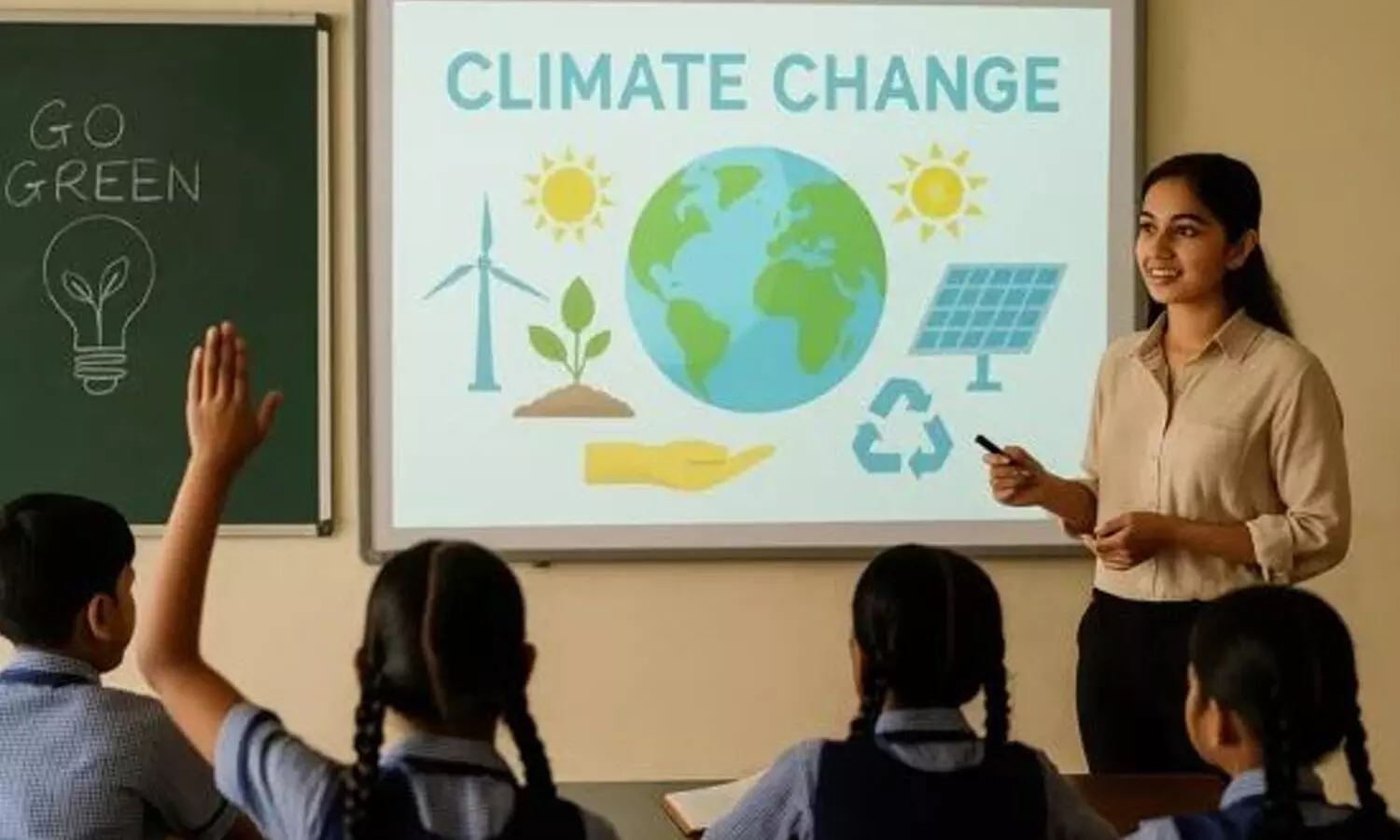
Climate education is springboard to action: Prof Singal
Climate education is increasingly extending beyond environmental awareness to include critical thinking, practical learning and the ability to make informed decisions. As climate change influences industries, employment opportunities and societal priorities, schools have an important role in helping young people understand environmental challenges and explore ways to address them. An independent evaluation of the Cambridge Climate Quest programme, conducted among 1,144 students across 18 schools, found that interest in climate issues increased from approximately 40% to 61.2% after participation. The evaluation also found that 58.9% of students were highly motivated to undertake climate-positive action.
In an interaction, ProfessorNidhi Singalof the Faculty of Education, University of Cambridge, discusses the importance of climate literacy, the role of teachers in providing reliable information, and how schools can connect sustainability education with practical skills and future career opportunities.
The Cambridge Climate Quest evaluation found an increase in students’ interest in climate issues from around 40% to 61.2%. What does this indicate about the role of education?
Climate education is evolving. It is no longer simply about awareness; it is about helping young people understand change, think critically and develop the agency to respond. As organisations increasingly consider climate change and sustainability in their operations, young people also need to understand their environmental responsibilities and future opportunities. Climate education is therefore relevant to both responsible citizenship and employability.
Schools provide an important foundation, helping students connect specialised knowledge with wider societal and environmental challenges. Education must also become a trusted source of climate information, particularly as young people encounter conflicting content on social media.
The evaluation found that students valued evidence, historical information and local examples connecting global climate science with Indian contexts. Notably, students who were initially less engaged also demonstrated significant gains in interest. This shows that effective climate education can bring more young people into the conversation.
How can schools move beyond climate awareness and help students take meaningful action?
The survey did not specifically measure climate anxiety. However, students reported confusion caused by sensational and conflicting information online. Schools can help by making climate action practical through projects, field visits and community activities. Students should also understand how individual initiatives connect with the responsibilities of governments, businesses and communities. Recognising sustainable practices already present in local cultures and communities can further strengthen students’ sense of participation. The evaluation found that 58.9% were highly motivated to take climate-positive action after the programme.
How can climate education be connected with future careers and made accessible to students?
Students are already identifying opportunities in renewable energy, climate technology, engineering, agriculture, environmental policy and sustainable business. Schools can demonstrate how climate knowledge applies across different professions. Projects, portfolios and documented community initiatives can help students demonstrate relevant skills and interests. Partnerships with universities, businesses, start-ups and local organisations can also expose learners to practical challenges and emerging career pathways.
What role should teachers play in climate education, and what support do they need?
Teachers play a central role in helping students navigate complex information and distinguish reliable evidence from misinformation.
Students identified teachers among the people they trust most.
Educators therefore need dependable teaching resources, locally relevant examples and training to facilitate practical learning and discussions around environmental responsibility.
Climate education can also be integrated into existing subjects such as science, environmental studies and English.
CM: Local poll outcome has endorsed NDA’s governance
AP ranks 2nd in Access Equality Index
Addressing pensioners’ dilemma…AP extends OPS option to pre-2004 notified CPS staff
AP eyes global investments at Partnership Summit
Temple liberation must not lead to their privatisation
India should focus on its health promotion policies


