




- GST Council softens enforcement, eases compliance
- TG experiencing scorching heat amid deficit rainfall
- e-HRMS for all govt employees by October 15
- Hyderabad: Malkajgiri all set to come alive with Bathukamma celebrations
- CMC demolishes 14 unauthorised structures
- Housing Board launches portal to resolve Indiramma claims
- Is Congress trying to replicate Bangladesh in Bharat, asks BJP
- Coordinated arrangements in place for forthcoming local body polls
CSIR-NGRI focuses on groundwater research and skill development
In Short
The institute is focusing on methods for identifying, assessing and characterising groundwater resources, particularly in regions facing water stress

Share :
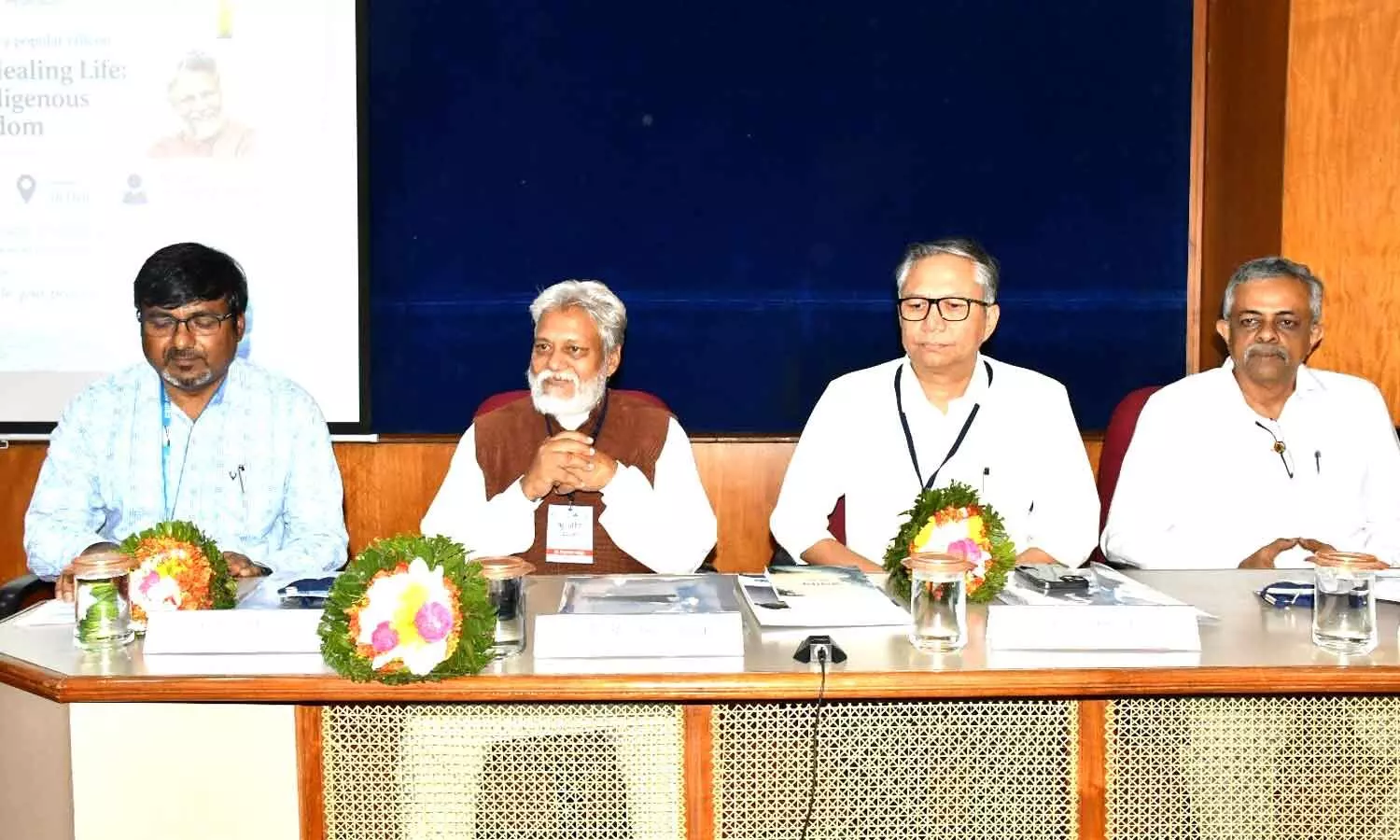
CSIR-NGRI focuses on groundwater research and skill development
The CSIR-National Geophysical Research Institute (CSIR-NGRI) is expanding its work in groundwater exploration, technical training and sustainable water management through the use of geophysical technologies and field-based capacity building.
The institute is focusing on methods for identifying, assessing and characterising groundwater resources, particularly in regions facing water stress. Under the leadership of Dr Prakash Kumar, Director, CSIR-NGRI, the institute is working to connect geophysical research with field applications related to groundwater assessment and management.
The focus was discussed during the visit of water conservationist Dr Rajendra Singh to CSIR-NGRI in connection with the BhuNEER 2026 groundwater training programme. Dr Singh was briefed on the institute’s work in Earth sciences, geophysics and groundwater exploration.
Dr E.V.S.S.K. Babu, Senior-most Scientist and Head, Human Resource Division, CSIR-NGRI, highlighted the role of specialised training in developing technical expertise for groundwater exploration and management.
The 10-day BhuNEER 2026 programme, organised under the broader Skill India initiative, provides students, researchers and professionals with practical training in groundwater exploration. The programme includes both conventional and advanced geophysical techniques and combines classroom learning with field exercises. According to Dr Subash Chandra, Programme Coordinator, BhuNEER 2026, participants receive hands-on exposure to technologies including Electrical Resistivity Tomography (ERT), EVRI, Ground TEM and Towed TEM. Training also covers field data acquisition, processing, interpretation and integration. The programme introduces participants to applications of Artificial Intelligence and Machine Learning in geophysical data analysis and subsurface characterisation. The combination of theoretical instruction and field exposure is intended to help participants develop skills relevant to groundwater assessment. During his interaction with researchers and participants, Dr Rajendra Singh discussed community-based approaches to water conservation, including the revival of traditional johads, or check dams. Drawing on his experience with Tarun Bharat Sangh, he emphasised the role of local communities and farmers in groundwater management.
Dr Singh also discussed the concept of systematic aquifer recharge and what he described as “underground water banking”. He noted that water management requires both technical interventions and community participation. He also highlighted the importance of understanding groundwater movement, mapping resources and considering local rainfall patterns while planning cropping practices. The training programme reflects the role of specialised human-resource development alongside technological research in addressing groundwater-related challenges. CSIR-NGRI’s activities combine geophysical investigation, data analysis, field training and community-oriented approaches to support scientific groundwater assessment and resource management.
CM Naidu seeks PM’s support for Godavari-Cauvery link
AP builds investment pitch around Rs 22L-cr pipeline
India needs to work on mitigating risks from rogue AI agents
Polling duty to continue till election material is handed over: Gujarat SEC
Andhra Pradesh secured Rs 22 lakh crore investment in 28 months: Chandrababu Naidu
From dialogue to action: CM Mohan Yadav pitches MP as India's "More Profit", secures Rs 90,000 crore investments


