




- CM Satheesan questions Assembly's power to reject CAG reports, flags KIIFB episode
- BJP blasts Congress over ‘links’ with anarchic elements in pushing violent protests
- MP cabinet clears projects worth over Rs 23,288 crore; extends paddy registration deadline
- Siddaramaiah expressed dissatisfaction with sting op probe during meeting with LoP Gandhi: Rajanna
- PV Sindhu, Lakshya Sen Win Hylo Open Titles Amid Funding Concerns For Indian Shuttlers
- Heavy rain delays VMC poll counting, results likely by 7 pm
- 'Govt, private sectors must come forward to make Delhi a medical hub’: CM Gupta
- RBI eases export reporting compliance for freelancers, service exporters
UoH-led researchers develop new metal alloys for medical implants
In Short
The findings have been published in Advanced Healthcare Materials, an international peer-reviewed journal published by Wiley.

Share :
UoH-led researchers develop new metal alloys for medical implants
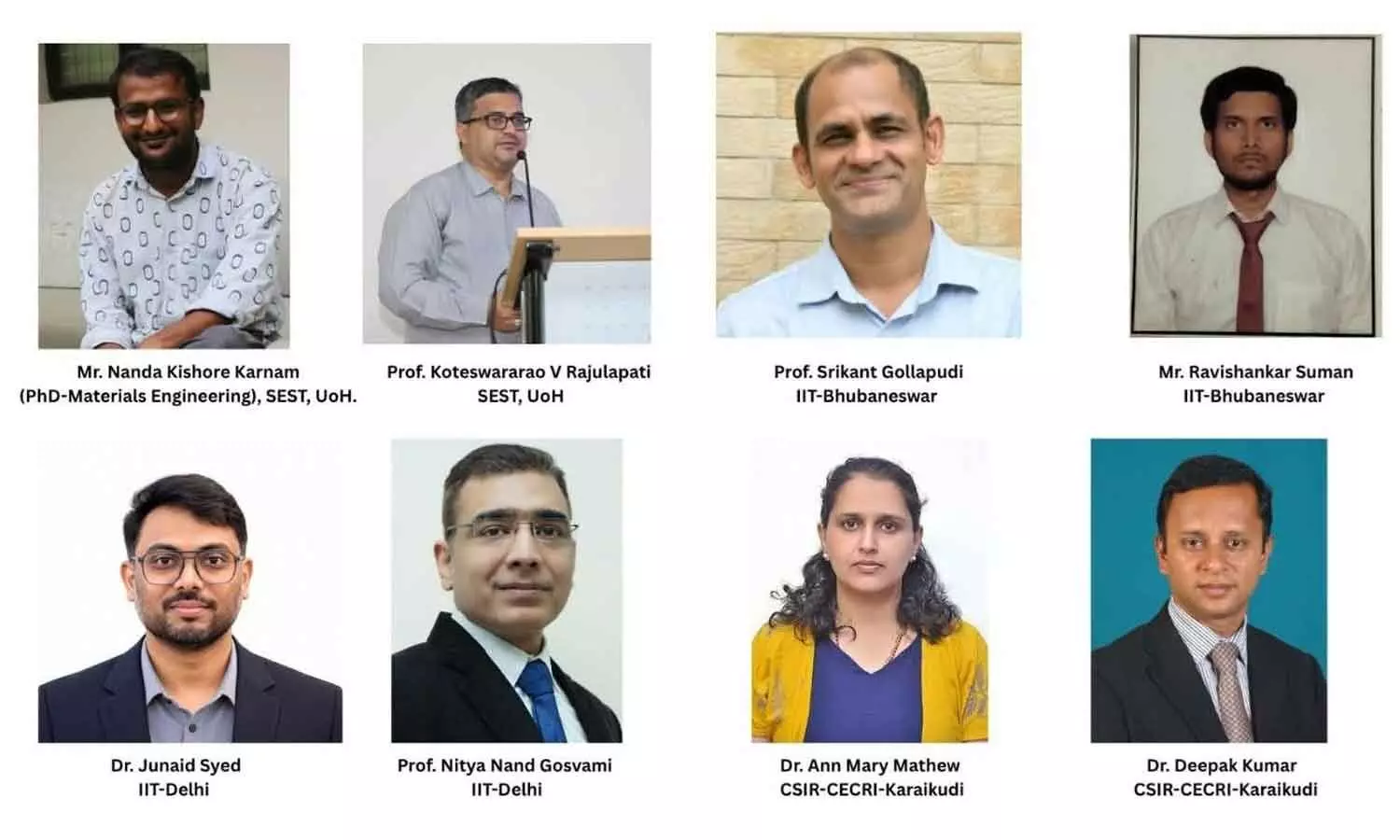
Researchers at the University of Hyderabad (UoH), in collaboration with teams from IIT Delhi, IIT Bhubaneswar and CSIR-Central Electrochemical Research Institute (CSIR-CECRI), Karaikudi, have developed a new family of metal alloys that may have applications in medical implants such as hip joints and bone plates.
The findings have been published in Advanced Healthcare Materials, an international peer-reviewed journal published by Wiley. The research focuses on titanium-cobalt-chromium (TiCoCr)-based multi-principal element alloys (MPEAs), developed by combining the three metals in equal or near-equal proportions. Conventional metal implants can undergo wear and corrosion over time, potentially releasing metal ions into surrounding tissues. Their stiffness can also differ considerably from that of natural bone. This mismatch may contribute to stress-related changes in bone and implant loosening, sometimes requiring further surgery.
To address these challenges, the research team explored an alloy design in which no single metal serves as the dominant base. Instead, titanium, cobalt and chromium are combined as principal elements to obtain a different set of mechanical and chemical properties.
Laboratory evaluations indicated that the developed alloys had high strength and resistance to wear. The researchers also reported that their flexibility was closer to that of natural bone than that of conventional implant metals. This property could be relevant to reducing the risk of implant loosening.
The alloys were also tested for corrosion resistance in laboratory fluids designed to simulate conditions inside the human body. According to the study, they showed resistance to corrosion under the tested conditions. Cell-based studies indicated good biocompatibility, with no observed toxic effects and support for healthy cell growth.
The researchers said these findings suggest that TiCoCr-based MPEAs could be considered for further investigation as materials for medical implants. However, additional research, including further testing and clinical evaluation, would be required before their suitability for medical use can be established. The work forms part of the doctoral research of Nanda Kishore Karnam, a PhD student under the supervision of Prof. Koteswararao V. Rajulapati at the School of Engineering Sciences and Technology (SEST), University of Hyderabad.
AP Municipal elections results live updates: Counting begins
Telangana to continue dialogue with Maharashtra on Tummidihatti Barrage
PM Modi-Netanyahu bond offers foundation for lasting India-Israel partnership: Report
Sonowal unveils Rs 1,500 crore plan to build Puri International Cruise Terminal
Union Minister Kumaraswamy cautions Karnataka police against losing public trust
HM Amit Shah apprised on difficulties in transferring Chandigarh property: BJP leader


