




- CNC observes traditional ritual at Devaatt Paramb Memorial, renews Codavaland demands
- Dasara rush grips Hyd-Vja highway!
- PGRS suspended due to local body polls
- 300 YSRCP activists join TDP
- TDP Mayor candidate files nomination
- District election, expenditure observers inspect nomination filing process
- Focus shifts to high-voltage campaigning among TDP-YSRCP Mayoral candidates
- Jana Sena TDP leaders join YSRCP
CNC observes traditional ritual at Devaatt Paramb Memorial, renews Codavaland demands
In Short
CNC Chairman N U Nachappa Codava, along with volunteers, offered ritualistic prayers and sprinkled sacred Cauvery Theertha water for the departed souls of thousands of Codavas.

Share :
CNC observes traditional ritual at Devaatt Paramb Memorial, renews Codavaland demands
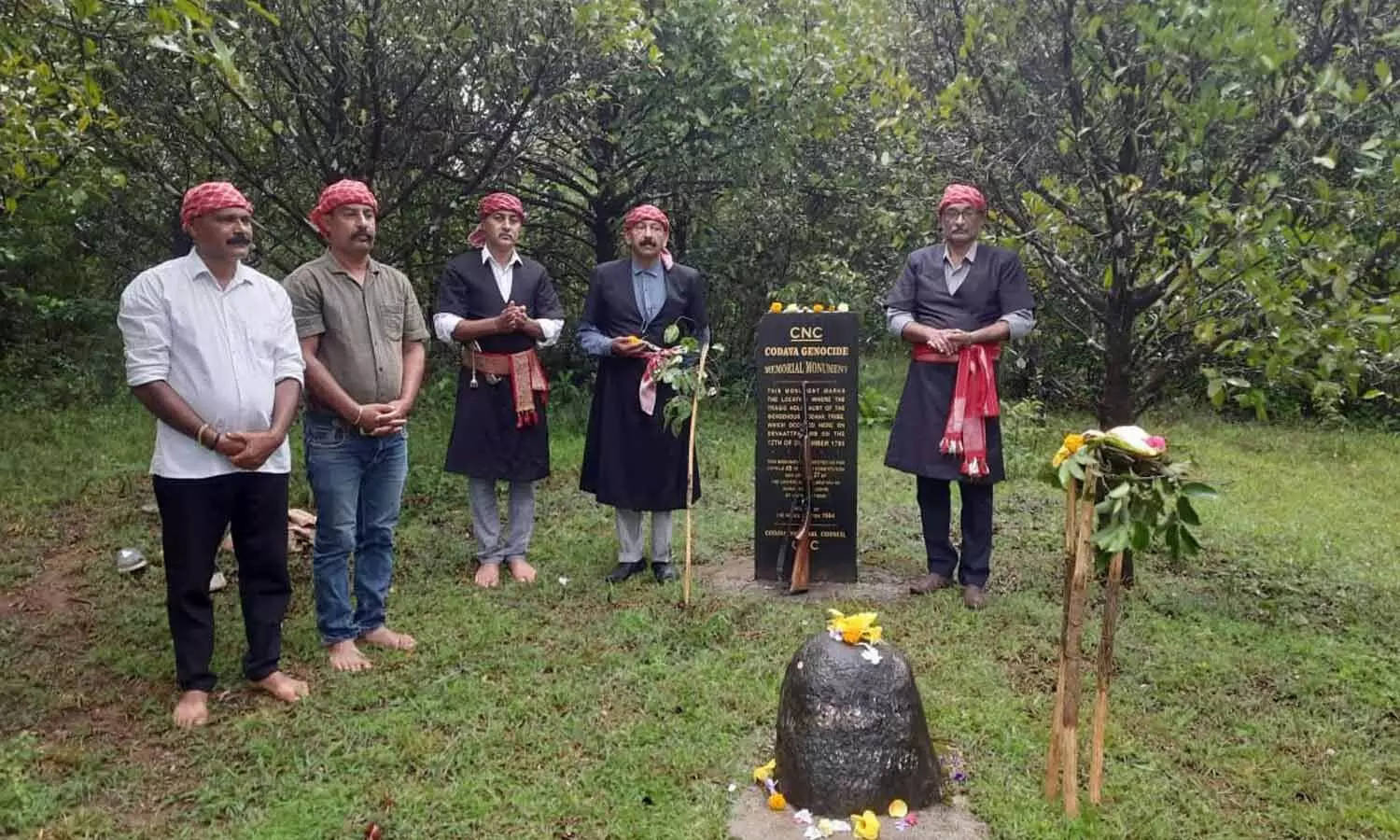
Madikeri: Early Sunday, following the sacred Cauvery Theerthodbhava, the Codava National Council (CNC) performed a traditional ritual at the Devaatt Paramb Tragic Genocide Memorial Site, placing Dosa and Putt atop Botthh, a herbal creeper known as Botthh Balli.
CNC Chairman N U Nachappa Codava, along with volunteers, offered ritualistic prayers and sprinkled sacred Cauvery Theertha water for the departed souls of thousands of Codavas.
The folklore tradition has been practised for generations. Codavas traditionally place Botthh Kutthhuvo sticks, fixed with Botthh Balli, in wetlands, paddy fields, paddy-drying yards, cattle sheds, wells and around houses two to three days before Cauvery Tholeyaar Changrandhi. Nachappa said Devaatt Paramb commemorates the alleged massacre of thousands of Codavas and their families on December 12, 1785. According to his account, Tipu, aided by Nawab Ranmast Khan of Kurnool and French forces under General Lally, carried out the killings under the pretext of peace talks. The CNC conducts the annual ritual to honour the departed and accord spiritual significance to the memorial. Codava pilgrims travelling to Talacauvery traditionally offer green leaves as tributes to the deceased.
Following the ceremony, the congregation reiterated its demand for Codavaland autonomy as internal self-determination under Articles 244 and 371 of the Constitution, with safeguards under the Sixth and Eighth Schedules, citing autonomous council models in Northeast India and Ladakh.
The council also sought indigenous status for Codavas, protection of Gun-Thok rights under Articles 25 and 26, and inclusion of Codava Thakk in the Eighth Schedule. Other demands included UNESCO recognition of Codava folklore, research centres, legal protection for the Cauvery’s source, and a greater share of the river’s water for Coorg.
The CNC further called for memorials at historical sites, an Inner Line Permit system, Codava representation in Parliament, restoration of ancestral properties and exclusive identification as “Codava” in the caste and religion columns of the 2027 Census.
Participants included Pattamada Kusha, Areyada Girish, Mandapanda Manoj, Mandapanda Suraj and Mangerira Jagdish.
30,000 voters ineligible for inclusion in final list
Hyd wing of ED tops in restitution of Rs 4K crore attached properties
Dangerous ‘trend’ in TG private colleges: Accent on entertainment at the cost of academics
Trump’s decision will boost Indo-US ties
Old examinations and new technologies: Can we plug the leak?
The harvest of apathy: How many more lives before we banish the man-made disaster of stampedes?


