Navi Mumbai Airport Poised to Unlock Maharashtra’s Next Economic Chapter

Set for inauguration at September-end, NMIA is expected to fuel job creation, strengthen connectivity, and accelerate Maharashtra’s transition into a multi-hub economy.
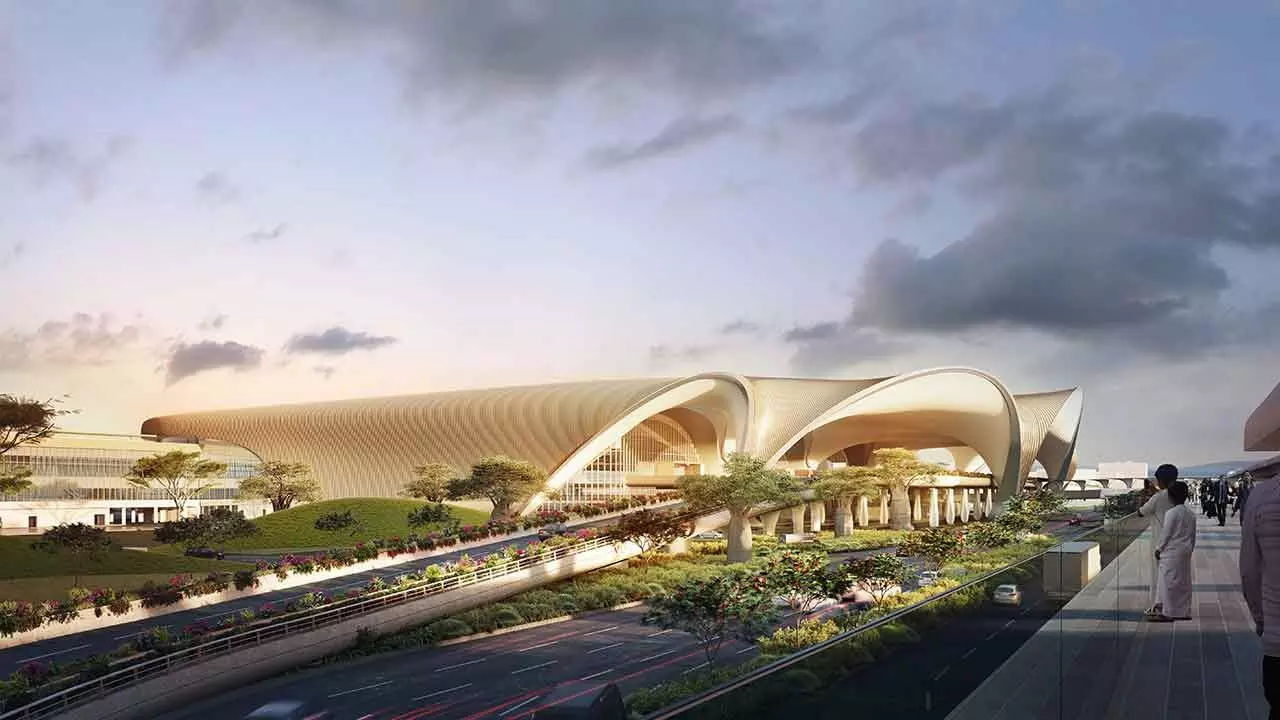
Mangaluru : As the Navi Mumbai International Airport (NMIA) prepares for its formal inauguration later this month, the project is being hailed as more than just an aviation milestone. Policymakers, urban planners, and industry observers see it as a new economic engine for Maharashtra.
For decades, Mumbai’s Chhatrapati Shivaji Maharaj International Airport has managed capacity constraints under heavy demand. NMIA, built with modern facilities and ample land, is designed to ease the pressure while reimagining Navi Mumbai as a hub for trade and investment.
The airport is expected to eventually serve 90 million passengers a year. Beyond aviation, it is projected to generate employment across ground services, tourism, logistics, and real estate. The International Air Transport Association (IATA) estimates that improvements in air connectivity have a direct correlation with GDP growth, making NMIA a potential contributor to Maharashtra’s economic expansion.
Surrounding the airport, the Navi Mumbai Airport Influence Notified Area (NAINA) is envisaged as a planned smart city with IT parks, warehousing, and commercial spaces. This is expected to draw significant foreign direct investment and create new economic clusters outside Mumbai’s traditional core.
Infrastructure integration is another key driver. The Mumbai Trans Harbour Link, expected to cut travel time between South Mumbai and Navi Mumbai to under 30 minutes, will provide direct connectivity to the airport. Metro lines, suburban rail upgrades, and freight corridors will embed NMIA within a multi-modal transport ecosystem.
The ripple effects are already visible in real estate. Property developers in Ulwe and Panvel have reported up to 30% appreciation in values over the last three years. Planners see parallels with Gurugram’s growth following Delhi’s IGI Airport and North Bengaluru’s rise after Kempegowda International Airport.
Beyond business, NMIA is also expected to strengthen tourism by making Maharashtra’s coastal and heritage attractions more accessible. Cargo terminals will support industries ranging from pharmaceuticals to agriculture.
With sustainability measures including solar energy and rainwater harvesting, NMIA aims to balance growth with environmental responsibility.
Observers describe the project as a turning point for Maharashtra’s development trajectory, one that may redefine Navi Mumbai’s role in the state’s urban and economic landscape.