




- Rains likely in parts of Telangana today and tomorrow
- Two students killed in MVSR Engg College Dandiya event mishap
- DGP Anand flags off rally for drug-free India
- Congress seeks TJS support for Graduate MLC elections
- 10 arrested in Rs 1.30 cr kidnap-for-ransom case
- Suspended inspector had amassed 2.8 cr assets
- Nalgonda pitted against MBNR on water issue
- Saddula Bathukamma: A floral celebration of Telangana’s culture and traditions
Chorgabagan Durga Puja Stampede: Kolkata’s First Fatal Stampede
In Short
Kolkata Police investigate the fatal Chorbagan Durga Puja stampede, suspecting poor crowd management, inadequate security and misleading announcements amid heavy rain.

Share :
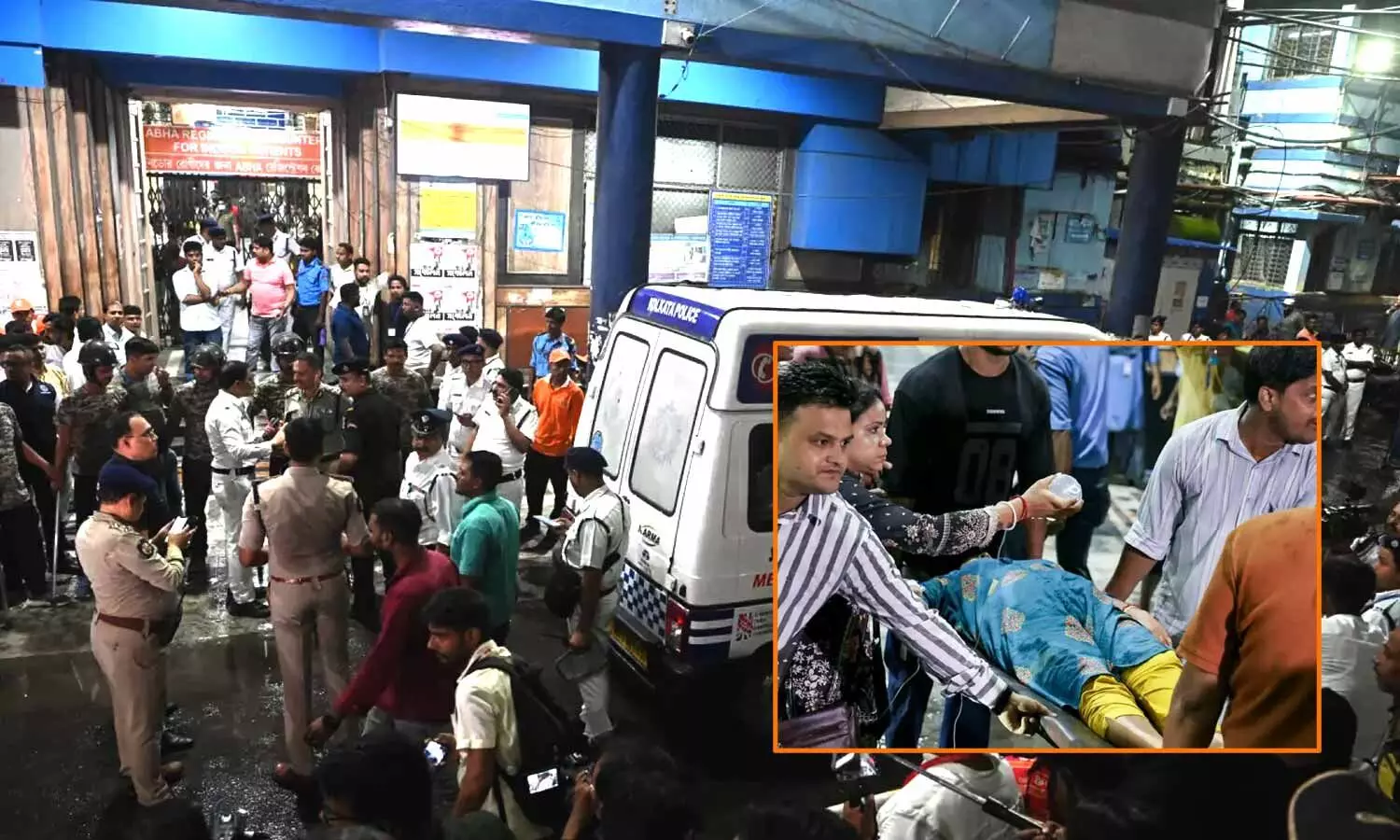
Chorgabagan Durga Puja Stampede: Kolkata’s First Fatal Stampede
The stampede at the Chorbagan Durga Puja pandal in north Kolkata is the first fatal stampede Kolkata has ever witnessed. It is being said that a lack of crowd management and alleged misleading announcements following a sudden downpour on Saturday night, Saptami, might have led to the tragic incident, the police suspect.
Police officials said that according to the prima facie circumstantial evidence, and from what the locals and eyewitnesses told police, it suggests that the organisers had not made proper crowd control arrangements. It is being said that the number of police personnel and private security guards deployed there was not adequate.
"We have gathered sufficient evidence pointing to gross mismanagement by the puja organisers. There was no clear plan to manage the large number of visitors, and everything was handled verbally. We have collected CCTV camera footage, recorded accounts from locals and eyewitnesses, and corroborated our findings. Security personnel were inadequate," the police officer told the media.
Locals also claimed that police deployment at the pandal was inadequate, alleging that personnel were mainly stationed near the VIP entrance.
"Due to the mismanagement, people tried to escape through the entrance gate during the stampede. Both the gates and the approach road were narrow, which contributed to the accident," police said. They further said that announcements regarding entry, exit, and crowd movement were inadequate, leaving visitors confused during the rush.
"We have video footage of an announcement asking people to leave the pandal on the grounds that the structure was about to collapse. We are trying to identify who made the announcement and what prompted it," the officer said.
A team of forensic experts visited the pandal on Saturday night and collected evidence from the site, he said.
"Another team of forensic experts will visit the pandal today to collect further evidence. Officers from our Detective Department will also visit the venue as part of the investigation," he said. Kolkata Police is also planning to question survivors as part of the probe, the IPS officer said.
"We need first-hand accounts to cross-check the findings based on statements from locals and other eyewitnesses. This will help our investigation," he added.
Meanwhile, Kolkata Police Commissioner Ajay Kumar Nand imposed prohibitory orders under Section 163 on roads adjoining the Chorbagan Sarbojanin Durga Puja pandal in north Kolkata on Sunday morning. The orders will remain in force until October 20.
Looking at the history of stampedes and crowd surges during Durga Puja in Kolkata has been rare, and no stampede has been this fatal. In October 2015, heavy crowds had gathered to see an 88-foot Durga idol at Deshapriya Park, leading to overcrowding in the narrow streets. This triggered panic and suffocation, particularly among the senior citizens and children. Around 11 people were injured, but there were no fatalities.
A Puja Night Turns Tragic: 19 Killed in Kolkata Durga Puja Stampede
CM Revanth Reddy extends Bathukamma greetings
Heavy rain forecast for 17 TN districts; NDRF team to be sent to Chennai
TVK plans 3rd state conference to celebrate electoral success
Kolkata stampede: Death toll rises to 19, CM Adhikari announces Rs 2.5 lakh compensation, job for victim’s families
Scheduled power cuts for Telangana industry soon?


