




- US says Iran oil exports blocked at Hormuz
- World Bank unveils first digital strategy
- Rubio to hold talks with EAM Jaishankar, honour 26/11 victims during Mumbai visit
- Ponguleti announces revenue reforms to protect farmers’ land rights
- 25 years of faith, flowers and festivity at Sunnam Cheruvu
- Contingency plan to tackle El Nino in Telangana
- Accord priority to Congress workers who bore the brunt of BRS misrule: Uttam
- Aprilia expands portfolio with the launch of SXR GT range
Smartphone can scan placenta to predict health of mom, newborn
In Short
A team of researchers has developed an Artificial Intelligence (AI)-based novel solution that could produce accurate

Share :
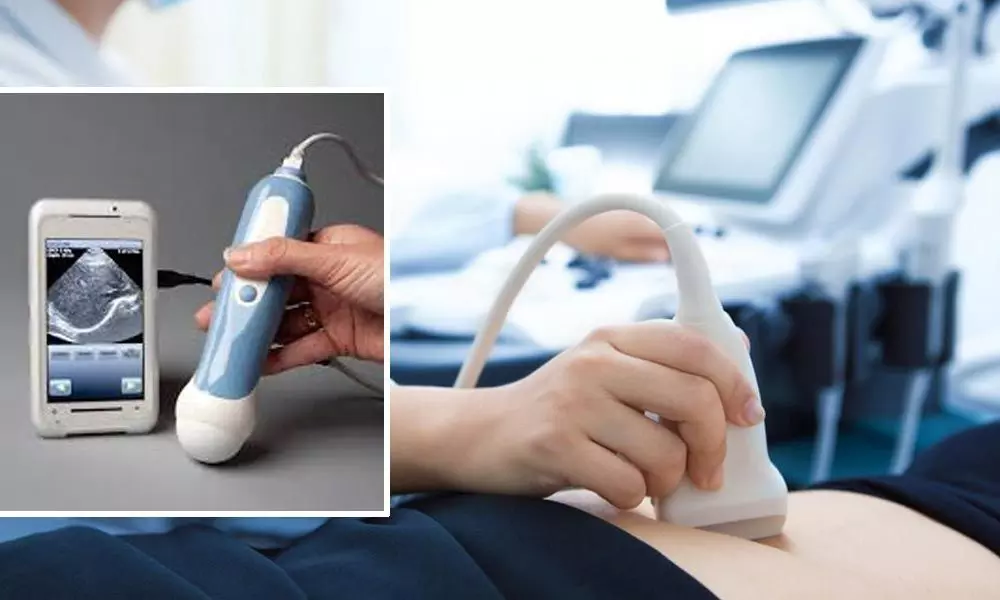
New York: A team of researchers has developed an Artificial Intelligence (AI)-based novel solution that could produce accurate, automated and near-immediate placental diagnostic reports via a smartphone or a tablet with the appropriate software.
Placentas can provide critical information about the health of the mother and baby but the cost, time and expertise required to analyze them are prohibitive.
The research could allow all placentas to be examined, reduce the number of normal placentas sent for full pathological examination and create a less resource-intensive path to analysis for research -- all of which may positively benefit health outcomes for mothers and babies.
"The placenta drives everything to do with the pregnancy for the mom and baby, but we're missing placental data on 95 per cent of births globally," said Alison Gernand, assistant professor of nutritional sciences in Penn State's College of Health and Human Development.
The study was presented at the International Federation of Placenta Associations meeting held in Buenos Aires, Argentina recently.
The patent-pending technology uses AI to analyze an image of each side of the placenta after delivery and then produces a report with critical information that could impact the clinical care of the mother and child, such as whether the fetus was getting enough oxygen in the womb or if there is a risk of infection or bleeding.
Currently, there are no evidence-based standards to determine when a placenta This digital tool could offer a solution, as an individual would need only a smartphone or tablet with the appropriate software.
"Even in very low-resource areas, someone typically has a smartphone," said Gernand. "Our goal is for a medical professional or trained birth attendant to take a photo which, after analysis through licensed software, could provide immediate information that aids in the care of the mother and baby."
For example, an umbilical cord with an abnormal insertion point or excessive twisting can be a predictor of neonatal stroke.
Examination after a stillbirth could give family information about whether future stillbirths may reoccur and help medical professionals advise them on possible interventions.
To create the system, the researchers analyzed 13,000 high-quality images of placentas and their corresponding pathology reports from Northwestern Memorial Hospital.
They labeled a training set of images with data points critical to understanding the placenta, such as areas of incompleteness and the umbilical cord insertion point.
Additionally, this tool could advance pregnancy research and be useful for long-term care by providing clinically meaningful information to patients and practitioners, said the researchers.
Kota Police’s Dramatic 15-Minute Operation Leads to Arrest of Shroff Shooting Suspects
BJP Chief Slams Rahul for Repeated ‘Vote Chori’ Claims; Rahul Dares Govt to Act Against Him
CM Revanth Reddy extends Dasara greetings to people
Telangana asks govt offices to use electricity economically
President Murmu extends greetings on the eve of Vijayadashami
No one from Bihar will be forced to migrate for manual labour by 2030: Samrat Choudhary


