






- Kadapa ZP chairperson row rocks NDA
- Rajasthan: Congress wins 269 Panchayat Samitis, BJP 73
- Classification of land holding nature to be the basis for creation of 'land bank' for industries in West Bengal: CM Adhikari
- India and Nepal to discuss development cooperation and energy ties during Shah's visit to New Delhi
- No one discriminated against on religious grounds in India: Kiren Rijiju on Siraj selection row
- Google Taps Jeff Bezos’ Blue Origin for Space AI Data Centres
- Prabhadevi anti-encroachment demolition drive halted after Maha Dy CM Shinde talks with Railway Minister Vaishnaw
- Man sentenced to double life for Murder in Nalgonda
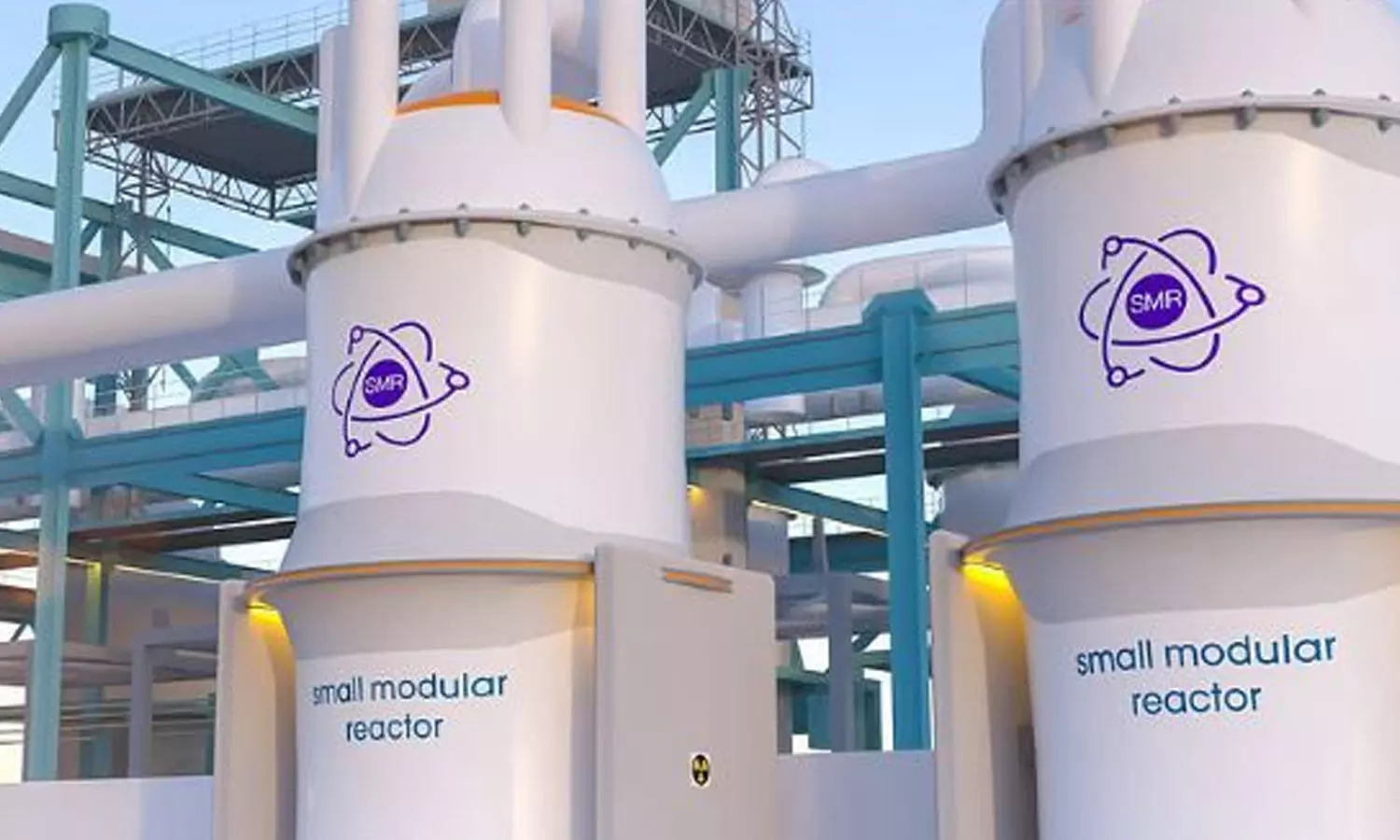
Andhra Pradesh clears nuclear power plan using SMR technology
In Short
Small Modular Reactors to offer alternative to thermal power

Share :
Andhra Pradesh clears nuclear power plan using SMR technology
Amaravati: The state government on Friday approved tapping nuclear power employing Small Modular Reactor (SMR) technology as an alternative to thermal power, an official said.
Energy special chief secretary K Vijayanand said the state would explore setting up nuclear power plants using SMR technology at “retiring thermal power units or other suitable locations in the state after SMR technology is stabilised.”
Unlike large and expensive conventional nuclear power plants of around 700 MW(e) power capacity, SMRs are advanced nuclear reactors with around one-third of that capacity, 300 MW(e).
“Government, after careful consideration of the request of the Managing Director, APGENCO (Andhra Pradesh Power Generation Corporation), hereby accord approval to explore establishment of a Nuclear Power Plant using SMR technology, as an alternative to thermal power,” Vijayanand said in a government order (GO).
The special chief secretary noted that the private sector will be allowed to participate in Andhra Pradesh’s endeavour to set up SMR nuclear power plants. According to the International Atomic Energy Agency (IAEA), SMRs can produce a large amount of low-carbon electricity with a physical size that is a fraction of that of conventional nuclear power reactors.
Their modular design enables systems and components to be factory-assembled and shipped as a unit for installation at a favoured location, while the reactors in SMRs harness nuclear fission technology to produce heat for generating energy. SMRs advantages are linked to their small and modular design, making them affordable, saving construction time and enabling incremental deployment to match rising energy demand.
Further, they also require reduced fuel requirements, refuelling every three to seven years, compared to conventional nuclear power plants, which require refuelling every one to two years.
According to the IAEA, some SMRs are designed to operate for up to 30 years without refuelling.
Further, SMRs can be synced with renewable energy sources such as wind and solar to enhance the efficiency of a hybrid energy system, among several other advantages.
Nara Lokesh takes sarcastic swipe at TN
CM Chandrababu Naidu orders year-long price-control strategy
CM Chandrababu Naidu sets Dec 2027 IPO target for APMDC
Rural voters have sent clear message to BJP govt, says Gehlot on Rajasthan Panchayati Raj poll results
PM Modi’s political journey defined by ‘Nation First’ and ‘Trust’: BJP chief Nitin Nabin (Lead)
Our infrastructure vision is becoming Andhra’s biggest investment proposition: Jagan


