






- Piyush Goyal to inaugurate 45th India International Trade Fair
- Akhilesh Yadav’s Ram Mandir visit ahead of 2027 UP Assembly polls is opportunistic: BJP
- AP SEC releases notification for 23 pending urban local bodies elections
- Fire breaks out at Srikalahasti Temple Kitchen, no casualties
- Govt Employees Can Get Rs 1.8 Lakh Laptops, Keep Them After 4 Years
- Anirudh Ravichander And Kavya Maran’s Dreamy Greece Wedding Pics Are Here
- Bullet-Riddled Bodies Of Two Missing SPOs Recovered In J&K’s Kishtwar, Search For Terrorists Underway
- Gold and Silver rates today, 12 Nov in Hyderabad, Visakhapatnam, check gold prices of 18K, 22K, 24K
Karnataka mulls repeal of Anti-Conversion Law amendments in Winter Session; BJP warns of statewide opposition
In Short
The Karnataka Congress has proposed to repeal the amendments made to the Anti-Conversion law by the previous BJP government during the upcoming Winter Session of the State Legislature, triggering a fresh political confrontation between the ruling party and the BJP.

Share :
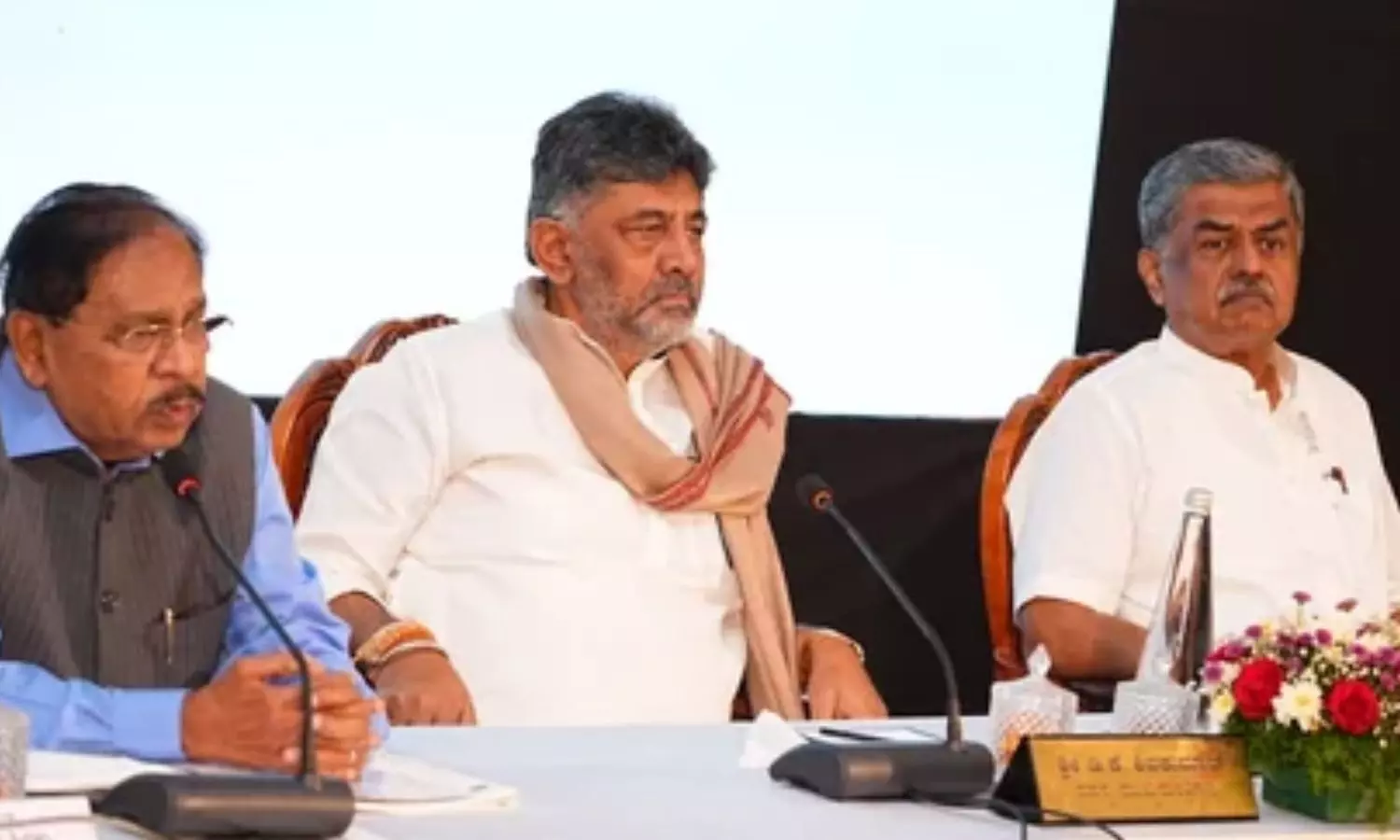
President and MLC, B.K. Hariprasad
Bengaluru: The Karnataka Congress has proposed to repeal the amendments made to the Anti-Conversion law by the previous BJP government during the upcoming Winter Session of the State Legislature, triggering a fresh political confrontation between the ruling party and the BJP.
Karnataka Pradesh Congress Committee (KPCC) President and MLC, B.K. Hariprasad, made the announcement at a press conference in Bengaluru on Thursday, stating that the government would restore the earlier legal position, claiming that the BJP had introduced draconian and stringent provisions in the law with the intention of harassing religious minorities.
"We will repeal the Anti-Conversion Bill in Karnataka during the upcoming Winter Session. We will restore the earlier status quo. The government will fulfil the aspirations of the people. The BJP had amended the Bill with the intention of harassing minorities," Hariprasad said.
The announcement has drawn a sharp reaction from the BJP, which accused the government of facilitating religious conversions and warned that it would strongly oppose the move.
Senior BJP leader and Leader of the Opposition in the Legislative Council, Chalavadi Narayanaswamy, said the BJP's legislation did not prevent anyone from voluntarily embracing another religion but was intended to prohibit conversions through force, coercion or inducements.
"There should not be any pressure on people who want to convert to another religion. If a person wishes to embrace another religion voluntarily, it is their right. They can submit the necessary documents through the Deputy Commissioner and convert to any religion. Our Constitution allows this," he said.
However, he maintained that forced conversions or conversions through the offer of money or other inducements should not be permitted.
"If the government withdraws this law, it would mean that it is allowing other religions to forcibly convert people. The BJP will oppose such a move," he claimed.
Reacting to protests by minority organisations demanding the withdrawal of the anti-conversion law and the cow slaughter ban law, Narayanaswamy alleged that such demands were intended to facilitate forced religious conversions and continue cow slaughter.
"If minorities are demanding the withdrawal of these laws, does it mean that they want forced conversions to continue and want to continue cow slaughter? Anyone who wants to convert voluntarily has that right. We have no objection to that," he said.
The controversy centres on the Karnataka Protection of Right to Freedom of Religion Act, 2022, introduced by the previous BJP government led by Basavaraj Bommai. The legislation prohibits religious conversions through misrepresentation, force, coercion, undue influence, allurement, fraudulent means or marriage.
Controversially, under the Act, reconversion to a person's immediate previous religion is not treated as conversion.
The legislation also prescribes a procedure for those intending to change their religion. A person intending to convert must submit a declaration to the District Magistrate at least 30 days in advance. The person conducting the conversion must also give prior notice. Following the conversion, the individual is required to submit another declaration within 30 days and appear before the District Magistrate for verification of identity and intention.
The District Magistrate is empowered to invite objections from the public and order a police enquiry into the circumstances and intention behind the proposed conversion.
The Act provides for imprisonment ranging from three to five years and a fine of Rs 25,000 for unlawful conversions. In cases involving minors, women, members of Scheduled Castes and Scheduled Tribes, and persons of unsound mind, the punishment ranges from three to 10 years, with a fine of up to Rs 50,000.
Mass conversions involving two or more persons attract imprisonment of three to 10 years and a fine of up to Rs 1 lakh. Repeat offenders face imprisonment of five years or more and a fine of up to Rs 2 lakh. Offences under the Act are cognisable and non-bailable.
With the Congress announcing its intention to repeal the amendments in the forthcoming winter session scheduled to be held in December, the issue is expected to become a major political flashpoint between the ruling Congress and the BJP in the Legislature.
PM Modi to visit Philippines next week for ASEAN-India Summit
Manchester United sack Michael Carrick after disappointing start to the season
India's retail inflation crosses RBI's upper limit of 6 per cent in October
Karnataka mulls repeal of Anti-Conversion Law amendments in Winter Session; BJP warns of statewide opposition
CII Summit 2026 Vizag live updates: All set for investments in AP
PM Modi to visit Philippines next week for ASEAN-India Summit
With right opportunities, students can help build 'Viksit Bharat@2047': President Murmu
'Visakhapatnam emerges as a permanent venue for CII Partnership Summit’: Piyush Goyal
'Gujarati friend': PM Modi extends festive greetings to Sam 'Bhai' Pitroda, wife
Piyush Goyal pitches India as safe investment haven amid global uncertainties


