






- MMC chief puts Ghatkesar civic works on fast track
- Congress hits back at KTR over Sonia’s role in TG formation
- Sridhar Babu rolls out red carpet for Mumbai investors
- Telangana will oppose AP’s 1.8 TMC Nagarjuna Sagar water plan: Uttam
- BRS vows fight until all eligible get pensions
- GHMC sets target of 3,400 new Self-Help Groups
- GHMC to crack down on roadside dumping
- Kids below 12 can't use lifts alone in Maha
White jowar price crosses Rs 100 per kg in north Karnataka
In Short
White jowar is currently selling at Rs 100 to Rs 110 per kg in the market, more than double its earlier price of Rs 40 to Rs 50. The wholesale price has also crossed Rs 10,000 per quintal, compared to around Rs 5,000 in recent months.

Share :
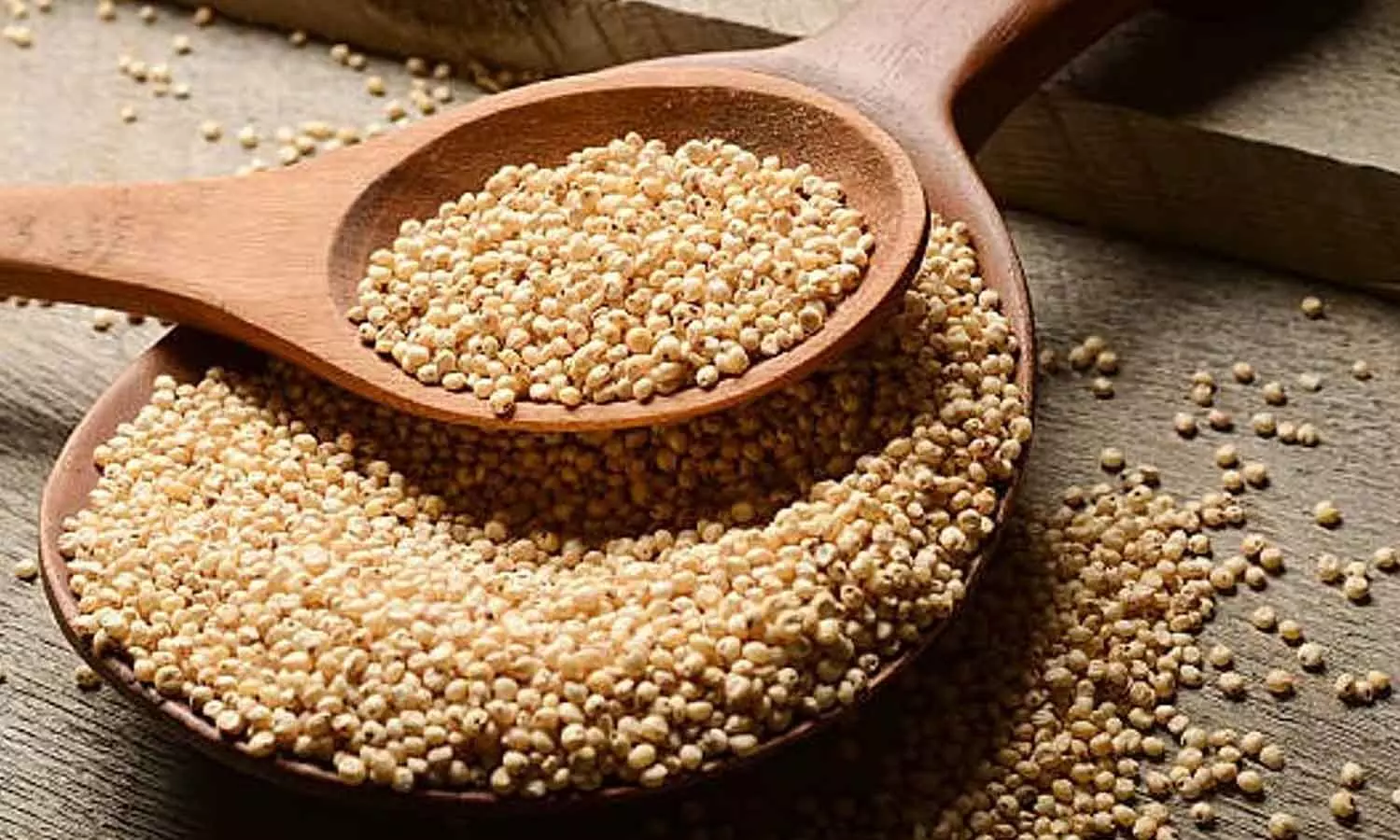
White jowar price crosses Rs 100 per kg in north Karnataka
Bengaluru: The price of white jowar, a staple food grain in North Karnataka, has crossed the Rs 100-per-kg mark for the first time, raising concerns over an increase in the cost of the region’s popular jowar rotti meals.
White jowar is currently selling at Rs 100 to Rs 110 per kg in the market, more than double its earlier price of Rs 40 to Rs 50. The wholesale price has also crossed Rs 10,000 per quintal, compared to around Rs 5,000 in recent months. While farmers are benefiting from the sharp increase in prices, consumers are facing a significant burden as the cost of an essential food item continues to rise.
A major reason for the price surge is the steep decline in jowar cultivation. In Bagalkot district, the crop was earlier grown on nearly one lakh hectares. However, the area under cultivation has now fallen to around 30,000 to 40,000 hectares. Many farmers have shifted to commercial crops such as sugarcane, reducing the area available for jowar cultivation. Drought conditions have further affected crop yields and overall production.
The higher prices have also affected market transactions. Traders said that daily sales, which previously stood at two to three quintals, have dropped to a maximum of one quintal as consumers are reluctant to purchase the grain at current rates.
The reduced cultivation has also affected supplies from farmers, adding to the pressure on the market. The price rise has triggered concerns among hotel and khanavali owners, who serve jowar rotti meals, a popular food choice across North Karnataka. With raw material costs increasing sharply, restaurant owners fear they may have to revise meal prices if the trend continues.
SP Unlikely to Give Congress More Than 25 Seats in UP
CM Revanth Reddy heads to BRS bastion for political showdown
Telangana committed to SCs, STs uplift: Ganesh
Telangana a role model in SC and ST welfare: Revanth Reddy
KTR warns of mass movement over alleged Krishna water diversion
Mosquito menace stings Hyderabad


