




- Apple’s OLED MacBook Pro: What to Expect
- Tejashwi Yadav seeks high-level probe into Ganga boat tragedy, slams CM for not visiting victims
- Google Pay upgrades Flex rewards program ahead of the festive season
- Calcutta HC snubs CBI over protocol lapses in submitting progress report in case at Division Bench
- CM Revanth Reddy sets out Telangana’s $3T economic ambition at business summit
- OpenAI fires employee after hidden recording device found in office
- OneWeb should get India approval before Starlink, we applied 5 years earlier: Sunil Mittal
- Frankfurt-Delhi Air India Flight Diverted To Jaipur After Hijack Alert, Probe Underway
CJP vs Police: Delhi Braces for Another Showdown on Thursday
In Short
CJP founder Abhijeet Dipke calls for a Tiranga march at Delhi’s Connaught Place amid a row over police action against party members at Jantar Mantar and debates over the right to protest.

Share :
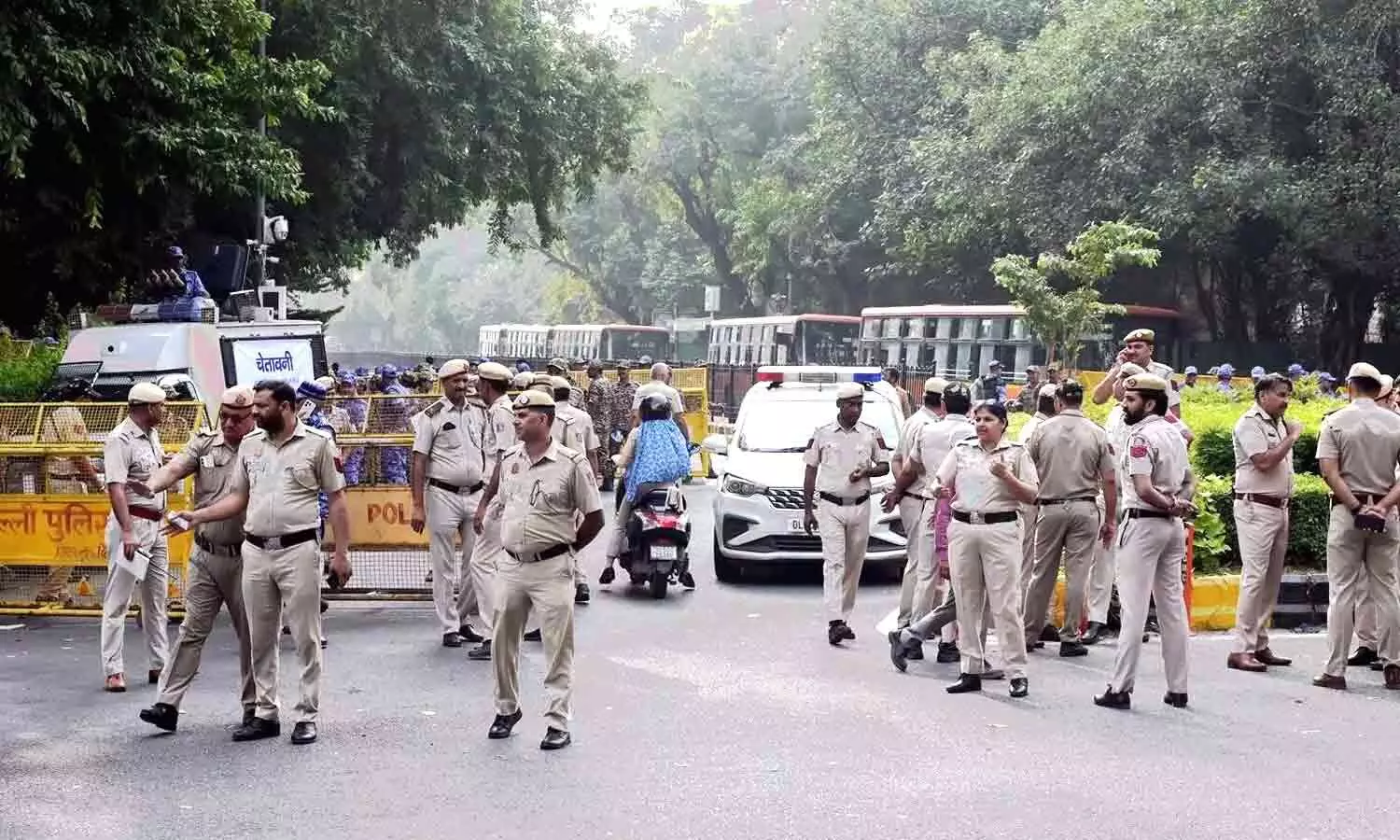
CJP vs Police: Delhi Braces for Another Showdown on Thursday
Cockroach Janta Party founder Abhijeet Dipke has called on "patriots" to gather on Friday at Central Park in Delhi's business hub, Connaught Place, with the national flag, alleging that CJP members Saurav Das and Ashutosh Ranka have been "jailed only for unfurling the tricolour".
But the police claimed that they had violated the bond given to the executive magistrates' court and had breached peace at Jantar Mantar.
"We will show that waving a tiranga is not a crime," Dipke said on X on Wednesday and asked those who cannot come to Delhi to carry out 'tiranga marches' in their cities. He expressed apprehension that he may also be jailed.
Earlier during the day, LoP Rahul Gandhi also slammed the government for arresting protestors for flying the Tiranga at Jantar Mantar.
But what does the law say? The right to display the National Flag by itself is not a crime, but it should be in accordance with the Flag Code.
CJP can argue that citizens have a right to wave the Tricolour. But that right does not automatically entitle the party to hold an unauthorised gathering, disregard police restrictions, or occupy any public place of its choice. Equally, authorities should not treat the mere act of waving the National Flag as a crime without examining the actual conduct and applicable law.
It now remains to be seen what turn the proposed tiranga march would take on Thursday at Connaught Place.
The CJP members, holding the tricolour, had raised slogans against Chief Election Commissioner Gyanesh Kumar before they were taken away by police personnel on Tuesday. The outfit said that they had "reclaimed" Jantar Mantar and their right to protest.
"Those who cannot come to Delhi, take out tiranga marches in your cities in the evening, and show that the tricolour is our pride," he said.
"I also may be jailed after this, but I am not worried. Tricolour is my pride, and I will raise it," the CJP founder added.
Ex-SC Judge Kurian Joseph Says Supreme Court Must Act If Warnings Fail, Calls For Stronger EC Safeguards
PIL in SC seeks uniform judicial terms, abbreviations and court fees across India
Indiramma homes to be allocated without political bias: Ponguleti
FM Sitharaman to attend IMF and World Bank meetings in Bangkok
AP SEC releases notification for local body polls, to be held in three phases
India-ASEAN cooperation necessary for peace, stability in Indo-Pacific: Rajnath Singh


