




- Karnataka MLC polls: NDA candidate set for hat-trick win in West Graduates' seat, says Vijayendra
- 'Borewell Suraksha Abhiyan' to make Karnataka free of open borewells, says govt
- Bihar teachers, graduates will vote for change in MLC polls: Prashant Kishor
- J&K govt enhances retirement age of judicial officers from 60 to 62 years
- High on energy, low on egos: Trinamool's Derek O'Brien on INDIA bloc protest
- Tipra Motha Party dominates Tripura tribal bodies' polls, wins 74.61 pc of 4,594 seats
- He Saved 174 Lives. Now Captain Smit Battles a Skull Injury
- Flydubai Attack: Indian Pilot Smit Machchhar Fought Through Skull Fracture To Stop Plane From Being Taken Over
PM Modi highlights Gujarat’s water-governance model as lessons for Global South
In Short
Sharing the article, “From India to Global South, a Gujarat water-governance model”, on social media platform X, he said water security is not limited to building infrastructure but also depends on planning, strong local systems and community participation.

Share :
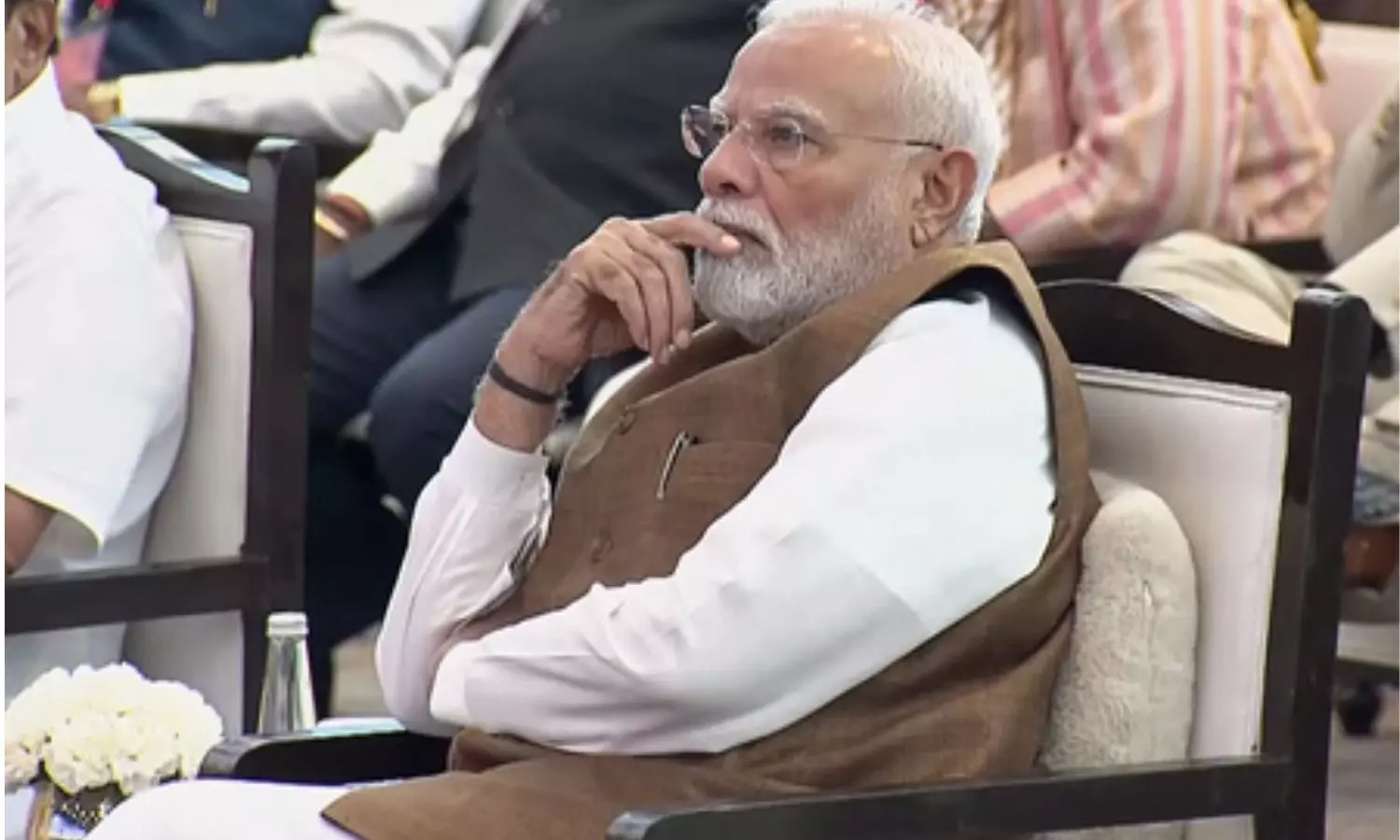
Prime Minister Narendra Modi
New Delhi: Prime Minister Narendra Modi on Tuesday shared an article highlighting India’s water-governance experience, tracing the evolution of reforms in Gujarat into large-scale national programmes and presenting the approach as a potential reference for countries across the Global South.
Sharing the article, “From India to Global South, a Gujarat water-governance model”, on social media platform X, he said water security is not limited to building infrastructure but also depends on planning, strong local systems and community participation.
“From India, a water-governance model is offering useful lessons for the wider Global South. Water security is not only about building infrastructure but also about good planning, strong local systems and involving communities in managing water,” PM Modi said.
“India's journey from water reforms in Gujarat to large-scale national programmes offers a practical example for countries looking to improve water management and meet growing water needs,” he added.
The article, published in a national daily and authored by former Union water resources secretary Parameswaran Iyer, Council on Energy, Environment and Water fellow Nitin Bassi and George Mason University assistant professor Daniel W Smith, examines water-governance reforms in Gujarat and India between 2001 and 2026.
The authors argue that the experience shows water security to be a governance and institutional challenge as much as an engineering one.
They identify Gujarat during PM Modi’s tenure as chief minister from 2001 to 2014 as an early setting for reforms that were subsequently expanded through national programmes after 2014.
The article refers to programmes including the Jal Jeevan Mission, Swachh Bharat Mission, Jal Shakti Abhiyan, Namami Gange, Atal Bhujal Yojana and Per Drop More Crop as part of the broader national water-governance framework.
Drawing on official data, policy and programme records, existing literature and consultations with practitioners, the authors’ case study, “From Gujarat to India: Water Lessons for the World”, identifies four broad lessons: prioritising governance alongside infrastructure, managing water resources and services together, placing communities at the centre of water management, and designing programmes for scale.
The article also highlights a “4 Ps” framework — political leadership, public and private financing, partnerships across levels of government and institutions, and people’s participation — as an approach to strengthening water governance.
It cites Gujarat’s Chintan Shivirs between 2001 and 2014 as an example of bringing key stakeholders together to prioritise water governance and develop solutions aligned with community expectations.
The authors say a similar approach has since been replicated at the national level, citing the Departmental Summit on Water organised by the Ministry of Jal Shakti and addressed by PM Modi in September 2026.
The authors further argue that water-resource planning needs to keep pace with rising demand from cities, industry and agriculture, while greater attention should be given to the reuse of treated water, particularly for non-potable purposes.
They project that the annual market revenue from the sale of treated used water in India could reach around Rs 73,000 crore by 2047 at current prices.
On community participation, the article points to local institutions such as Pani Samitis and programmes for water conservation, harvesting and groundwater recharge.
It argues that infrastructure needs to be supported by institutions capable of ensuring reliable services and by community involvement in local water decisions.
The authors also note that the world remains off track on Sustainable Development Goal 6, which seeks universal access to safe drinking water and sanitation and sustainable management of water resources, used water and ecosystems by 2030.
They estimate that an additional USD 500 billion in annual investment is required globally.
The article concludes that the scale of India’s water programmes demonstrates the importance of political commitment, financing and institutions in implementing water-governance reforms on a large scale — the central point PM Modi highlighted while sharing the piece with his followers.


