




- NHRC Notice to Meta, MeitY Over Anti-Modi Instagram Videos Featuring Children
- Do Voters Matter in India?
- Roshan Meka's 'Emo Emo Idi' Theme Song Is Out; Fans Love the Romantic Vibes
- TRAI Mandates Cheaper Voice-Only Recharges: What Changes for Airtel, Jio, Vi Users
- NIA raids five locations in Bengal in Bangladesh-based JMB's sleeper cell case
- Bengal Minister Dilip Ghosh issues stern warning over corruption in name of Durga Puja
- Bengal mulls action against doctors for attending Abhishek's Sebashray camps without approval
- Dengue cases drop nearly 40 pc in Gujarat; districts told to intensify checks
Supreme Court Asks Centre To Examine Parental Consent For Minors On Social Media
In Short
The Supreme Court has asked the Centre to examine statutory safeguards for minors on social media, including parental consent and age verification for children below 18.

Share :
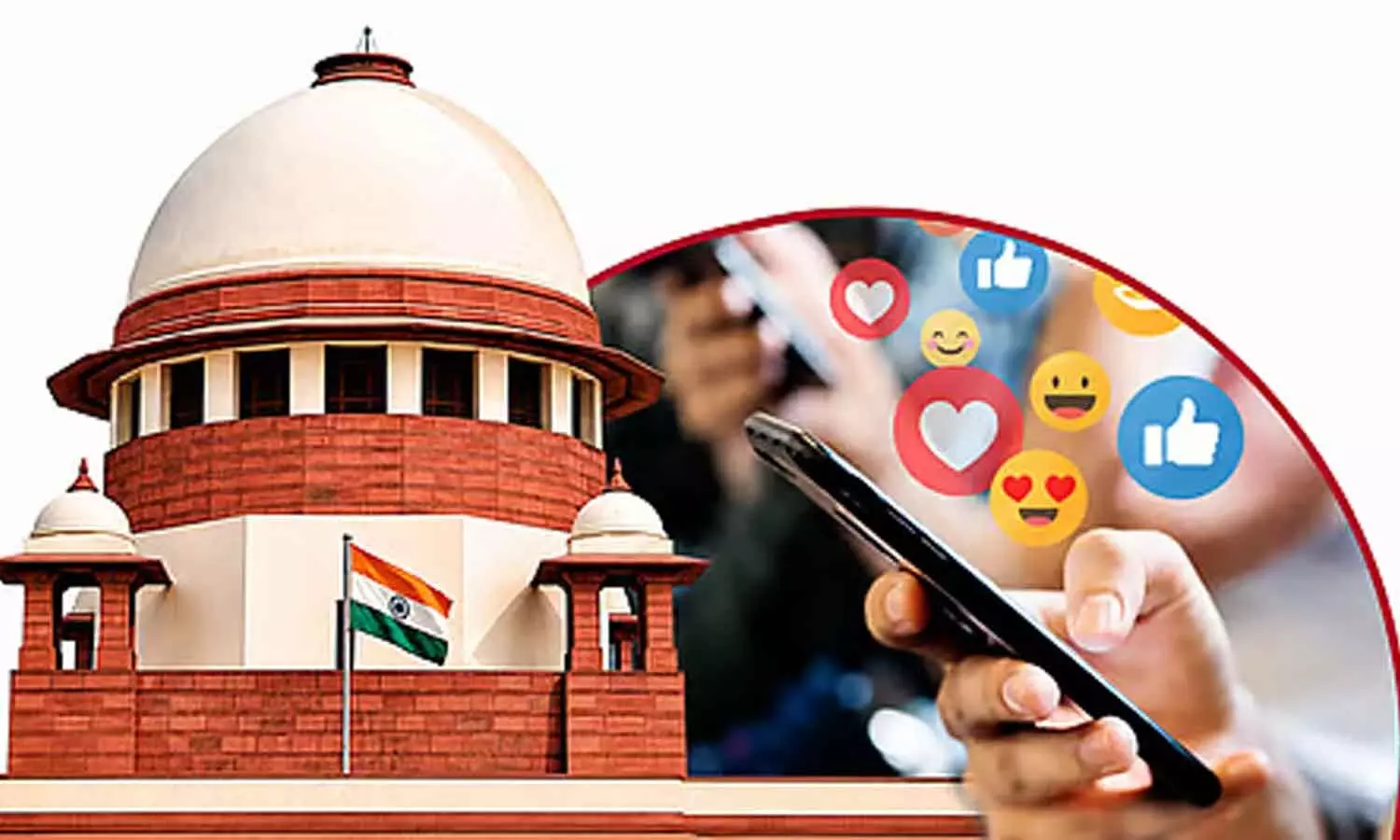
Supreme Court Asks Centre To Examine Parental Consent For Minors On Social Media
The Supreme Court has asked the Centre to examine whether children below 18 should require parental or legal guardian consent to create accounts on social media platforms.
A three-judge bench headed by Chief Justice of India Surya Kant, along with Justices Joymalya Bagchi and V Mohana, considered the issue during a hearing on September 28. The court was hearing a petition seeking stronger safeguards for children using social media and other digital platforms.
The court's intervention is in response to the increasing worries about minors being exposed to online grooming, sexual exploitation, cyberbullying, personal data misuse and age inappropriate content.
SC Seeks Statutory Framework For Children’s Social Media Accounts
The court asked the Centre to explore whether safeguards concerning minors’ access to social media could be incorporated into a statutory framework instead of remaining limited to guidelines.
The petitioners argued that children below 18 generally lack independent contractual capacity under Indian law. Since creating an account requires users to accept a platform’s terms and conditions, the petition raises questions about how such agreements involving minors should be regulated.
Justice Bagchi asked Solicitor General Tushar Mehta to consider whether the requirements could be incorporated into the Information Technology intermediary rules. Mehta said the Centre would examine the matter.
The matter is expected to be taken up again after four weeks.
NGO Seeks Parental Consent And Identity Verification
The petition has been filed by the Just Rights for Children Alliance, which has sought stronger legal protections for minors using social media and other digital services.
Among its proposals is a requirement for platforms to obtain consent from a parent or legal guardian before allowing a child below 18 to create an account.
The petition also proposes mechanisms to verify the identity of parents or guardians, including appropriate identity checks or e-KYC procedures.
The NGO has requested to make changes in the Information Technology (Intermediary Guidelines and Digital Media Ethics Code) Rules, 2021, or to make new rules to solve the issue.
Petition Highlights Online Risks To Children
The petitioners cited the following dangers to the children if they're unsupervised on digital platforms.
This includes online grooming, sexual exploitation, sextortion, cyberbullying and exposure to inappropriate content or information.
The plea has also cast doubt on age verification and if there are enough systems in place on platforms to make sure that those using the platform are following Indian law with regards to minors.
The petition alleged that some big social media platforms allow users to register accounts even with the age of 13, even though the Indian law considers anyone under the age of 18 as a minor.
Centre Refers To Digital Data Protection Framework
During the hearing, the Centre indicated that the issue could potentially fall within the framework of the Digital Personal Data Protection Act, 2023.
However, senior advocate H S Phoolka, representing the petitioners, argued that existing legal provisions could be used without waiting for the new data-protection framework to become fully applicable.
The petitioners also referred to Section 79 of the Information Technology Act as a possible legal basis for requiring intermediaries to comply with laws concerning minors.
The Supreme Court has not imposed a nationwide parental-consent requirement through this hearing. Instead, it has asked the Centre to examine whether such safeguards can be given statutory backing.
Debate Over Children’s Social Media Access
The proceedings come amid a wider international debate over the minimum age at which children should be permitted to access social media.
The issue has also received attention in India following Australia’s restrictions on social media access for children under 16. During an Australia-India leaders’ summit in July, Prime Minister Narendra Modi said India was taking lessons from Australia’s approach.
Proposals concerning restrictions on children’s social media use have also emerged in states including Karnataka and Andhra Pradesh.
The Supreme Court’s latest intervention could therefore add momentum to discussions over age verification, parental consent and the legal responsibilities of social media platforms operating in India.
North vs South: Ram vs Shiva
Chandrababu inaugurates Mission Karmayogi workshop, says to enhance employees skill
Asian Games Day 10: Neeru Dhanda Earns Historic Gold, India clinches Two Boxing Finals
SIR Row: Can It Reunite Opposition Parties?
ACB raids in NIMS doctor's DA case, seized Rs 7 lakh from barbar shop
J&K Assembly: BJP MLAs stage walkout to protest statehood restoration resolution


