




Crippling water shortage leaving fields parched
In Short
According to local reports, close to 800 acres of paddy crop were severely impacted across Siddapur, Shyamrao Thanda, Chelaka Thanda, and Chintalpet villages in Varni mandal.

Share :
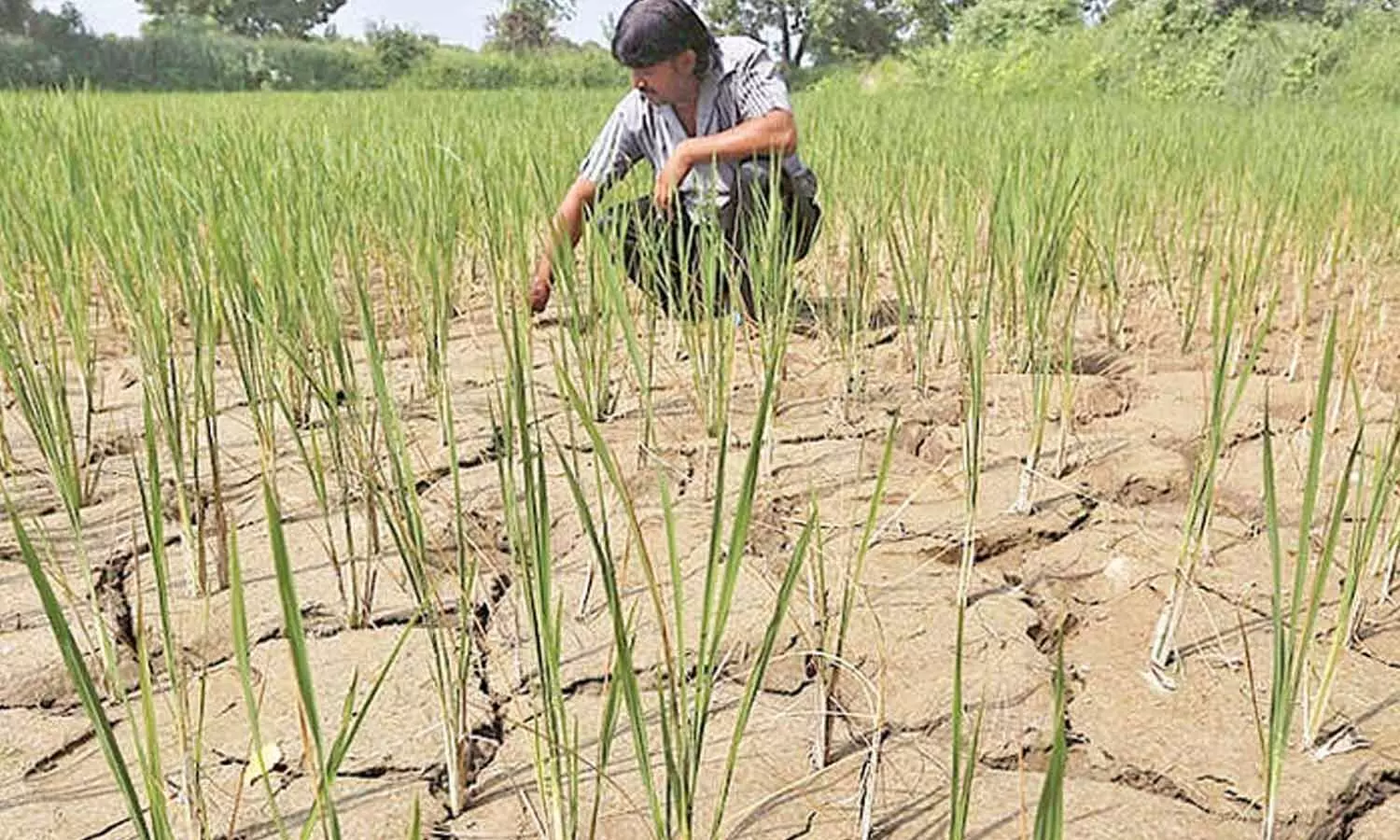
Crippling water shortage leaving fields parched
Nizamabad: Formonths, farmers across the district guarded their fields against pests, weather, and market fluctuations. Today, just weeks before harvest—a crippling water shortage and low rainfall are leaving their fields parched and their livelihoods in jeopardy.
With groundwater levels dipping, borewells sputtering, and monsoon rains falling short, standing paddy crops across several mandals are showing severe moisture stress. The plight of farmers came to the fore recently in Varni mandal, where vast stretches of paddy withered due to lack of timely irrigation, prompting widespread anguish and political outrage.
Over 800 acres affected in Varni Mandal
According to local reports, close to 800 acres of paddy crop were severely impacted across Siddapur, Shyamrao Thanda, Chelaka Thanda, and Chintalpet villages in Varni mandal. Deprived of critical final watering spells, crops that were once lush green are turning pale yellow and dry.
The aggrieved farmers staged a demonstration at the Paidimal substation for its failure to supply uninterrupted three-phase power for agriculture. They urged the state government to sanction a compensation of Rs 30,000 to Rs 40,000 per acre to cushion the financial blow. Official estimates from the Agriculture department regarding the final damage are yet to be released.
“Just two more watering turns were needed for the crop to fully mature. Seeing months of hard work and invested capital turn into ashes right before my eyes broke my heart,” said Kandi Ramulu, a distressed farmer from Paidipalli village who set his dried-up 5-acre paddy field on fire.
The crisis is not isolated to Varni mandal alone. Extended dry spells and El Niño-induced rain deficits have led to widespread moisture stress across Nizamabad Rural, Ditchpally, Banswada, Armoor, and Balkonda constituencies. Nizamabad district registered a 14 per cent rainfall deficit during the monsoon season.
Over 5.35 lakh acres were brought under cultivation in the Kharif season, primarily with paddy, soybean, maize, and turmeric—all of which are now vulnerable to moisture stress.
In a bid to salvage the remaining crops, local authorities released water from the first bund of the Siddapur Reservoir on October 7. While the emergency release offers a ray of hope, farmers remain anxious about whether the water will reach tail-end fields in time to save the standing crop.
With heavy investments already sunk into tilling, seeds, fertilizers, and power, agricultural union leaders and local farmers have placed key demands before the district administration. They urged the deployment of Agriculture department officials to conduct comprehensive field-level inspections to assess crop loss accurately. Additionally, they demanded the prompt disbursement of state compensation per acre to affected farmers, uninterrupted three-phase power supply for pump sets, and maximized water release from nearby tanks and reservoirs
Reservations finalised for urban local body elections
10 Corporations for BCs: 5 General, 5 for women
Prez Murmu to visit Vijayawada
Will develop Tirupati into world-class ‘Spiritual city’: CM Naidu
CM Revanth Reddy announces Rs 6L aid to kin of TG man killed in Ukraine war
Maharashtra govt declares drought, yet farmers lack relief: Supriya Sule


