




- Four Telangana youths trapped at Russian military camp
- Kadiyam Srihari reviews progress of Gandi Ramaram irrigation works
- Drought-hit tanks threaten Telangana fish seed scheme
- AISF calls for statewide struggle over students’ issues
- Urban development, curriculum debate takes centre stage in Karimnagar
- G20 trade talks open in Milwaukee; Piyush Goyal represents India
- HM Shah to chair key Odisha-Chhattisgarh meet on Mahanadi dispute today
- Call to fight for journalists’ rights
Drought-hit tanks threaten Telangana fish seed scheme
In Short
Under Fisheries Department norms, seed stocking is permitted only in water bodies with at least 40 per cent water depth

Share :
Drought-hit tanks threaten Telangana fish seed scheme
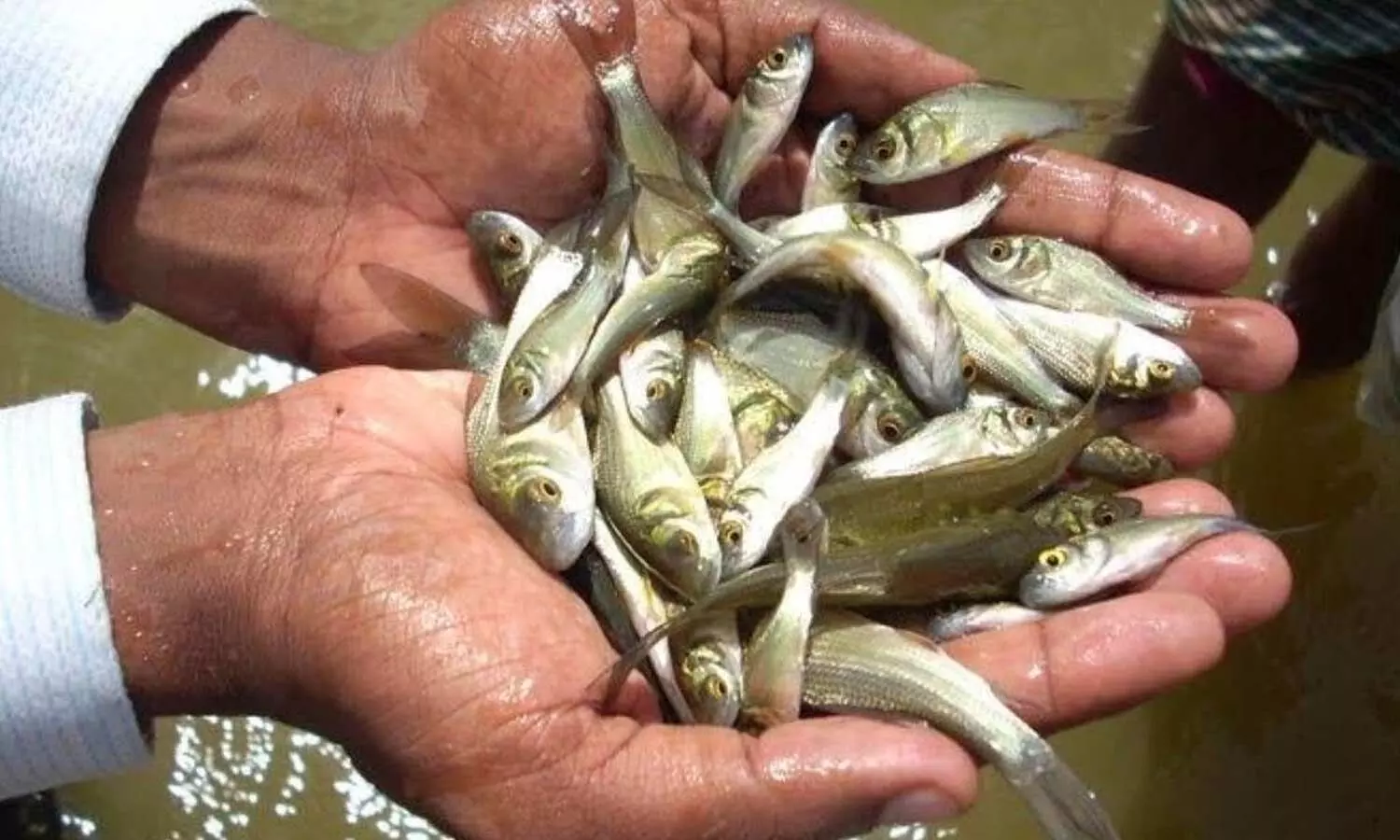
Nizamabad: Telangana’s annual fish seed distribution programme is facing uncertainty in Nizamabad district as declining water levels in irrigation tanks threaten the survival of fingerlings. The state spends around Rs 4 crore to Rs 4.20 crore annually to release nearly four crore fish seed into local water bodies. However, Irrigation Department data shows that many of the district’s 1,007 designated tanks have inadequate storage. Around 50 tanks have less than 25 per cent water, while 245 have between 25 and 50 per cent. Another 334 tanks hold between 50 and 75 per cent capacity.
Under Fisheries Department norms, seed stocking is permitted only in water bodies with at least 40 per cent water depth. Fishermen fear that releasing fingerlings into depleted tanks could result in high mortality and financial losses.
The fishing community has urged officials to physically inspect shortlisted tanks before distribution and match seed allocation with actual water availability.
KCR family amassed Rs 1L-cr wealth: Revanth Reddy
Will complete 36 irrigation projects in 3 years: Naidu
CM Naidu calls for continuous skill training of govt staff
Job creation coalition govt’s only agenda: Lokesh
CM Vijay accuses AIADMK of aligning with DMK during Dharapuram campaign
Green energy scheme ‘big push’ towards achieving 900 GW non-fossil capacity by 2035: PM Modi


