
Chances of renewed India-Pakistan conflict 'remote', says Pakistani foreign minister

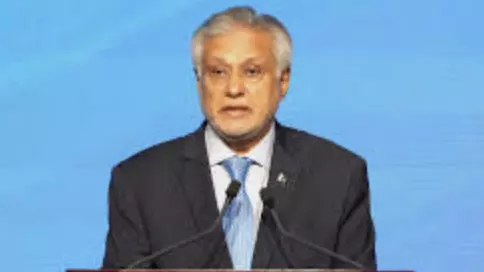
Pakistani Foreign Minister says chances of renewed conflict with India are low, emphasizes commitment to peace but warns of strong response if provoked.
Pakistan’s Foreign Minister and Deputy Prime Minister Ishaq Dar has said that the likelihood of a renewed armed conflict with India is “remote,” though he warned that any aggression would be met with a strong response.
Addressing a press conference on Wednesday, Mr. Dar discussed Prime Minister Shehbaz Sharif’s recent diplomatic visits to Turkiye, Iran, Azerbaijan, and Tajikistan. He used the occasion to thank these countries for their support during last month’s tensions with India following the deadly April 22 terror attack in Pahalgam that claimed 26 lives.
“Not Desperate for Dialogue”
Responding to questions about the possibility of another military clash, Mr. Dar said, “The ceasefire is intact, and both sides have withdrawn troops as agreed. So, I believe the chances of a new war are very slim. However, if India chooses conflict, Pakistan will respond appropriately.”
While reaffirming Pakistan’s readiness for talks, he added that Islamabad is not desperate. He called for a composite dialogue that covers terrorism, the Indus Waters Treaty (IWT), and other key issues. Mr. Dar also asserted that the IWT—signed in 1960 to manage water-sharing between the two nations—cannot be suspended, responding to India’s move to place the treaty in abeyance after the Pahalgam attack.
Call for Neutral Probe into Pahalgam Attack
Mr. Dar reiterated Pakistan’s offer for an impartial investigation into the Pahalgam incident, which triggered the brief but intense military escalation between the nuclear-armed neighbours.
Following India’s precision strikes on terror infrastructure in Pakistan and Pakistan-occupied Kashmir on May 7, Pakistan attempted retaliatory strikes over the next three days. India responded with severe damage to Pakistani military targets, including airbases and command centres.
Global Mediation and Outreach
Mr. Dar acknowledged the diplomatic roles played by countries such as the U.S., U.K., Saudi Arabia, UAE, Qatar, and Iran, which he said were instrumental in de-escalating the conflict. He also confirmed that Prime Minister Sharif would visit Saudi Arabia within 24 hours to personally thank its leadership.
The Minister praised Pakistan’s diplomatic efforts, crediting former Foreign Minister Bilawal Bhutto Zardari for enhancing the country’s international standing with clear and effective outreach.
Competing Narratives on the Global Stage
Both India and Pakistan have intensified global outreach following the hostilities. India dispatched seven multi-party delegations to 33 countries to highlight Pakistan’s alleged involvement in terror activities and justify its military response.
In parallel, Pakistan also announced plans to send expert delegations to various foreign capitals to present its perspective on the four-day conflict and the broader bilateral issues.
As of May 10, India and Pakistan reached an understanding to halt all military operations across land, air, and sea borders. The situation remains fragile but under control, with both countries now shifting focus to diplomatic engagement.


