




- EPFO Wage Ceiling Raised To ₹25,000: Cabinet Decision To Expand Social Security Coverage
- PhonePe's Sameer Nigam Says UPI MDR Move Brings IPO Filing Closer
- Prabhas’s Fauzi Might Feature Controversial Adolf Hitler Sequence?
- UPI MDR Row: Centre Rejects Foreign Influence Claims, Says Policy Decisions Are Independent
- Karnataka MLA’s Niece Removed From Medical Officer Post Amid Dual Engagement Probe
- CM Revanth Reddy alleged land scam worth ₹1 lakh cr in Telangana, says will form SIT
- Adivi Sesh’s G2 Makers Eye February 5 Release
- Rapido Fined ₹10 Lakh By Consumer Watchdog For Misleading Ads, Unfair Practices
Haifa's liberation by Indian soldiers integral part of history: Israeli city's deputy mayor
In Short
Israel’s Haifa city commemorated the bravery of Indian soldiers who liberated the city during World War I, honouring the Battle of Haifa and the enduring India-Israel historical connection.

Share :
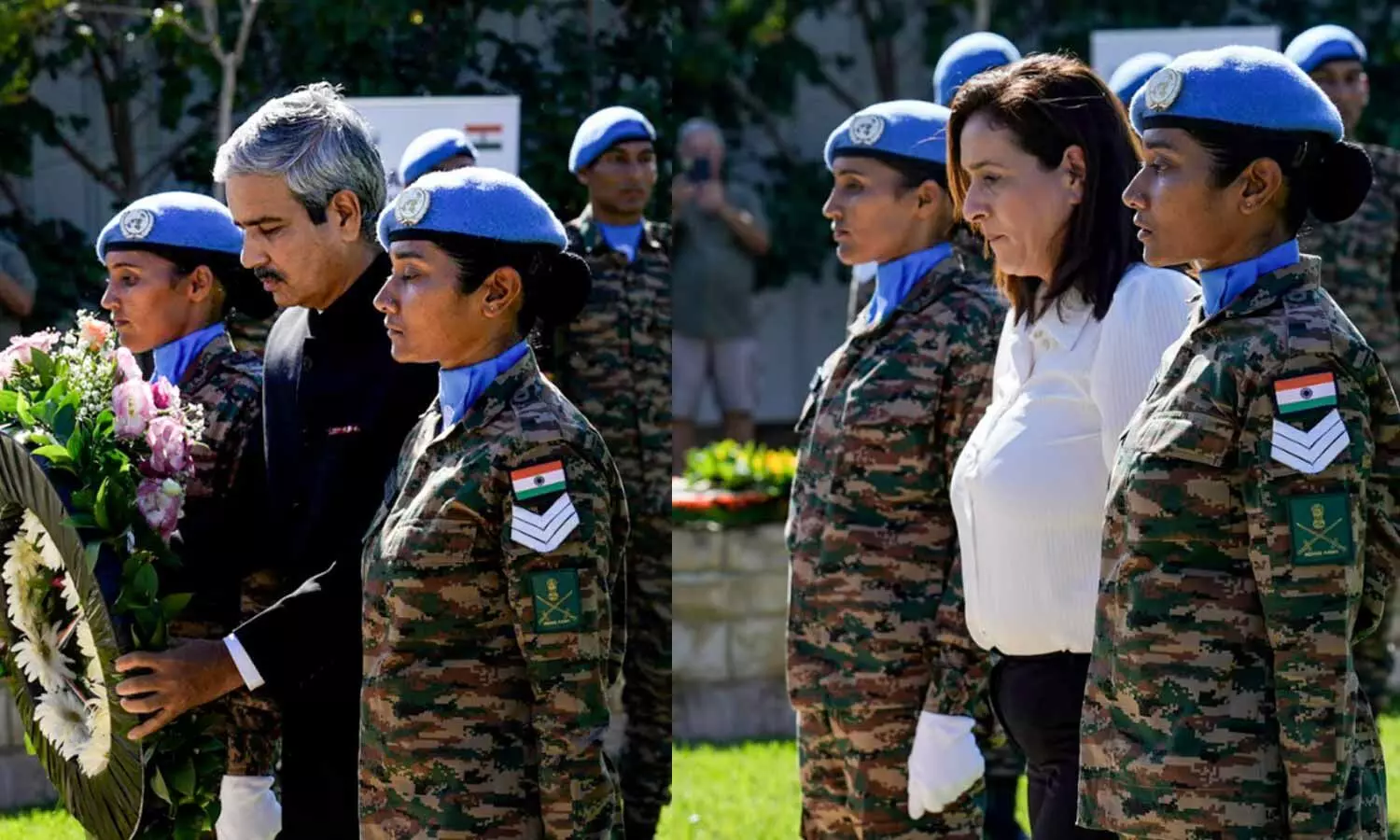
Haifa's liberation by Indian soldiers integral part of history: Israeli city's deputy mayor
Haifa (Israel): Israel's northern coastal city of Haifa on Wednesday commemorated the valour and sacrifice of Indian soldiers who liberated it from Ottoman forces during World War I, with Deputy Mayor Sarit Golan-Steinberg saying their “courage and sacrifice” remain an integral part of the city's history.
The Haifa municipality, in association with the Embassy of India, organised the annual Haifa Day commemoration, highlighting the role played by Indian cavalry regiments in the Battle of Haifa on September 23, 1918.
"Haifa has not forgotten the courage and sacrifice of the Indian soldiers," Golan-Steinberg said.
"Their story remains an integral part of the history of Haifa and an important part of the close ties between Haifa and India,” she said, highlighting the annual commemorations and memorials across the city as "symbols of the historic connection".
As part of efforts to familiarise younger generations with the episode, students from the Ironi Gimel school attended the ceremony and learnt about the Battle of Haifa, the role of Indian soldiers and the enduring ties between India and Israel.
The municipality has also incorporated the story of Haifa’s liberation by Indian soldiers in school history textbooks and organises lectures at schools to make youngsters aware of its “real” history, contrary to the belief that the Britishers liberated the city.
History textbooks in Haifa now teach the story to students from classes 3 to 5, while the Haifa Historical Society has been visiting schools over the past decade to recount the role of Indian soldiers in the liberation of the city.
Haifa Mayor Yona Yahav had last year recalled that he grew up believing that British forces had liberated the city until research by the Historical Society established that Indian troops had played the decisive role.
“In every school we are changing the texts and saying that it wasn’t the British but the Indians who liberated us,” Yahav had said.
Meanwhile, Indian Ambassador to Israel J P Singh paid homage to the fallen soldiers at the Haifa Cemetery by laying a wreath and recalled the exceptional courage of Major Thakur Dalpat Singh, popularly known as the “Hero of Haifa”.
Singh said the Battle of Haifa remained an “important chapter in the shared history of India and Israel”.
Major Dalpat Singh was awarded the Military Cross for his bravery. Accompanied only by his trumpeter, he charged an entrenched machine-gun position, killed or scattered its crew and captured the gun, along with the commandant of a regiment and another officer.
He was critically wounded by machine-gun fire and later succumbed to his injuries. Captain Aman Singh Bahadur then assumed command and rallied his men in the final charge.
The Jodhpur Lancers lost eight men and suffered 34 wounded, while capturing more than 700 prisoners, 17 field guns and 11 machine guns.
Captain Aman Singh Bahadur and Dafadar Jor Singh were awarded the Indian Order of Merit, while Captain Anop Singh and Second Lieutenant Sagat Singh received the Military Cross for their bravery.
Indian Army commemorates September 23 as Haifa Day every year to honour the Mysore, Hyderabad and Jodhpur Lancers, which formed part of the 15th Imperial Service Cavalry Brigade that took part in the battle.
The Indian cavalrymen, armed with lances and swords, charged Ottoman positions on the rocky slopes of Mount Carmel and helped capture the strategically important city.
The Battle of Haifa has been described by military historians as one of the last major classical cavalry actions of its kind and as an instance "when a fortified town was captured by cavalry on the gallop".
The Haifa battle formed part of the wider Allied campaign against Ottoman forces in the Middle East during World War I. More than one million Indian soldiers served during the war, with over 74,000 Indian troops losing their lives, including more than 4,000 in the Middle East.
About 900 Indian soldiers are interred in cemeteries in Haifa, Jerusalem and Ramle. Memorials to Indian soldiers exist at all three locations, including those who were of Jewish descent.
The Embassy of India, with Israeli authorities, has also established the India Trail in the Holy Land, highlighting sites associated with the service and sacrifice of Indian soldiers during World War I.
India has commemorated the Battle of Haifa in several ways. During Israeli Prime Minister Benjamin Netanyahu’s visit to New Delhi in January 2018, the iconic Teen Murti Chowk was renamed Teen Murti Haifa Chowk. The memorial had been erected in 1922 to commemorate the role of Indian cavalry in the battle.
Prime Minister Narendra Modi visited the Indian cemetery in Haifa during his visit to Israel in July 2017 and unveiled a plaque commemorating Major Dalpat Singh.
The 61st Cavalry, formed after Independence through the merger of the three Indian cavalry units, sent a contingent to Israel in 2018 for the centenary commemorations of the battle.
The Israel Post also issued a commemorative stamp in 2018 honouring the contribution of Indian soldiers to the liberation of Haifa.
Sri K.V. Ranga Reddy: A Flame of Courage in Telangana’s Liberation
Telangana High Court deferes verdict on Danam Nagender disqualification plea to Friday
Section 22-A: 1 Crore Acres Or 3 Lakh Acres?
Telangana CM Revanth Reddy orders probe on KCR farmhouse
CM Chandrababu inaugurates SV Museum and EV buses in Tirumala
SEMICON India 2026: Chip industry push gets boost as PM Modi set to lead inaugural session on September 17


