




- Two students killed in MVSR Engg College Dandiya event mishap
- DGP Anand flags off rally for drug-free India
- Congress seeks TJS support for Graduate MLC elections
- 10 arrested in Rs 1.30 cr kidnap-for-ransom case
- Suspended inspector had amassed 2.8 cr assets
- Nalgonda pitted against MBNR on water issue
- Saddula Bathukamma: A floral celebration of Telangana’s culture and traditions
- FSSAI mulls ban on added sugars in infant foods
'Important ally of US': Rubio cites India in defence of Russia waiver
In Short
US Secretary of State Marco Rubio defends Trump's 60-day Russia sanctions waiver, highlighting India's importance as a US partner and its continued dependence on Russian energy.

Share :
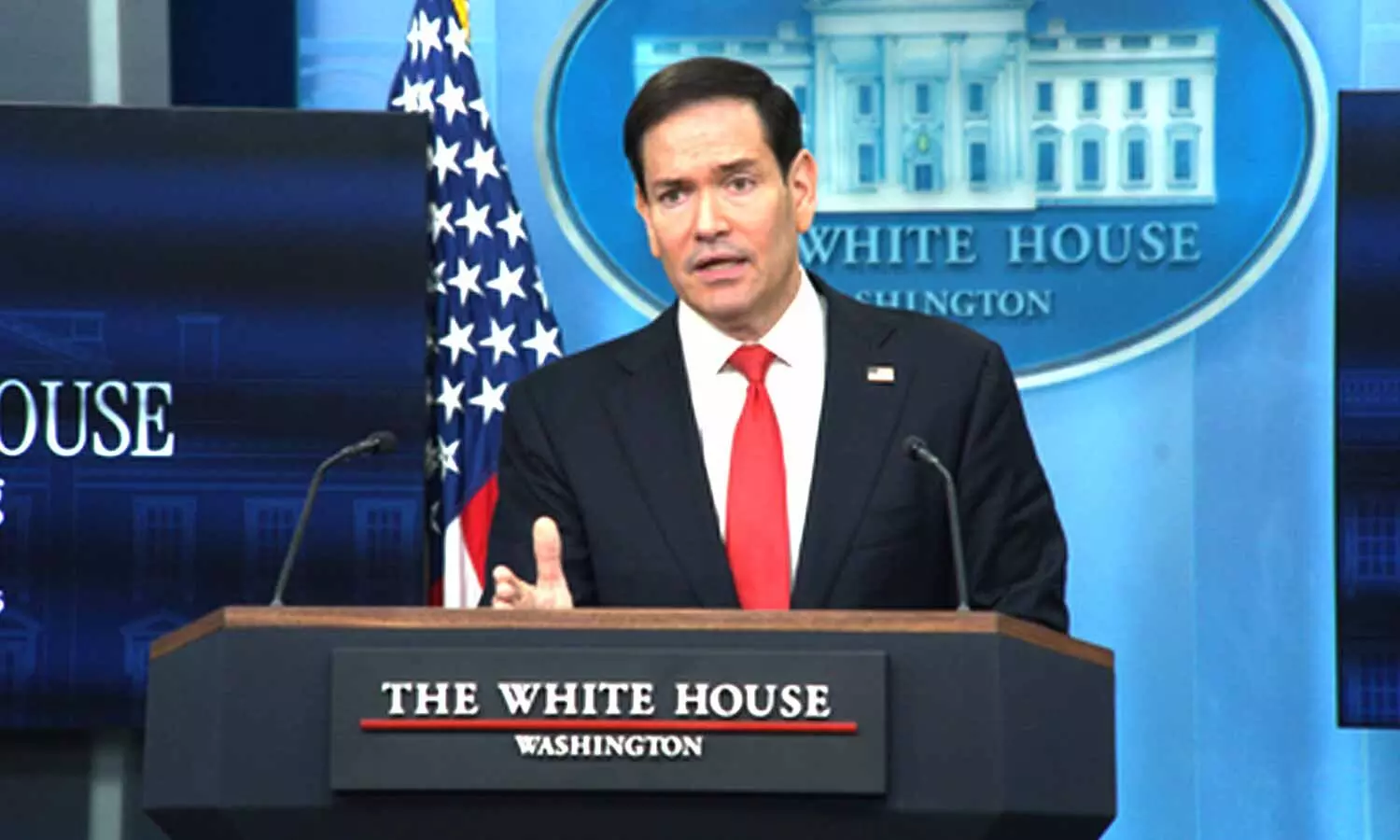
'Important ally of US': Rubio cites India in defence of Russia waiver
Washington: US Secretary of State Marco Rubio has defended President Donald Trump's decision to grant a 60-day waiver from sanctions linked to Russia, citing India as important partner to US, and its dependence on Russian energy, warning that imposing tariffs and sanctions simultaneously could have serious consequences for the global economy.
Speaking to reporters at Joint Base Andrews on Saturday, Rubio said the administration needed time to assess the wider economic impact of the measures, particularly as conflicts in the Middle East and Ukraine were disrupting global energy supplies.
His remarks came in response to criticism from Republican Senator Ted Cruz, who described the waiver as a mistake that would benefit Russian President Vladimir Putin.
"Well, there are other countries – the problem is these sanctions were not just sanctions on Russia. They include tariffs on a number of countries – India, for example, and others," Rubio said.
He said Trump wanted to use the 60-day period to examine the potential consequences of enforcing both sanctions and tariffs.
Rubio specifically acknowledged India's efforts to diversify its energy purchases while explaining why Washington considered an immediate disruption of Russian supplies difficult.
"And then you’ve got countries like India, for example, that have voluntarily diversified their energy portfolio but are still getting a substantial amount of energy from Russia because it’s hard to pivot from one day to the next, but they’re also an important ally and partner of the United States," he said.
Rubio said the administration was weighing several developments affecting international energy markets, including the conflict involving Iran, disruptions around the Strait of Hormuz, attacks by the Houthis on Saudi Arabia and damage to energy infrastructure during the Russia-Ukraine war.
He argued that these developments were placing additional pressure on global prices and complicating decisions about sanctions enforcement.
Rubio said the waiver provisions reflected an understanding that the government might need time to examine the consequences of the legislation.
"So, the President – we need that period of time to sort of study all this and figure out what the right combination is," he said.
Asked whether the waiver and a separate arrangement involving Russian diesel effectively provided concessions to Putin, Rubio rejected the suggestion that restricting American access would prevent Russian diesel from reaching international markets.
"Well, that diesel was going to be sold one way or the other," he said.
Rubio said the United States had previously issued a 60-day waiver involving Russian oil when shipping through the Strait of Hormuz faced difficulties.
He also warned that overlapping international conflicts were creating economic pressures extending beyond the countries directly involved.
"So yeah, these conflicts around the world are starting to crash into each other, and they’re having an impact not just on global oil and diesel prices, but on economics," Rubio said.
He acknowledged that Americans were paying higher energy prices, while suggesting that some other countries faced considerably more severe economic pressures.
The latest remarks underline the competing considerations confronting Washington as it seeks to maintain pressure on Moscow while managing its economic relationships with major energy-importing countries.
India has maintained that its energy procurement decisions are guided by national requirements, affordability and supply security. Russian crude became an important component of India's import basket following the disruption of international energy markets after Russia's invasion of Ukraine in February 2022.
TVK plans 3rd state conference to celebrate electoral success
Kolkata stampede: Death toll rises to 19, CM Adhikari announces Rs 2.5 lakh compensation, job for victim’s families
Scheduled power cuts for Telangana industry soon?
Naidu sets higher vote-share target
Negligence During Municipal Polls: SEC warns officials of suspension, transfers
Tensions rise amid TDP-YSRCP showdown in AP local polls


