




- 'I am consulting legally to shut down KPSC, thieves are stationed there': Karnataka CM Shivakumar
- 'In politics, 1+1 is not 2 but 11': Udit Raj on SP-Congress alliance
- 'Theft of democracy': BJP slams Congress over Sonia Gandhi's voter roll entry in 1980
- India, OPEC agree to further strengthen energy ties
- Only T20I: Japan captain Kendel Kadowaki proud despite narrow defeat to India
- Python used for dance during Ganesh immersion in Hyderabad rescued
- Rani Mukerji's mother Krishna Mukerji passes away at 75, family requests privacy
- 177 taluks now: BJP mocks Karnataka govt as Gadag added to expanded drought list
Media Freedom: US and India
In Short
The debate over media freedom has intensified after US President Donald Trump restricted White House access for CNN, MSNBC and Politico. The controversy highlights key differences between US and Indian media regulation, press freedom and editorial independence.

Share :
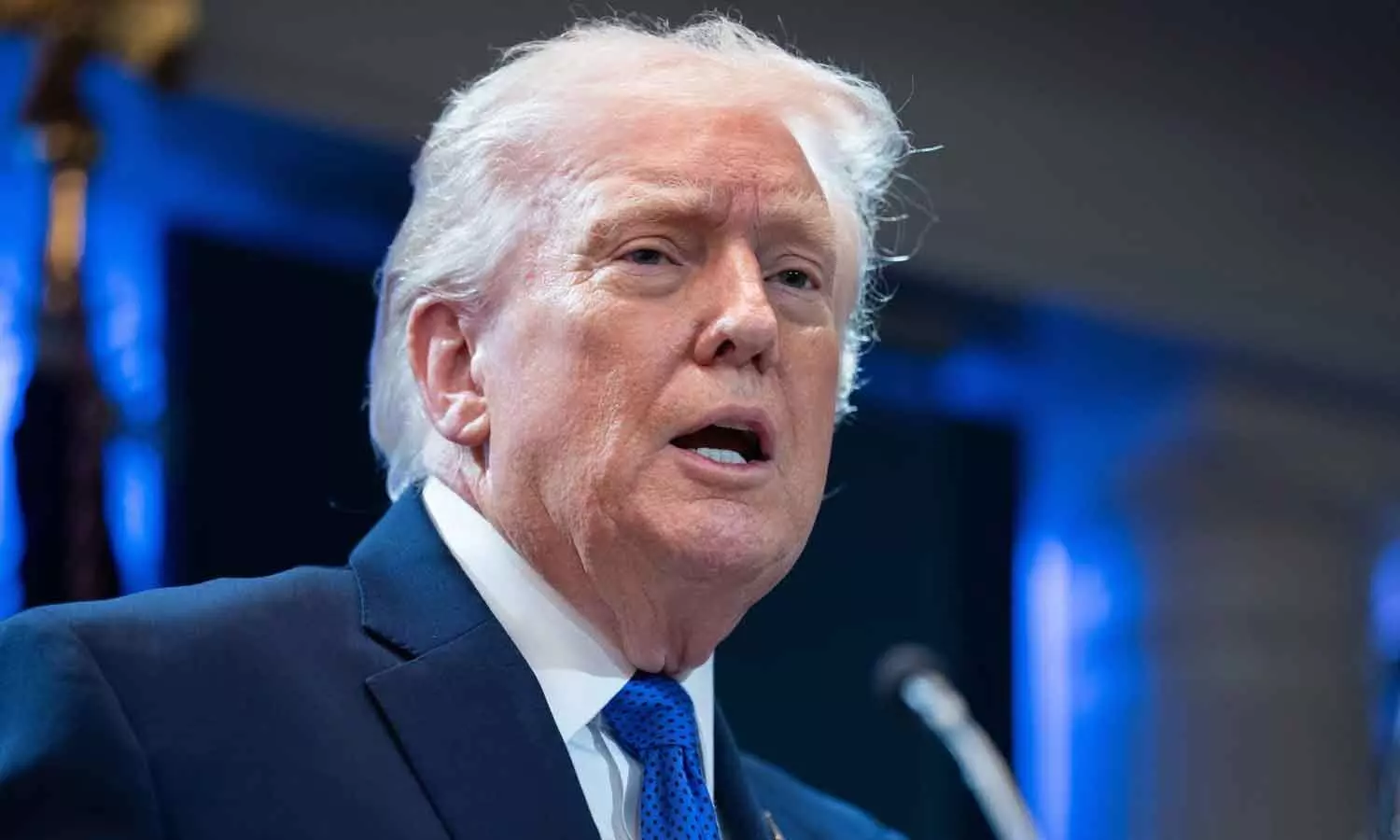
US President Donald Trump
US President Donald Trump has barred CNN, MS NOW and Politico from the White House, accusing the outlets of publishing what he describes as “fake news”. He has also indicated that other media organisations could face similar action. The move has triggered a wider debate over the relationship between the government and the media.
What is interesting is that Trump has said his decision was not based on any single recent report. He has described the action as a response to what he considers negative or false coverage accumulated over several years. He has also cited the Biden administration’s spending on Politico subscriptions as one of the reasons for his decision.
The White House has maintained that the outlets remain free to publish and that the dispute concerns access to the White House, rather than their right to operate or broadcast. The administration has argued that access to the White House, briefing-room seats and presidential press pools is not an automatic right.
The three organisations, however, have challenged the decision in federal court. CNN, MS NOW and Politico argue that the restrictions amount to retaliation for their reporting and violate First Amendment protections as well as due-process rights. The case is now before the courts, which will have to examine whether the administration’s stated reasons and the manner in which access was withdrawn comply with the Constitution.
What is significant is the response from the American media establishment. The affected organisations have said they will defend their constitutional rights, while the White House Correspondents’ Association and other press groups have raised concerns about selective restrictions on access. Major television networks also temporarily suspended participation in the White House television pool after the restrictions were imposed.
This raises an interesting question for India: how would a similar confrontation play out here?
The institutional and regulatory frameworks are different. There are also differences between print, digital media and television broadcasting. Yet the broader issue is the same — how much leverage should any government have over media organisations whose reporting it dislikes?
In India, a media organisation facing official displeasure may have to deal with a range of pressures, including legal notices, regulatory scrutiny or questions relating to government advertising. It would, however, be too sweeping to suggest that every media house or every journalist would automatically react in the same manner. The response would depend on the organisation, the nature of the dispute and the facts of the particular case.
There is also the question of whether journalists and their professional bodies can provide effective institutional support when an individual reporter or media organisation comes under pressure. Opinions on this issue often differ sharply, and journalists’ organisations themselves have sometimes been criticised for responding selectively to controversies.
Intolerance towards critical media coverage is not a new phenomenon in India. The Emergency remains the starkest historical example. During that period, the press faced government censorship, and newspapers were subjected to censorship before publication. The experience remains an important reminder of the dangers of excessive state control over the media.
In the present environment, the nature of pressure is different. Governments at various levels have considerable influence over the advertising ecosystem, while politicians, public officials, and private entities use legal notices and litigation when they believe a report is defamatory or inaccurate. Such legal remedies are legitimate when used within the law, but they can also raise concerns when they are perceived as attempts to intimidate legitimate journalism.
The growth of social media has made the situation even more complicated. The spread of misinformation and fake news is a genuine problem, but the answer cannot simply be to allow governments or political authorities to decide what constitutes acceptable journalism. At the same time, freedom of expression does not place journalists or media organisations above the law.
The American system provides an interesting contrast.
The First Amendment gives particularly strong constitutional protection to freedom of speech and the press. The government cannot ordinarily punish a broadcaster merely because it dislikes the broadcaster’s editorial position. The US Federal Communications Commission has itself recognised the importance of protecting broadcasters’ editorial discretion from governmental intrusion.
This does not mean that American broadcasters are completely outside regulation. Broadcast licences exist because use of the radio-frequency spectrum is regulated. But a crucial distinction must be made: a government cannot simply equate disagreement with editorial judgment with a legal ground for cancelling a broadcast licence.
This distinction became particularly relevant in July when Trump criticised ABC and NBC after they declined to interrupt their regular programming to carry his speech on election integrity. Trump said the networks should have their broadcast licences revoked and accused them of protecting the political left, although those allegations were not accompanied by evidence in the remarks reported at the time.
The issue of the licence, however, is legally different from the present White House dispute. CNN and MS NOW are television news organisations, while Politico is a news organisation operating primarily through digital and other media. The present action concerns access to the White House and participation in its press operations; it is not a general prohibition on these organisations broadcasting or publishing.
This distinction is important when comparing the US and India.
In India, broadcasting operates within a substantially regulated technical and statutory framework. At the same time, freedom of speech and expression is protected under Article 19(1)(a) of the Constitution, subject to the reasonable restrictions specified in Article 19(2).
There is also a significant difference between print and broadcasting. A newspaper does not require a government licence to decide whether to publish a Prime Minister’s speech. A television broadcaster, however, operates within a regulated broadcasting environment involving spectrum and other statutory requirements.
That does not mean that a broadcasting licence gives the government a general power to dictate editorial content. Nor should the regulatory framework be interpreted as a blanket licence for official interference in editorial decisions. Any regulatory or legal action would have to rest on the applicable statutory provisions and constitutional limitations.
So, which system gives the media greater freedom?
There is no simple answer. The American model places an exceptionally strong constitutional barrier between government and editorial decision-making. The Indian framework combines constitutional protection of speech with a more extensive regulatory structure for broadcasting.
The real test of media freedom, therefore, is not whether a government likes a particular report or whether a media house supports or opposes a particular political position. The test is whether journalists can report facts, question those in power and publish criticism without unlawful retaliation — and whether governments, media organisations and journalists alike are willing to operate within the law.
The Trump-CNN-MS NOW-Politico dispute is now before the US courts. Its eventual outcome may provide another important judicial examination of where the line lies between legitimate control over access to government premises and unconstitutional retaliation against the press.
For India too, the larger lesson is worth examining: regulation is necessary, accountability is essential, but editorial independence cannot be reduced to government permission.
Punjab: ED conducts searches in Delhi, Chandigarh, Mohali over GMADA 'scams'
'Unconstitutional': Pakistani women's rights body on arrest of Imran Khan's sisters
'I am consulting legally to shut down KPSC, thieves are stationed there': Karnataka CM Shivakumar
Bihar EOU conducts searches at four locations linked to Corporation GM
Media Freedom: US and India
Big schemes pointless if women's safety can't be ensured, says Priyanka Gandhi on Jamui case
Punjab: ED conducts searches in Delhi, Chandigarh, Mohali over GMADA 'scams'
Bihar EOU conducts searches at four locations linked to Corporation GM
Good Scheme Needs Good Execution
Roshibina Devi confirms her third successive Asian Games Wushu medal after QF win


