




- Adigram project sets a digital benchmark
- Rajamahendravaram police commissionerate approved
- Indian-born cheetah gives birth to 5 cubs in Kuno
- Accountability will be fixed if people’s grievances not resolved: Adityanath
- Businessman duped of Rs 30L in digital arrest
- Naidu targets 5 lakh women entrepreneurs in AP
- Assistant SI shot at in Amritsar
- Farmers raise sugarcane dues, MSP, input costs at Congress rally
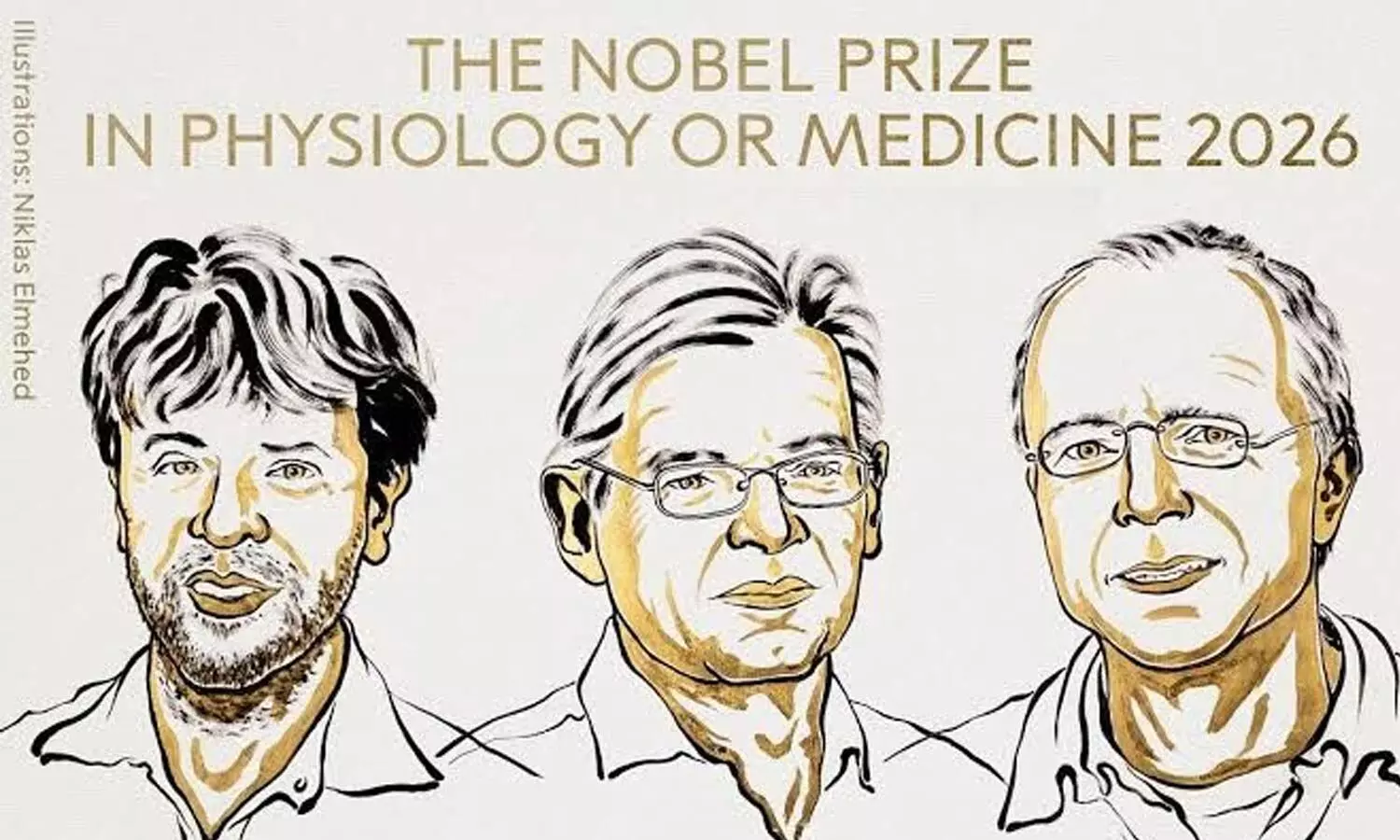
Nobel medicine goes to 3 scientists for research into brain activity
In Short
Optogenetics opened what the Nobel assembly called a new era in neuroscience: the discovery of a light-controlled switch to turn on and off nerve cells and circuits in the brain to better learn how it works - to start unravelling the pathways that lead to behaviour and disease

Share :
Nobel medicine goes to 3 scientists for research into brain activity
Stockholm: The Nobel Prize in medicine was awarded Monday to three scientists working on the mechanisms the brain uses to switch on, or off, the activity of individual nerve cells. Karl Deisseroth, 54, Peter Hegemann, 71, and Georg Nagel, 73, have carried out research into light-gated ion channels and optogenetics. The Nobel Assembly lauded their work, writing on X that the method "is now being used in laboratories around the world to reveal the brain's mysteries". The assembly said Deisseroth is based at Stanford University in California, while Hegemann is at Humboldt University in Berlin and Nagel at the University of Wurzburg, also in Germany. Optogenetics opened what the Nobel assembly called a new era in neuroscience, the discovery of a light-controlled switch to turn on and off nerve cells and circuits in the brain to better learn how it works - to start unravelling the pathways that lead to behaviour and disease. It started when Hegemann explored how a single-celled type of green algae can swim toward light.
He and Nagel discovered a particular protein that, when illuminated by blue light, opens a channel to create an electrical impulse. Putting that protein into other cells makes them light-sensitive.
Deisseroth then worked with the gene that controls that protein to create a light-controlled switch for nerve cells in the brains of living mice. Deisseroth, a self-described night owl, said he was up late in his Northern California home working on papers and emailing his students. He had just gone to lie down when he got the call from the Nobel assembly.


