






- Amit Shah unveils bust of Ajit Pawar in Pune; reveals the 'secret' behind his entry into Mahayuti
- Anbumani Ramadoss seeks urgent recruitment as TN govt colleges face faculty shortage
- Trinamool infighting: Ritabrata faction's X account suspended, blames Mamata group
- Apple Smart Glasses May Launch in 2027, Takes on Meta Ray-Bans
- Mahesh Babu’s Varanasi Team Teases A Massive Update
- Adani Group a hard-asset play, Jefferies bullish on six firms amid $51 billion capex
- Drought forcing K'taka farmers to sell cattle at throwaway prices: BJP
- Jay Shah Reappointed As ICC Chairman For Second Term, Elected Unopposed
Rights body raises alarm over deepening repression, democratic erosion in Pakistan
In Short
The concerns were raised by the HRCP's general body at the conclusion of its 40th annual general meeting.

Share :
Human Rights Commission of Pakistan (HRCP)
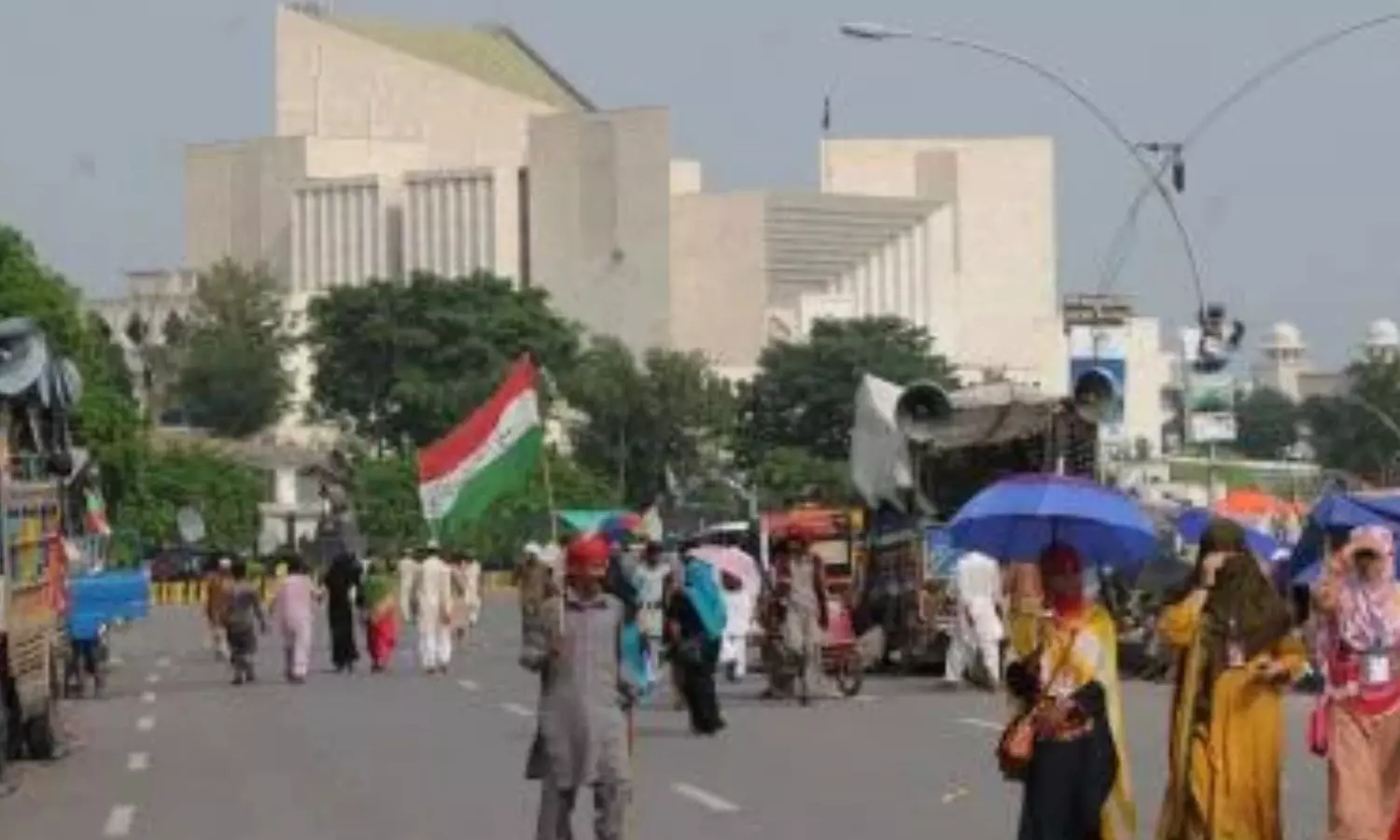
Islamabad: The Human Rights Commission of Pakistan (HRCP) has raised concerns over the escalating assault on constitutional democracy and fundamental rights across the country, warning that freedom of expression is being steadily eroded through censorship, surveillance, restrictive regulations and the misuse of criminal laws.
The concerns were raised by the HRCP's general body at the conclusion of its 40th annual general meeting.
The rights body described the 10-year sentences handed down to human rights lawyers Imaan Mazari-Hazir and Hadi Chattha by a Pakistani court as a chilling example of how individuals exercising their constitutional rights can be targeted.
According to the HRCP, Pakistan’s 26th and 27th Constitutional Amendments have seriously undermined judicial independence and institutional checks and balances.
The rights body called for review of both amendments, withdrawal of lifetime immunity for public officeholders, and an end to military trials of civilians.
“Any further constitutional amendments must be grounded in genuine, cross-party political consensus. This must also apply to proposals to create new provinces, which must not be pursued in ways that undermine Pakistan’s federal structure. Nor should new provinces be created at the expense of stronger local governments,” it added.
The HRCP highlighted the persistent violence, discrimination and blasphemy-related persecution faced by religious minorities in Pakistan.
It said that impunity remained entrenched in cases ranging from attacks on Ahmadiyya places of worship and mob violence, including an assault on a Christian doctor in the Sheikhupura region of Punjab province, to the framing of individuals in false blasphemy cases.
HRCP urges the Pakistani authorities to constitute the National Commission for Minorities without delay and to hold those inciting violence and orchestrating forced conversions accountable.
Describing enforced disappearances as a grave violation of the right to liberty and due process, the rights body said that the continued detention of activists, including Mahrang Baloch, Ali Wazir and Idris Khattak, demonstrated Pakistani authorities’ failure to protect those demanding accountability.
HRCP called for all detainees to be produced before competent courts, the repeal of arbitrary detention powers under Pakistan’s Anti-Terrorism Act and the abolition of internment centres.
The rights body also demanded the withdrawal of the proscription of the Joint Awami Action Committee in Pakistan-occupied Kashmir (PoK).
Expressing concern over the worsening security situation in Balochistan, the rights body called for an open, national debate and demanded the restoration of cross-border trade in the province to protect local livelihoods.
The HRCP raised alarm over the erosion of federalism and democratic representation in Khyber Pakhtunkhwa, citing the imposition of an emergency and governor's rule, the detention of the province's elected Chief Minister, and the mass arrests of former Prime Minister Imran Khan’s Pakistan Tehreek-e-Insaf (PTI) party workers in October 2026.
Highlighting the growing economic disparities in Pakistan, the rights body said that economic injustice has continued to deepen, with austerity measures and inadequate social protection imposing a disproportionate burden on low-income households.
“The state must also fulfil its responsibility to protect those most exposed to violence and discrimination, particularly women, transgender persons, and other marginalised communities, whose rights cannot remain merely promises on paper,” the HRCP noted.
INDIA Bloc Seeks Permission To Question CEC Gyanesh Kumar In Supreme Court, Submits 48 Questions On SIR
PM Modi arrives in Manila to attend ASEAN-India Summit and East Asia Summit
FM Sitharaman chairs 1st pre-Budget consultation with leading economists
Mekedatu Test for Vijay: Will He Take Up Tamil Nadu's Cause with Sonia
"It Was Between Modibhai and Me, Not Congress and BJP": Pitroda
Another Severe Cyclone Threatens AP; Fishermen Told Not to Venture into Sea till November 19


