






- Can AI solve the Riemann hypothesis, a 167-year-old problem?
- Dadasaheb Phalke International Film Festival Awards 2026: Check Out The Complete Winners List
- Anthropic CEO Dario Amodei puts culture before technical talent in hiring
- Youth Congress causes damage at Meta office in Hyderabad
- Petrol and diesel prices today in Hyderabad, Delhi, Chennai and Mumbai on 21 November 2026
- White House aide Stephen Miller predicts US' 'greatest two years'
- Trump cites India's growth to press Fed on rates
- Telangana Government launches logo and tagline contest for Godavari Pushkaralu
Trump ties Philippine trade to US defence role
In Short
At a White House news conference after his return from Asia, Trump said the two countries had reached a framework trade deal during his visit to Manila. He said lower Philippine tariffs and larger orders for American goods would help erase the US trade deficit with its ally.

Share :
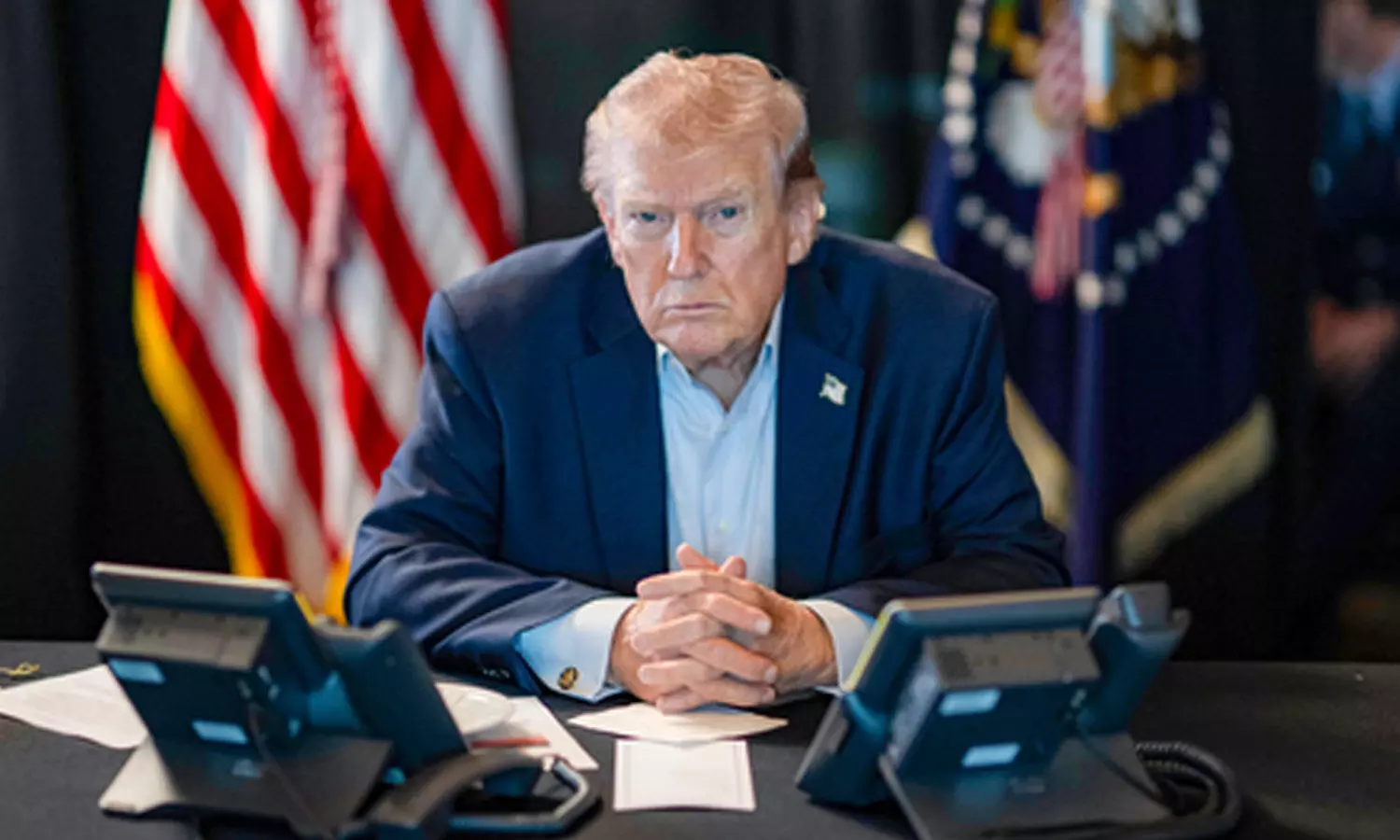
US President Donald Trump
Washington: US President Donald Trump said that he had pressed Philippine President Ferdinand Marcos Jr. to buy all his country’s farm and energy imports from the United States, arguing that Manila would turn to Washington for help in a confrontation with China.
At a White House news conference after his return from Asia, Trump said the two countries had reached a framework trade deal during his visit to Manila. He said lower Philippine tariffs and larger orders for American goods would help erase the US trade deficit with its ally.
Trump singled out Brazil when describing his pitch to Marcos. He said the Philippines had been buying more farm products from Brazil than from the United States, even as it relied on Washington for its security.
“Is Brazil going to help them in case they get into a little skirmish with China?” Trump asked. “I don't think so.”
Trump said he had asked for US farmers to supply 100 per cent of Philippine agricultural imports from January 1. He made a similar demand on energy, saying the United States supplied about a fifth of Philippine purchases and that he wanted Manila to shift its business away from the Middle East.
Trump described both shifts as commitments. On tariffs, he initially described the agreement as providing for sharp cuts. Later in the news conference, he said the Philippines would stop charging tariffs on American goods. He did not give rates for individual products.
Secretary of State Marco Rubio, speaking alongside Trump, said the president had personally negotiated the reciprocal trade framework. Rubio said Washington was the Philippines’ main defence partner and argued that American workers should see a commercial benefit from the security commitment their country had made to Manila.
Defence sales were also on the agenda when Marcos received Trump for a state visit on Wednesday. Trump said the two sides had announced Philippine purchases of more than $2 billion in US-made military equipment. He expected the figure to rise but did not identify the equipment or give a timetable for additional orders.
Trump also cited a planned purchase by Philippine Airlines of 20 Boeing 787 Dreamliners with General Electric engines. He said the airline had been looking to Europe before deciding to buy American aircraft. He put the number of US jobs supported by the order at 47,000.
The aircraft were among more than $17 billion in commercial deals Trump said he secured during talks with Southeast Asian leaders. That figure covered the wider regional meetings in Manila. Trump said the Philippines and Malaysia had also agreed to use US technology and services for their cloud infrastructure.
The United States and the Philippines signed a mutual defence treaty in 1951. It commits each country to act, through its constitutional processes, to meet the common danger posed by an armed attack on either in the Pacific. The two countries also conduct regular military exercises.
The alliance has particular significance in the South China Sea, where Beijing and Manila have competing maritime claims. Chinese and Philippine vessels have repeatedly confronted each other in waters claimed by both countries. Washington has said the treaty covers armed attacks on Philippine armed forces, public vessels and aircraft, including those of its coastguard, in the South China Sea.


