




- vHigh command’s decision final on alliance, says new UP Cong chief amid seat-sharing concerns with SP
- CEC Gyanesh Kumar must resign immediately: KR Nagaraju
- Raj Thackeray demands scrapping of 'illegal' SIR drive, return to ballot papers
- India, US discuss advancing security partnership, maritime cooperation in Indo-Pacific
- World Space Week: The Future of Space Exploration
- Delhi: Ambedkar University student protest enters 7th day over 'iron cage' security restrictions
- Major fire breaks out at plastic scrap godown in Warangal
- TN bypolls: FIR against Udhayanidhi Stalin for involving child in Dharapuram campaign
Assembly Poll Process in Four States to Begin Next Week
In Short
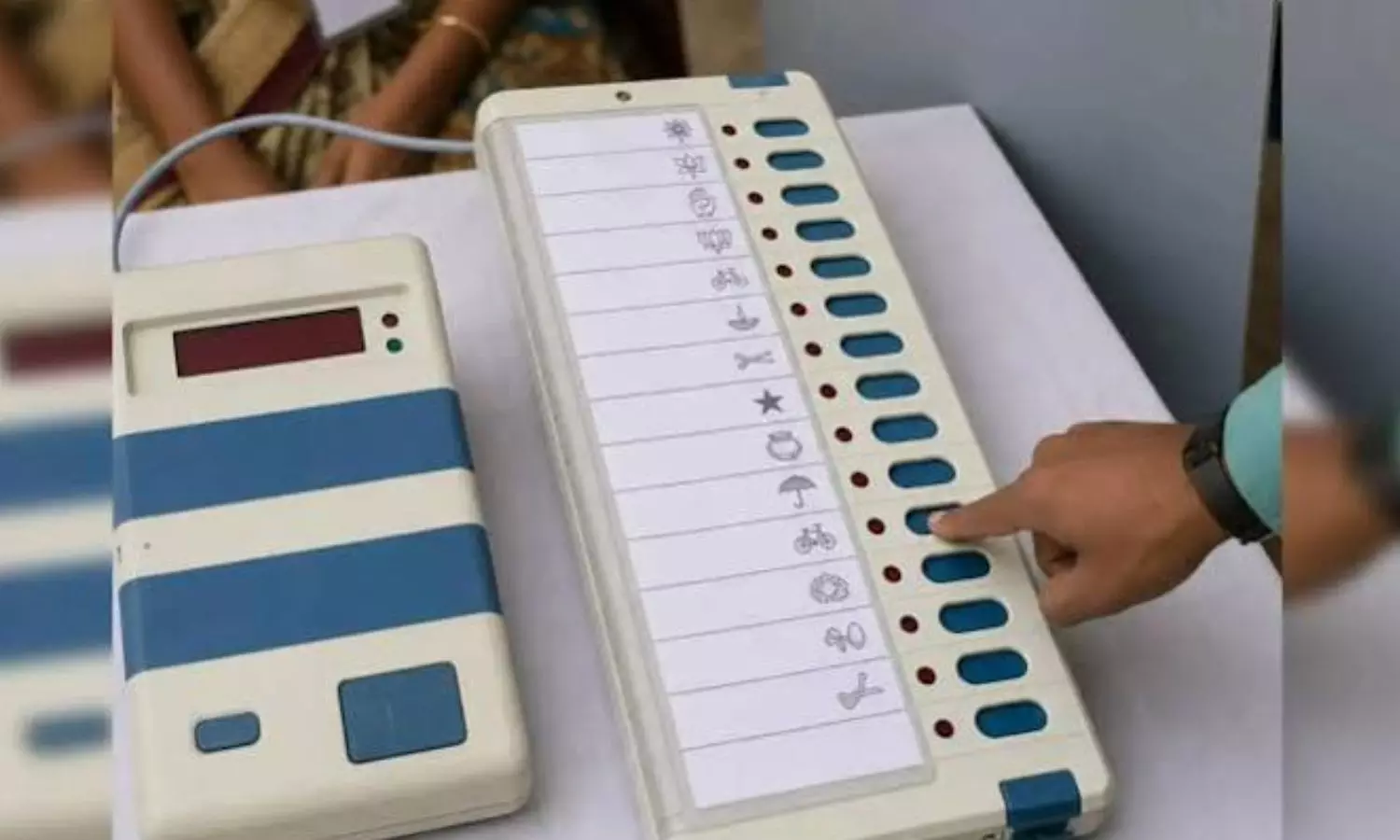
The Election Commission of India is going ahead with its process to conduct elections in the four poll-bound states, Goa, Punjab, Uttarakhand and Manipur, from next week.

Share :
conduct elections in the four poll-bound states, Goa, Punjab, Uttarakhand and Manipur, from next week.
The Election Commission of India is going ahead with its process to conduct elections in the four poll-bound states, Goa, Punjab, Uttarakhand and Manipur, from next week. It is not yet known when the EC officials will visit UP whose Assembly term ends on May 22, 2027 while the term of other assembly’s end in March 2027.
Normally, the practice is that the full Commission consisting of the three Election Commissioners visits the poll-bound states ahead of the announcement of the election schedule. But this time only senior officials at the level of deputy commissioners would be visiting these states.
These officials will take up a first-level check on electronic voting machines and paper trail units used in polling to ensure that there was no malfunction of these machines. The commission members will also hold a mock poll in the presence of representatives of all political parties. The commission members will also check if any data pertaining to the last election still remains in these units and if so it would be completely deleted. Once these machines pass all the diagnostic tests and are cleared as error-free, they would be sealed to prevent any unauthorised access before the next elections.
.
Irani Cup: Plan to bowl fuller in second innings paid off, says Rest of India captain Pant
After Salman Khan, Neha Dhupia, Neetu Kapoor reacts to paparazzi’s habit of clicking celebs' backside pictures
AI is a game-changer, but fallout for job market needs deft handling
vHigh command’s decision final on alliance, says new UP Cong chief amid seat-sharing concerns with SP
CM Chandrababu and Union Minister Shivraj Singh Chouhan Launch Rural Housing Program
Flydubai Crew, Israeli Passengers Clash After Attack on Smit Machchaar
UBT Morcha Against CEC In Mumbai
Poll Heat Picks up in UP. Cong-SP Differ on Seat Sharing
Rains likely in AP, Telangana amid cyclonic circulation
TN bypolls: CM Vijay to hold 40-km roadshow in Dharapuram as campaign ends today


