




- Major fire breaks out at plastic scrap godown in Warangal
- TN bypolls: FIR against Udhayanidhi Stalin for involving child in Dharapuram campaign
- Two killed in Siddipet road accident
- 'Early Olympics qualification gives preparation time': Manpreet after Asiad gold and LA 2028 berth
- 'Players were more disappointed than fans after WC...': Hardik on silencing critics with Asian Games gold
- Fire breaks out at Medchal checkpost, two shops gutted
- Pawan Kalyan pays tribute to Singeetham Srinivas Rao on demise
- Black flag march today against proposed TN's Pattinapakkam secretariat complex
Poll Heat Picks up in UP. Cong-SP Differ on Seat Sharing
In Short
Political heat rises in Uttar Pradesh ahead of the 2027 Assembly elections as BJP and SP intensify campaigns, while Congress-SP seat-sharing differences deepen.

Share :
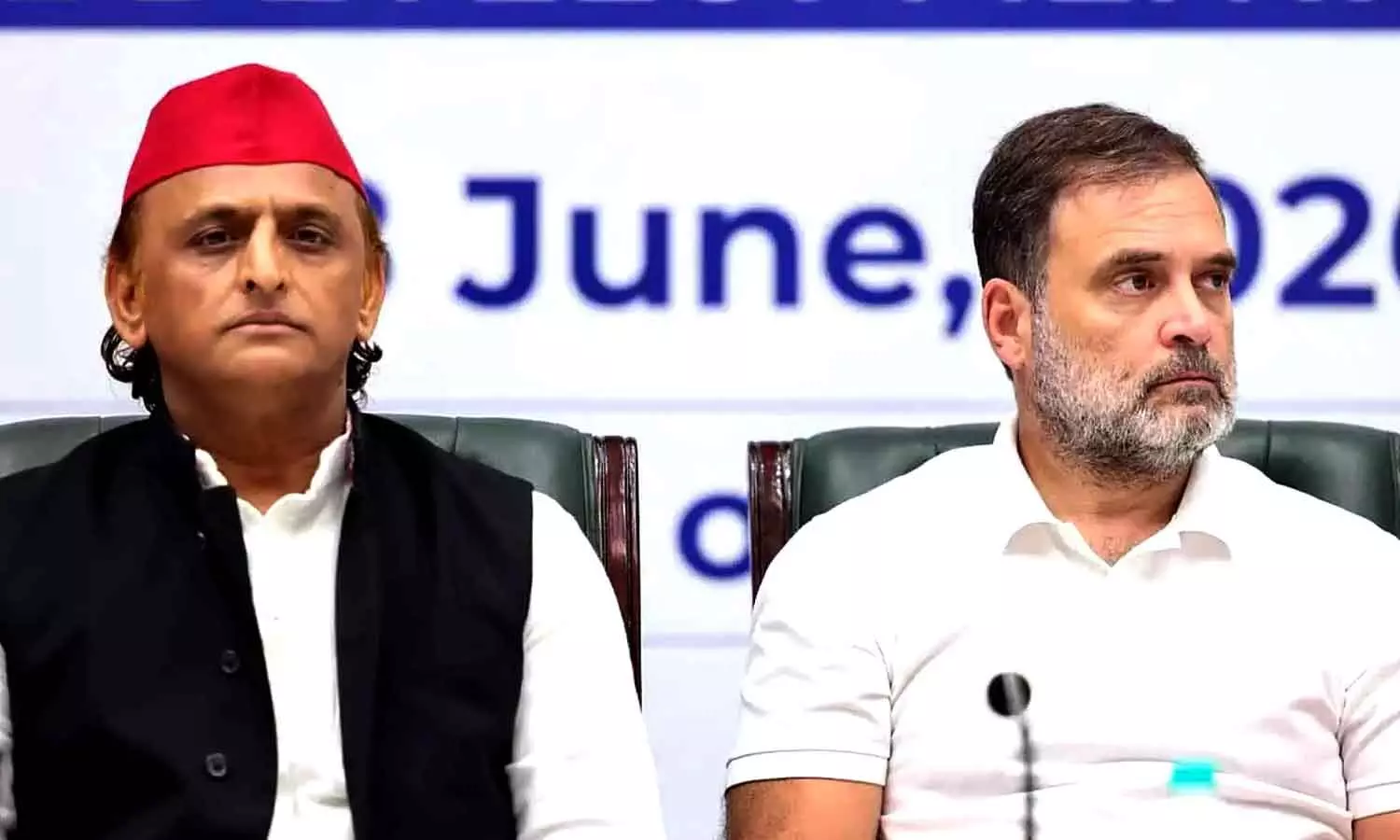
Poll Heat Picks up in UP. Cong-SP Differ on Seat Sharing
All eyes are on Uttar Pradesh, where the two main contenders, the BJP and the Samajwadi Party (SP), have begun their election campaigns, albeit without a formal launch. The speeches of Chief Minister Yogi Adityanath and SP chief Akhilesh Yadav indicate that both parties have moved well beyond preliminary preparations. With the 2027 Assembly elections approaching, they are strengthening their organisations, reaching out to voters and sharpening their political narratives.
The Election Commission of India is expected to announce the election schedule closer to the polls, which must cover all 403 Assembly constituencies. While the Bahujan Samaj Party (BSP) is also preparing for the elections in an effort to regain lost ground, the Congress is struggling to establish its independent political strength in the state.
The Congress faces a difficult challenge. Its prospects depend substantially on an understanding with the SP, but the two parties have yet to resolve their differences over seat sharing.
According to indications available earlier, the SP was unwilling to offer the Congress more than 20–25 seats. Its objective is to dislodge the BJP and secure the magic figure of 202 seats required for a majority in the 403-member Assembly. However, the Congress is seeking a much larger share, setting the stage for difficult negotiations.
In the 2022 Assembly elections, the BJP won 255 seats, while the SP secured 111. The question now is whether the BJP can consolidate its position and repeat its performance, and whether the SP can build an effective alliance to mount a serious challenge.
The Congress contested 399 seats in 2022 but won only two—Pharenda and Rampur Khas—securing just 2.33 per cent of the vote. It lost its security deposit in a large majority of the constituencies it contested. Despite this poor performance, the party has been seeking a substantial share of seats in the proposed alliance. Priyanka Gandhi Vadra led its campaign in 2022 under the slogan “Ladki Hoon, Lad Sakti Hoon”, but the campaign failed to translate into electoral gains. The party continues to face the challenge of rebuilding its grassroots organisation and constituency-level leadership.
The SP, meanwhile, is building its strategy around PDA—Pichhda, Dalit, Alpsankhyak, referring to backward classes, Dalits and minorities. It is seeking to mobilise these communities by emphasising political representation, social justice and the concerns of disadvantaged groups.
Akhilesh Yadav's PDA Yatra, launched from Rae Bareli, carries an additional political message. Rae Bareli is the Lok Sabha constituency of Leader of the Opposition Rahul Gandhi and has long been associated with the Congress. The SP's decision to begin its outreach from this constituency is therefore politically significant.
Political analysts view the SP's approach as a message to the Congress that it must accept a junior role in any alliance. The SP has questioned the Congress's independent electoral strength in Uttar Pradesh and maintains that the party can benefit only through a workable seat-sharing arrangement. If the differences remain unresolved, the SP could consider contesting a much larger number of seats on its own. The Congress party wants around 150 seats as part of seat sharing, but the SP feels that it does not have the strength to win more than 20 or 25, and that too if it agrees to an alliance.
The Congress has been out of power in Uttar Pradesh since 1989, while the SP has governed the state but has remained out of power since 2017. The BSP, led by Mayawati, has suffered a steep electoral decline, although it continues to retain a section of its traditional Dalit support base. Its performance could influence the broader contest, particularly where the opposition parties compete for overlapping sections of the electorate.
The BJP, meanwhile, is focusing on its governance record, infrastructure development and welfare delivery. The state government is also using digital platforms, including AI-generated videos and social-media content, to communicate its message and counter opposition criticism.
Preliminary survey reports offer sharply contrasting projections. Some surveys circulated by Congress and SP sympathisers suggest that the BJP could fall to around 125 seats, with the SP winning approximately 170. Other projections put the BJP at 265–270 seats, the SP at around 105 and the Congress at 22. However, these are preliminary reports, and it would be premature to come to a conclusion on which way the wind is blowing.
Anti-incumbency may be a factor, but its extent and impact remain open questions. The BJP is banking on its governance record and Yogi Adityanath's leadership, while the opposition is seeking to turn public grievances into an electoral challenge.
The SP is focusing its attacks on alleged misgovernance and the BJP's use of the bulldozer as a symbol of its approach to law and order. A key question is whether it can broaden its social coalition, including by attracting a significant section of Brahmin voters, without alienating its existing support base.
The political temperature in Uttar Pradesh is rising. The coming months will test the BJP's ability to defend its record, the SP's capacity to expand its coalition and the Congress's ability to negotiate a meaningful role in the opposition alliance. Seat-sharing negotiations, candidate selection and the response of voters across social groups could prove decisive in shaping the contest.
Poll Heat Picks up in UP. Cong-SP Differ on Seat Sharing
INDIA bloc victory matters more than individual party wins, says Akhilesh Yadav
Rains likely in AP, Telangana amid cyclonic circulation
TN bypolls: CM Vijay to hold 40-km roadshow in Dharapuram as campaign ends today
Singeetham srinivasa rao, director of iconic kannada films, passes away at 95
Delhi Police personnel misbehaved with women protesters, Amit must answer: Rahul Gandhi


