




Drug Menace: Time to Move Beyond Political Blame Games
In Short
The northeastern states face specific challenges because of their proximity to the Golden Triangle (Myanmar, Laos and Thailand), a major illicit drug-producing region.

Share :
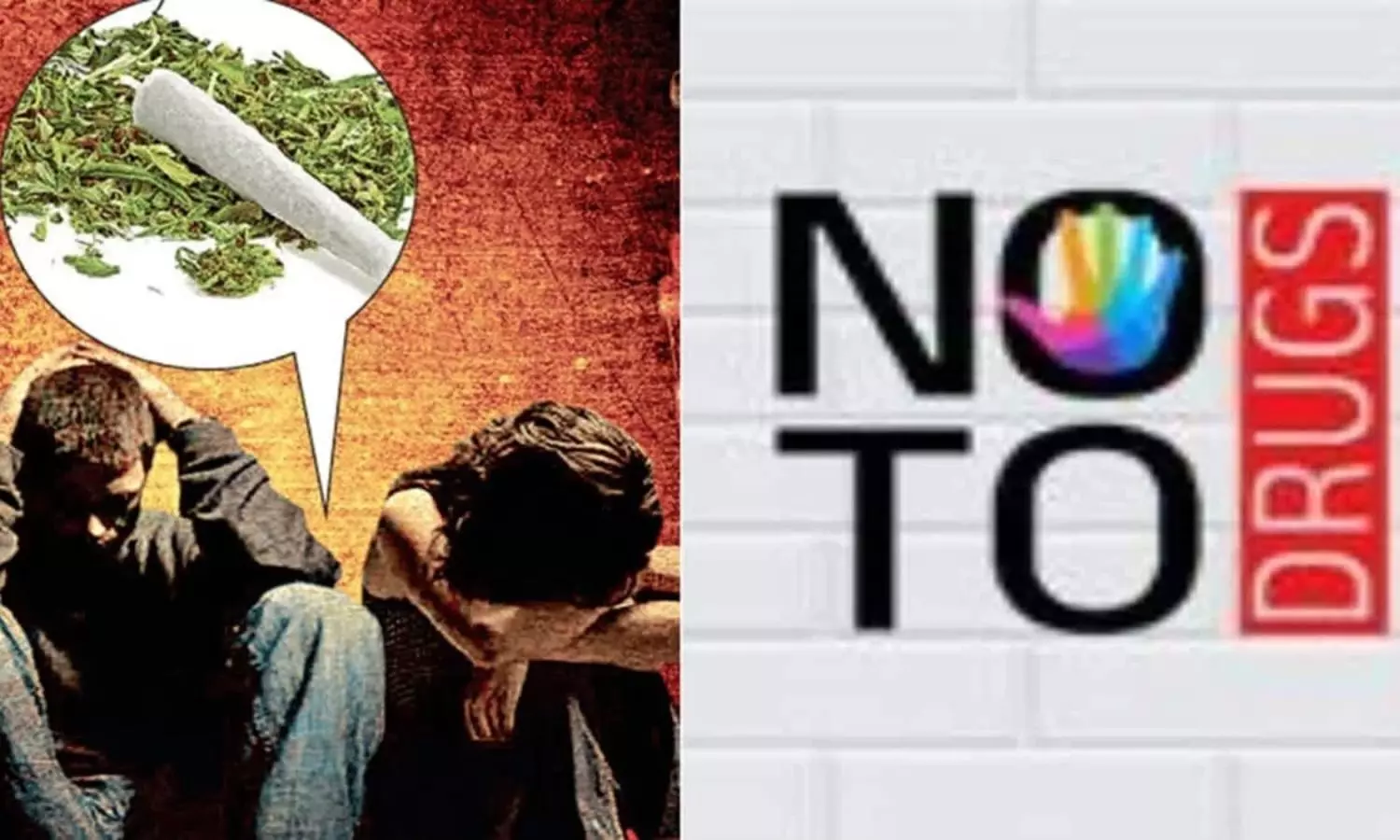
Drug abuse and trafficking are no longer problems confined to border states
Drug abuse and trafficking are no longer problems confined to border states such as Punjab, Manipur, Nagaland, Mizoram, Haryana, and Rajasthan, or parts of the northeastern region. The menace has spread to several other states, including Maharashtra, Kerala, Tamil Nadu, Andhra Pradesh and Telangana.
The northeastern states face specific challenges because of their proximity to the Golden Triangle (Myanmar, Laos and Thailand), a major illicit drug-producing region. Andhra Pradesh was identified in the 2019 National Survey as one of the states contributing substantially to India's estimated opioid-dependent population. Telangana, too, figured among the states with high estimated numbers of people injecting drugs.
Like Telangana, Mizoram also faces serious concerns over injecting drug use. The northeastern states, in particular, grapple with cross-border drug trafficking and opioid consumption.
According to the 2019 National Survey, the estimated prevalence of current opioid use among males was particularly high in Punjab at 18.20 per cent, followed by Himachal Pradesh at 11.20 per cent and Jammu and Kashmir at 9.21 per cent. These figures underline the gravity of the problem in these regions.
The irony, however, is that this serious issue has not attracted the attention it deserves from those who claim to be the real saviours of the Constitution, particularly the INDIA bloc and the Congress party. While the BJP has now intensified its campaign against the drug menace, its efforts appear to be largely confined to holding meetings and delivering speeches, rather than launching concrete programmes at ground level to eradicate the menace. By now they should have involved social organisations and activated youth wings like RSS, etc to create some model villages or urban clusters and showcase them to the country. Even social organisations have so far not shown much interest in taking it up in a mission mode.
The drug menace is a grave challenge that can cause irreversible damage to the social and demographic fabric of the country. Yet, political parties, whether in power or in the Opposition, seem more interested in using the issue for political point-scoring than in working towards its eradication.
Instead of fighting for a designated protest site, the CJP should have taken up a massive awareness campaign, ensuring that real change begins in rural areas. If people in villages can be educated and even one village can be made drug-free through the sustained efforts of organisations such as the CJP or any political party, that achievement can be showcased at the national level. It could inspire others and create a healthy spirit of competition among political parties and civil society organisations.
But what is happening instead? Rahul Gandhi visits Punjab, criticises the AAP government and makes a pointed reference to Chief Minister Bhagwant Mann, claiming that he was drunk when he met him on the premises of Parliament House. Political leaders then come up with a 'Khatakhat' guarantee, promising to eradicate the menace if voted to power.
They need to ask themselves what they have done over the years to curb this problem. What has the INDIA bloc done to educate people and mobilise communities against drug trafficking? How many times has it raised the issue in Parliament or in State legislatures? Isn't the loss of young lives far more serious than 'Vote Chori'?
It is time to end the blame game and demonstrate genuine concern for the well-being of the country's youth. The Congress party should open its 'Mohabbat Ki Dukan' in rural areas in particular and enthuse young people to take up the cause of making their villages drug-free.
This single issue could give the Opposition considerable political traction if it can demonstrate tangible results by creating drug-free villages and educational institutions, particularly in rural areas. It could begin by taking up the challenge in Congress-ruled states. Rather than merely promising a drug-free society, the party should demonstrate that it has the political will and organisational commitment to make it a reality.
AP MPTC ZPTC election Live Updates: Polling Under Way for parishad elections
EAM Jaishankar meets Antigua and Barbuda Governor-General, interacts with Indian community
K'taka CM thanks PM Modi for Rajyotsava wishes; seeks drought relief, decision on demands of sugarcane farmers
Kumaraswamy hits back at Priyank Kharge over derogatory remark, questions his family’s contribution to Gurmitkal
Weather Forecast For Rain In AP and Telangana
NTR Collector Inspects Nunna Polling Booth, Urges Voters to Strengthen Democracy


