






- Bengaluru Metro's growth a victory over traffic jams, says BJP MP Surya; thanks PM Modi
- My phone is being tapped, alleges Rahul Gandhi
- Traditional monetary policy losing effectiveness amid prolonged supply shocks: CEA Nageswaran
- Ramayana Joins ₹1,000 Crore Club In Just 8 Days
- Microsoft Outage Explained: What Caused Microsoft Services to Crash Worldwide?
- Naidu talks about P4, elimination of poverty, etc in fireside chat
- Satheesan-Sukumaran Nair differences cleared; CM to visit NSS HQ after 5 years
- Google Search Gets Major AI Upgrade to Handle Complex Questions
From Modi-Bashing to Cooperation with Modi: A New Raga Among Congress CMs
In Short
Interestingly, on Friday, Karnataka Chief Minister D K Shivkumar said that he was ready to work with the Centre for the country's progress and sought PM Modi’s help for priority Metro funding

Share :
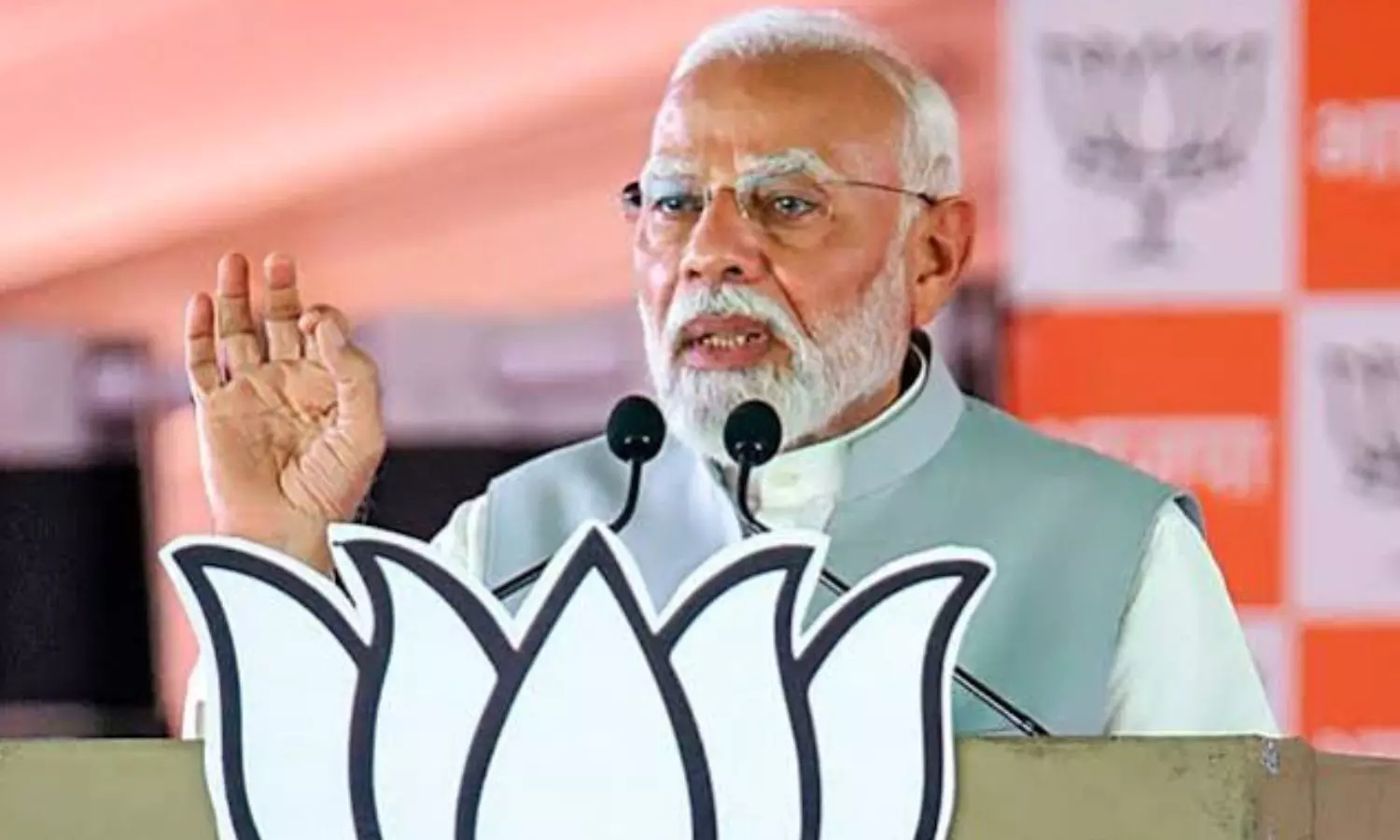
Prime Minister Narendra Modi
With Deepawali over, the weather is changing, and winter is setting in. Similarly, there appears to be a change in thinking among some Congress Chief Ministers who have been criticising Modi.
Recently, the Telangana Chief Minister A Revanth Reddy eloquently praised Modi, saying that the centre was fully cooperating with the state in development and that his government would be working with the Centre to achieve 5 trillion $ economy by 2028-2029 and 1 trillion $ economy of Telangana by 2034.
Interestingly, on Friday, Karnataka Chief Minister D K Shivkumar said that he was ready to work with the Centre for the country's progress and sought PM Modi’s help for priority Metro funding
He urged the Centre to accord Bengaluru the same priority as Delhi and ensure an equal sharing of the financial burden of Metro projects between the Union and state governments.
Addressing Prime Minister Narendra Modi at the Metro inauguration programme held at the IIM-Bangalore auditorium, Chief Minister Shivakumar also sought speedy approval for pending Metro projects and said the state aimed to expand Bengaluru's Metro network to 500 km in order to address the city's growing traffic congestion. He also submitted a memorandum to PM Modi on the stage after his address.
Calling for greater cooperation between the Centre and the state, CM Shivakumar said Karnataka was ready to work with the Union government for the country's progress. "Let us compete in politics, but cooperate in development," he added.
The Chief Minister further said, "Elections may produce different political mandates, but the aspirations of the people do not change. When the Centre and the state work together, the country moves forward."
He said a strong Karnataka and Bengaluru would contribute to India's growth and added that the state was an important pillar in the vision of a developed India. Politically, the Congress feels that Modi’s vision has destroyed the Indian economy. Rahul Gandhi, quoting Trump, said he agrees that the Indian economy is dead.
On the other side, a confidante of the Gandhi family and advisor to former PM Rajiv Gandhi, Sam Pitroda, was for the first time greeted on Gujarati New Year Day by Modi, and he also reciprocated, calling Modi a warm-hearted, hard-working Gujarati friend and saying he would have no objection to having dinner with him.
Shivkumar on Friday explained how the state was facing financial problems in meeting the cost of land acquisition for Metro projects which are funded on a 50:50 basis by the Centre and the state. He said the state is bearing the costs of land acquisition, repayment of foreign loans and Central and state taxes.
He urged nationalised banks to provide loans at lower interest rates and sought an equal sharing of the overall financial burden of Metro projects.
He went on to explain how Bengaluru had built a Metro network of 103 km and the government had set a target of expanding it to 500 km. "We have undertaken several major projects to address Bengaluru's traffic congestion, and Metro is an important part of this effort," he said.
He urged the Prime Minister to direct the concerned departments to provide early approval for the revised DPRs. CM Shivakumar also sought equal sharing of the additional costs arising from delays, operational losses and repayment of foreign loans, on the lines of the Delhi Metro model.
He suggested the creation of a technical institution for Metro projects, saying Bengaluru could play a role in supporting Metro cities across the country. A technical committee could recommend projects for approval, helping speed up the process, he added.
Citing former President A.P.J. Abdul Kalam's call to dream, the Chief Minister said the government was committed not only to dreaming big but also to implementing those dreams through proper planning and timely decisions.
"People in Bengaluru spend two to three hours every day in traffic congestion. We are working to find a solution to this problem so that people can spend less time on the roads and more time with their families," he said.
The Chief Minister also appealed to the Prime Minister to provide drought relief to Karnataka, stating that the state was facing a severe drought.
According to CM Shivakumar, crop losses had affected around 85 lakh hectares, with the state suffering losses of about Rs 62,000 crore. Karnataka had sought Rs 22,000 crore in assistance through the National Disaster Response Fund, he said, urging the Centre to release relief funds at the earliest.
CM Shivakumar said the state wanted to bring an all-party delegation before the Prime Minister to explain the drought situation and discuss ways to provide relief to farmers.
He also urged the Union government to ensure a fair share for Karnataka in ethanol allocation. Recently, the state had alleged that the percentage of ethanol in petrol pumps was higher than 20% and made a big political issue of it.
Shivakumar said Karnataka remained committed to hard work and contributing to India's progress.
From Modi-Bashing to Cooperation with Modi: A New Raga Among Congress CMs
Decision on merger of two factions must be taken collectively rather than individually: NCP's Chhagan Bhujbal
CM urges Centre to clear Mekedatu project, withdraw Kasturirangan report; seeks CSR support to upgrade 1,000 government schools
Karnataka ready to work with Centre for country's progress, says CM Shivakumar to PM Modi; seeks priority Metro funding
'No need to hack Rahul Gandhi's phone, some foreigner has already hacked him': BJP on LoP's phone-tapping allegations
Tamil Nadu finalises free bicycle deal for 5.3 lakh students


