




Keralam govt in talks with several states, discoms for power purchase: CM Satheesan
In Short
Kerala’s ongoing power crisis highlights long-standing structural challenges in the state's energy sector. While weak monsoon conditions and national supply constraints have intensified the situation, experts point to the need for stronger long-term planning, increased power generation, energy storage capacity, and improved supply management.

Share :
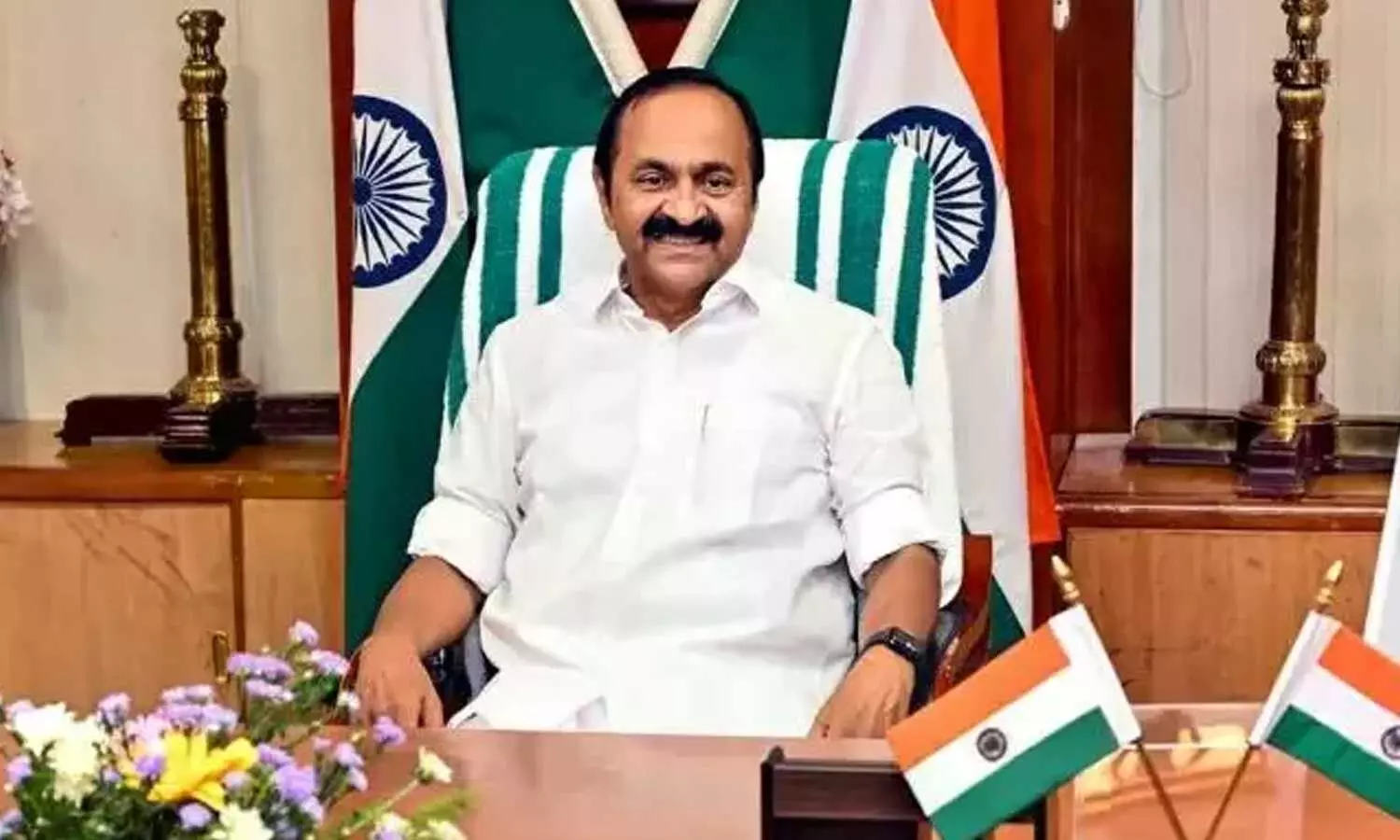
CM V. D. Satheesan
Hyderabad: The monsoon may have triggered Kerala’s latest power crisis, but it would be wrong to claim that the monsoon created the vulnerability.
Kerala was under the governance of the CPI(M)-led LDF continuously from 2016 to 2026 — 10 years. The first Pinarayi Vijayan ministry ran from 2016 to 2021 and the second from 2021 to 2026. During this period, and even when the Congress-led UDF was in power earlier, successive governments failed to evolve a long-term plan to meet the state’s growing power requirements. This has made the state particularly vulnerable whenever the power market tightens.
One thing is certain: Kerala’s power crisis cannot be dismissed as merely a legacy problem. Successive governments failed to address the underlying vulnerability. After 10 uninterrupted years of LDF rule, why does Kerala still depend so heavily on electricity purchased from outside the state? The Left leaders and spokespersons keep criticising the BJP-led NDA government for allegedly having no vision on various issues. But the current crisis raises questions about whether Kerala’s own governments have matched rhetoric with long-term planning.
The argument that the state is reeling from a power crisis simply because of inadequate rain does not cut much ice. The country as a whole has faced a weak monsoon, with the India Meteorological Department forecasting below-normal rainfall for the season. But rainfall has varied considerably across regions.
There is also a national power-supply problem involving coal availability, hydropower generation and a surge in demand. But Kerala’s vulnerability is particularly acute because of its heavy dependence on power imported from outside the state. The KSEB says Kerala currently depends on external sources for around 78–80% of its electricity requirements, while Andhra Pradesh generates a much larger share of its own requirement.
The main problem for Kerala is that it has not expanded electricity generation sufficiently to meet its growing consumption. The state has not commissioned a major generation project comparable to Idukki for decades. The KSEB has said peak-hour demand has risen sharply, while available supply is inadequate to bridge the gap. Recent reports put peak demand at around 5,000 MW or more.
Kerala has also been facing the politics of power for a long time. Four long-term power purchase agreements covering 465 MW, signed during the Oommen Chandy government, were cancelled in 2023 following a recommendation by the second Pinarayi Vijayan government and subsequent regulatory action. The agreements had offered power at around Rs 4.26 per unit for 25 years. After their cancellation, KSEB had to depend more heavily on short-term purchases and power exchanges, often at higher rates. A KSEB report subsequently estimated the financial impact of the cancellation at more than Rs 2,130 crore.
The argument at the time was that cheaper power could be obtained elsewhere. But three years later, the promised cheaper alternatives have still not adequately materialised, while Kerala remains highly vulnerable whenever power availability tightens.
The current UDF government led by the Congress party, which took office only a few months ago, has inherited this structural vulnerability. But that also raises an important question: were the risks not foreseeable? The IMD had warned of below-normal monsoon conditions and the strengthening El Niño phenomenon. Energy planning is precisely about preparing for such contingencies before a shortage occurs.
It is therefore difficult to understand why adequate power purchase, storage and demand-management measures were not put in place before the state entered the present crisis.
Energy planning is precisely about preparing before the shortage occurs. The irony is that Kerala now has to scramble for power when the warning signs were already visible. The crisis should not become an excuse for political blame games. It should instead force all political parties to confront the state’s long-term energy deficit.
The only saving grace is that Kerala has invested heavily in rooftop solar. During the day, solar generation helps considerably. But the state’s most acute shortage comes in the evening, when solar production falls, and household demand rises. The KSEB has also pointed out that Kerala lacks adequate battery storage to shift surplus daytime solar power to peak evening hours.
According to recent reports, peak-hour demand has been around 5,000–5,500 MW, putting enormous pressure on the system.
Kerala should take this crisis as a wake-up call and evolve both short-term and long-term plans to improve internal generation, expand storage and pumped-hydro capacity, and structure power purchase contracts more carefully.
The state cannot keep depending on electricity from outside while opposing or delaying every major generation project. Environmental concerns are legitimate and must be addressed, but development also requires reliable power. As the KSEB itself has acknowledged, Kerala has not had a major generation project after Idukki, while demand has continued to rise.
The present crisis may have been triggered by the monsoon and a national supply crunch. But the deeper problem is one of long-term planning. Kerala cannot wish away its growing power demand. It has to generate more, store more, and plan ahead.
CM Chandrababu inaugurates SV Museum and EV buses in Tirumala
SEMICON India 2026: Chip industry push gets boost as PM Modi set to lead inaugural session on September 17
Keralam govt in talks with several states, discoms for power purchase: CM Satheesan
YSRCP suspends Repalle leader Mopidevi Srinivasa Rao from party
Pakistan naval ship collides with Indian Navy unit after 'unprofessional, unsafe' manoeuvre; New Delhi lodges protest
History Should Have the last word


