




- CM Shivakumar invites people to Mysuru Dasara, calls it pride of Karnataka
- Digvijaya Singh begins Satya Sanatan Swabhiman Yatra with prayers in Ujjain
- Venky’s New Film Set for October 30 Release
- Kiran Abbavaram Unveils A Beautiful Family Poster From ‘Reality’ On The Occasion Of Dussehra
- Petrol and diesel prices today in Hyderabad, Delhi, Chennai and Mumbai on , 20 October 2026
- Elon Musk Promises SpaceX Share to Every US Child
- Woman Killed two injured after van collides bike in Gannavaram
- Gold rates today in Delhi, Mumbai, and Kolkata slashes, check the prices on 20 Oct 2026
Modi Calls For Unity Against Forces Undermining India’s Cultural Heritage
In Short
Without naming anyone or any party, the Prime Minister said all those who work against the country are the enemies of the nation. He said, “The purpose of power is not to rule, but to ensure public welfare: this is the ideal of Lord Shri Ram,” he said.

Share :
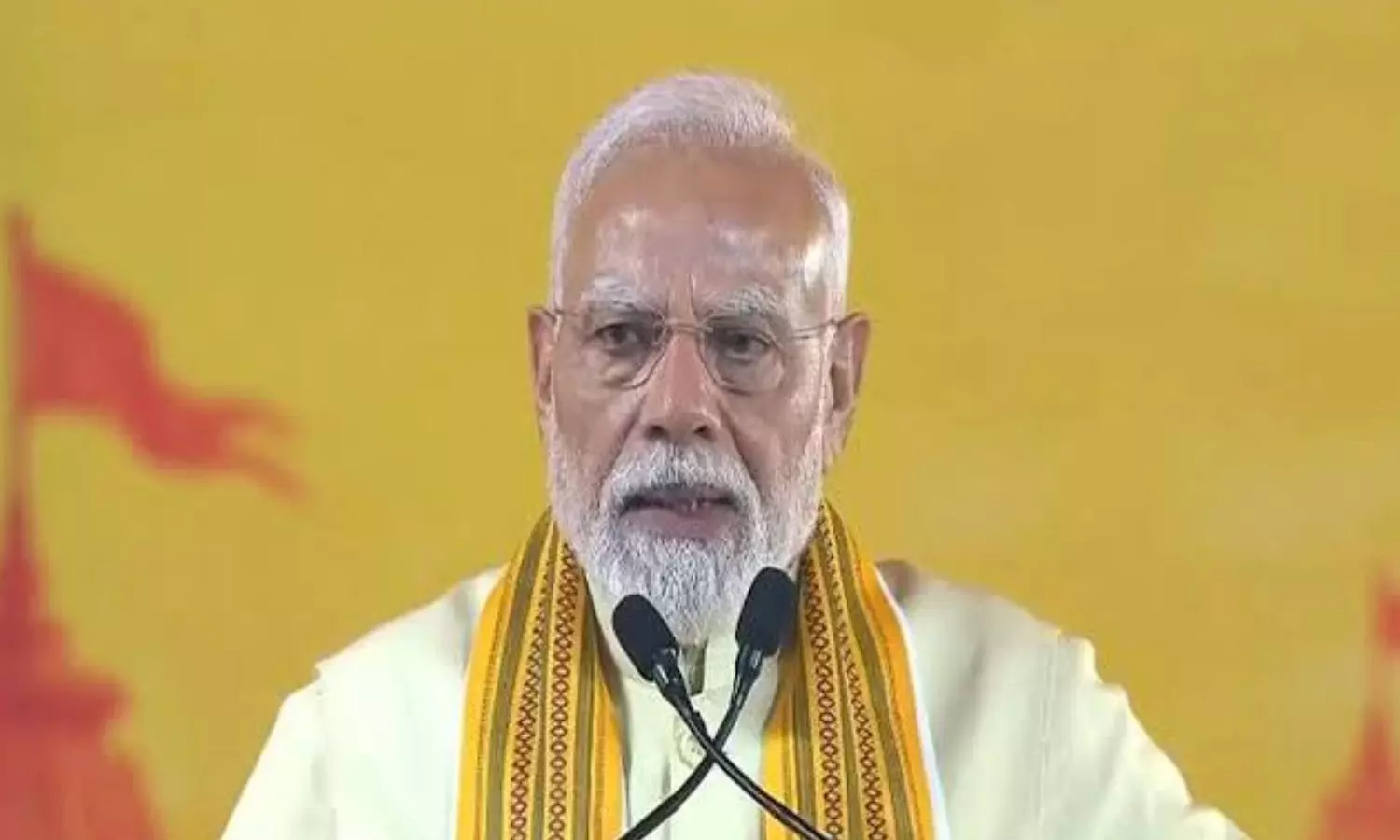
Prime Minister of India, Narendra Modi
In a significant message to the country, the Prime Minister of India, Narendra Modi, on Tuesday said: “Lord Ram taught us that difficulties can't stop our journey; no matter how big a crisis may be, we must not sit back relying on others.”
Without naming anyone or any party, the Prime Minister said all those who work against the country are the enemies of the nation. He said, “The purpose of power is not to rule, but to ensure public welfare: this is the ideal of Lord Shri Ram,” he said.
Modi said Lord Shri Ram did not lose his cool and balance whether in power or when he had to go to the forests. He said the ideals of Ram Rajya will continue to serve as a benchmark for good governance.
The PM said that Ram Rajya is a system where there is no discrimination, everyone receives justice, equal opportunities are available, and the focus of governance remains public welfare.
He said citizens must be treated with respect and service to the poor and underprivileged must remain a priority. Invoking Lord Ram's journey to Lanka, Modi said even the biggest challenges could be overcome through determination, collective strength and public participation.
He said, “Our goal is to make India fully self-reliant, as that is how a country can progress.” He said Dussehra should strengthen the people’s resolve to bring happiness, prosperity and success. Invoking Lord Rama, Janaki and Hanuman, Modi said this festival was a reminder of the end of tyranny and terror and the triumph of eternal truth over falsehood.
The PM gave a call for national unity against forces that undermine India's honour, dignity, social harmony and cultural heritage. He said these elements—those who harm the country's prestige, sow seeds of division in society and nurture hatred toward its culture. Such elements are the true enemies of the nation, he added. He said it was time for all political parties and institutions to remain united and confront the adversaries of ‘Maa Bharati’, Modi said.
Mentioning the emphasis that was placed on the vision articulated during the 'Pran Pratishtha' (consecration) ceremony at the Ram temple in Ayodhya, PM Modi said that vision charts a clear path, moving from 'Ram' (the Divine) to the 'Rashtra' (the Nation), and from the 'Dev' (the Deity) to the 'Desh' (the Country).
He said that division and cultural hostility are portrayed not merely as social problems but as direct threats to the nation's foundations.
Suniel Shetty's belated wish for 'Border' co-star Sunny Deol: Stay the rock-solid man you are
India, UAE and US hold talks on energy and connectivity during Mumbai trilateral meeting
'Tiger Shroff was not original target!' Shooters had planned to kill another Bollywood celebrity (Lead)
HM Shah’s visit sends strong message to drug smugglers: Punjab BJP chief
BJP Seeks Apology from Sanjay Raut over His Albania Remarks
Modi Calls For Unity Against Forces Undermining India’s Cultural Heritage
Tiger Shroff firing incident: Accused reveals that the 'Baaghi' actor was not the primary target
SC to hear YSRCP plea against HC order refusing extension of nomination deadline
India-UAE relationship living up to its promise as Comprehensive Strategic Partnership: EAM Jaishankar
CJP leaders Saurav Das, Ashutosh Ranka to approach Delhi HC seeking release


