






- Ramayana Joins ₹1,000 Crore Club In Just 8 Days
- Microsoft Outage Explained: What Caused Microsoft Services to Crash Worldwide?
- Naidu talks about P4, elimination of poverty, etc in fireside chat
- Satheesan-Sukumaran Nair differences cleared; CM to visit NSS HQ after 5 years
- Google Search Gets Major AI Upgrade to Handle Complex Questions
- BJP chief Nitin Nabin takes holy dip in Ganga on first day of Chhath Puja
- Very disappointed that Cummins has thrown Khawaja 'under the bus,' says Warner
- Security tightened in B'luru ahead of PM Modi’s visit
Old Allies BJP and Akali Dal Move Towards A Political Reunion
In Short
It was six years ago that the BJP and SAD parted ways, bringing an end to a nearly three-decade-long partnership that was among the longest-running political alliances in North India.

Share :
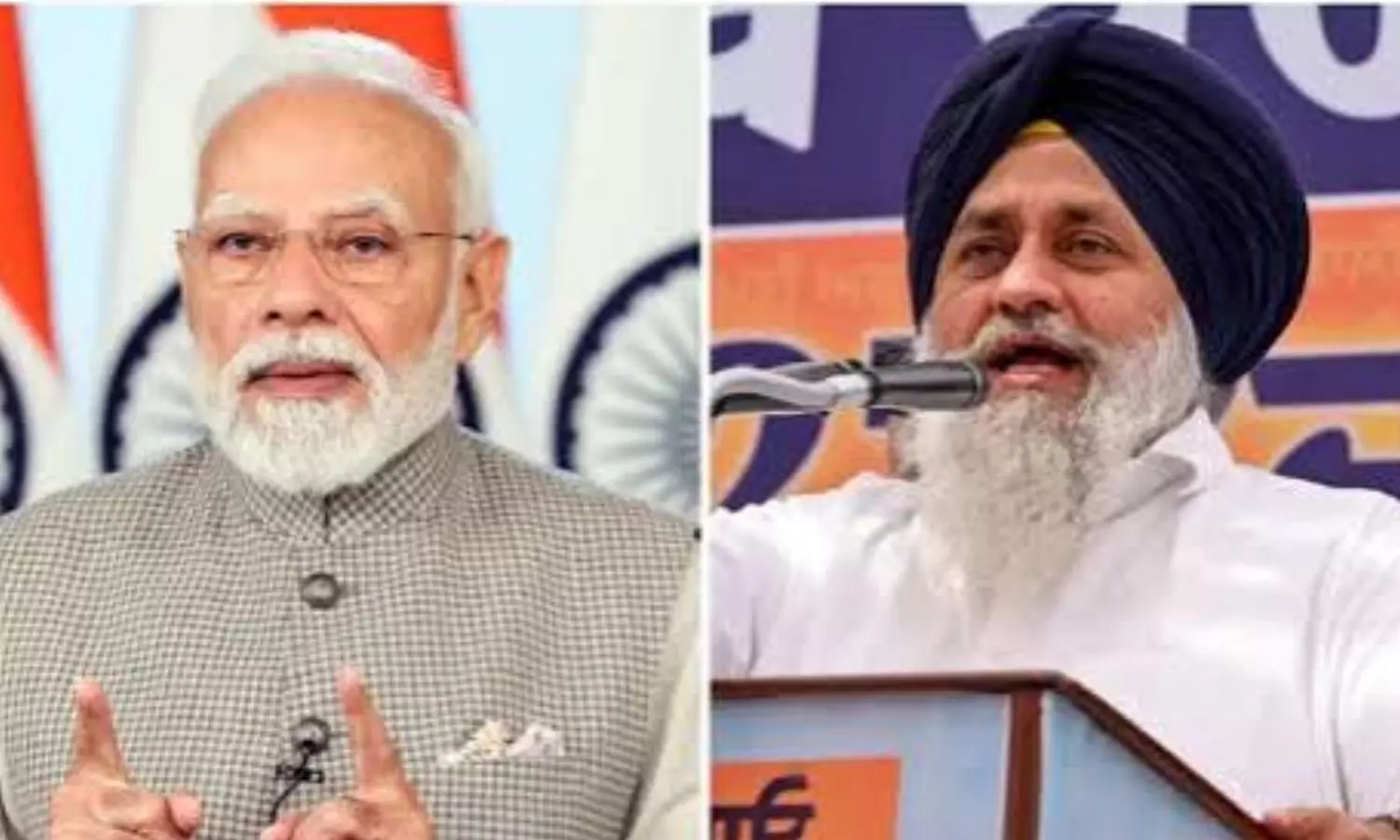
political realignments in Punjab appear to be gathering momentum
With crucial Assembly elections scheduled for early 2027, political realignments in Punjab appear to be gathering momentum. The BJP seems close to striking a deal with the Shiromani Akali Dal (SAD) to revive their erstwhile alliance and jointly contest the upcoming Assembly elections.
It was six years ago that the BJP and SAD parted ways, bringing an end to a nearly three-decade-long partnership that was among the longest-running political alliances in North India. Once a formidable electoral combination in Punjab, the two parties have struggled to regain their lost political ground since going their separate ways.
The BJP's association with the Akali Dal dates back to a period even before the formation of the BJP. The Bharatiya Jana Sangh had established ties with the Akali leadership, but a formal pre-poll alliance for the Punjab Assembly elections took shape only in 1997.
The partnership rested on a practical understanding of each other's political strengths and constituencies. The Akali Dal, with its strong rural and Sikh support base, contested 94 of Punjab's 117 Assembly seats, while the BJP fielded candidates in the remaining 23, primarily in urban and semi-urban constituencies where it enjoyed traditional support.
The arrangement proved mutually beneficial. While the Akalis brought rural influence and a strong Sikh political constituency to the table, the BJP contributed its urban support base and national political presence. The combination helped the alliance capture power in Punjab in 1997, 2007 and 2012.
The partnership weathered several political upheavals at the national level and remained intact through the 2014 and 2019 Lok Sabha elections. In 2019, the Akali Dal won two of the 10 parliamentary seats it contested, while the BJP secured two of the three seats allotted to it.
However, the three agricultural laws enacted by the Modi-led NDA government in 2020 proved to be the breaking point. Differences over the legislation eventually drove the two parties apart. The laws triggered a year-long farmers' agitation, which received support from the Congress, the Akali Dal and other Opposition parties. Farmers, particularly from Punjab and Haryana, laid siege to Delhi's borders, putting the BJP in an uncomfortable political position.
The issue was particularly sensitive for the Akali Dal, whose political strength has traditionally rested on the farming community, especially Jat Sikh farmers, who constitute a significant part of its support base.
Initially, the Akali Dal sought amendments to the legislation and assurances from the Centre. However, as the agitation gathered momentum, the party came under increasing pressure to distance itself from the controversial laws.
On September 26, 2020, the Akali Dal's core committee decided to withdraw from the NDA, citing the Centre's failure to address farmers' concerns. These included demands for adequate safeguards and a commitment on minimum support prices (MSP). The party also raised the issue of Punjabi not being included in the list of official languages in Jammu and Kashmir.
The 2022 Punjab Assembly elections provided the first major electoral test for the two parties after their separation. The outcome was disappointing for both. The Akali Dal's vote share fell sharply from 25 per cent to 18 per cent, while the BJP registered a marginal increase.
The Akali Dal contested 97 seats in alliance with the Bahujan Samaj Party, while the BJP fielded candidates in 73 constituencies in an arrangement with former Chief Minister Amarinder Singh's Punjab Lok Congress and the Akali Dal (Sanyukt). The biggest beneficiary of their separate electoral strategies was the Aam Aadmi Party (AAP), which swept to power in the state.
The 2024 Lok Sabha elections further underlined the limitations of the two parties contesting independently. The Akali Dal managed to win just one seat, while the BJP failed to open its account in Punjab.
With the next Assembly elections approaching in 2027, the possibility of a reunion has once again assumed political significance.
For the Akali Dal, the immediate challenge is to reclaim its traditional support base and restore its political relevance. For the BJP, the task is to expand its social and geographical footprint in a state where its independent organisational strength is still a work in progress.
A renewed alliance could offer both parties an opportunity to pool their respective strengths. Whether they can recreate the political chemistry that once made them a formidable force in Punjab remains to be seen.
PM Modi Inaugurates Bengaluru Metro's Pink Line, Takes Ride With Karnataka CM DK Shivakumar
Telangana plans special polio drive on 22 Nov
CM pitches for P4 model, AP's new 'norm' for inclusive growth
If Telangana Was Her Political Achievement. Why Did Sonia Leave It Out?
CM stresses on creation of opportunities to underprivileged to progress in life
IPS VC Sajjanar bids farewell as Hyderabad CP, shares heartfelt post on X


