




- Couple thanks Jagan Reddy for daughter’s treatment under YSR Aarogyasri
- Bangladesh confronts growing crisis of juvenile violence
- Gujarat CM pays tribute to Deendayal Upadhyaya on his birth anniversary in Ahmedabad
- Bangladesh’s inflation crisis due to deeper structural weaknesses rather than supply shortages
- The Road to CEC Removal Is Long
- Mathadi Act to stay; 3,000 workers to get homes in Wadala, says Maha CM
- Elon Musk Says SpaceX AI Could Surpass OpenAI, Anthropic in Six Months
- TRAI launches connectivity rating platform to empower consumers with credible information
Oppn Lacks Understanding of MDR, Says Nirmala Sitharaman
In Short
The finance minister said the Opposition was “searching for issues” and making allegations without fully understanding the matter.

Share :
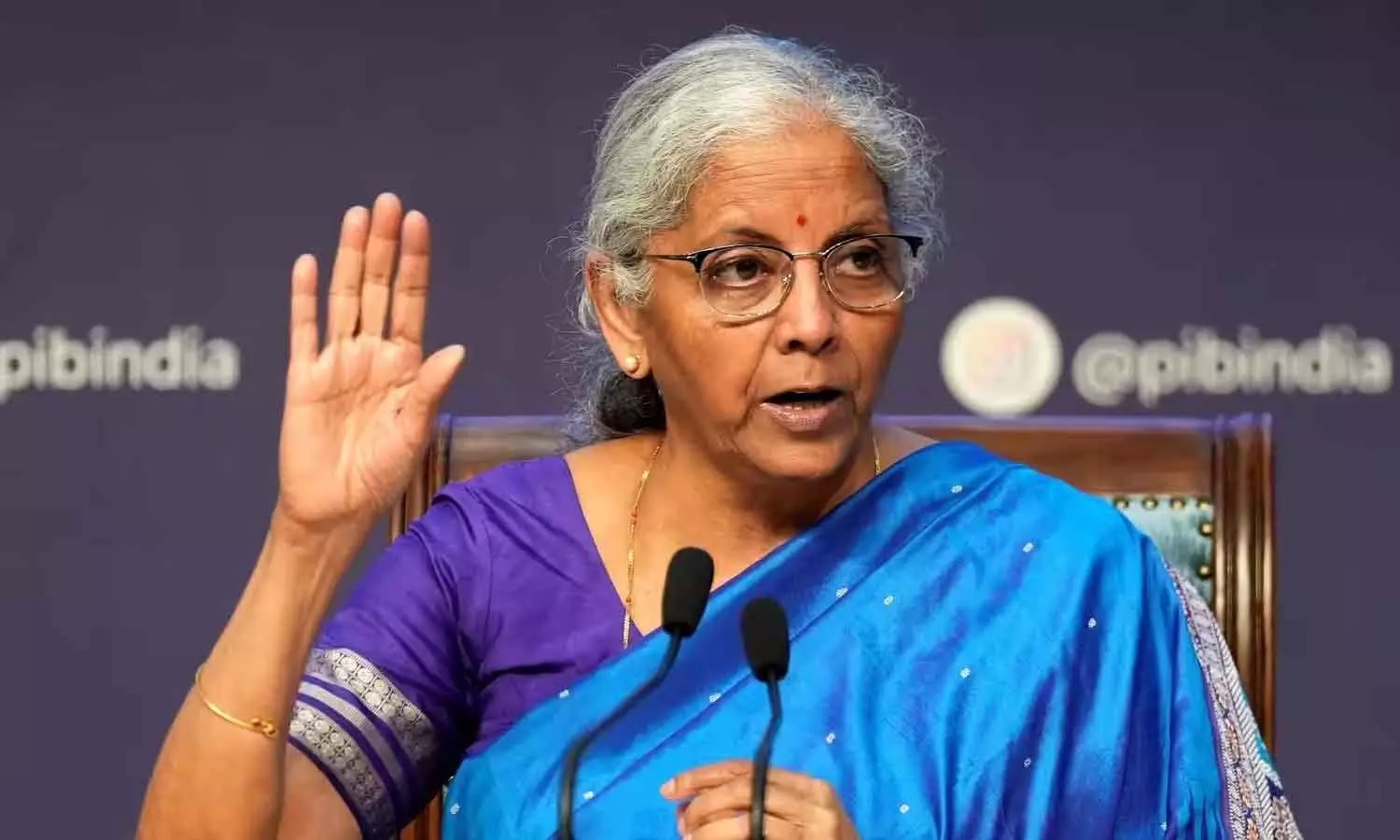
Finance Minister Nirmala Sitharaman
As the date for implementing the decision to levy 0.4 per cent Merchant Discount Rate (MDR) on specified UPI transactions above Rs 2,000 is fast approaching, the Union Finance Minister Nirmala Sitharaman sought to rubbish the opposition claim that the government had succumbed to external pressures.
She said, it is "Absolutely baseless. It was a professional decision by the payment ecosystem”, she said. The Union Minister said it was taken jointly by the National Payments Corporation of India (NPCI), payment banks and merchant banks, and not imposed by the government. She further said the MDR was not a tax and would not accrue to the government.
The finance minister said the Opposition was “searching for issues” and making allegations without fully understanding the matter. The finance minister said, "This is not a tax, this is not a cess, this is not even a surcharge. And the collection is not coming to the Consolidated Fund of India."
The collected amount will be shared among banks and other entities in the UPI ecosystem. Of the MDR collected, 40 per cent will go to customers' banks, 30 per cent to payment gateways, 20 per cent to the UPI app and the remaining 10 per cent to the sponsoring bank of the UPI app, she added.
From October 15, a 0.4 per cent MDR will apply to person-to-merchant UPI payments above Rs 2,000. The charge will be paid by merchants, not consumers, and will be capped at Rs 300 for transactions of Rs 75,000 or more. Payments between individuals, as well as the vast majority of everyday merchant payments, will remain free.
Essential services, such as railways, telecom, fuel and insurance, will attract a flat Rs 5 fee per transaction above Rs 2,000. Capital markets transactions (mutual funds, stockbroking) get a lower 0.02 per cent rate, also capped at Rs 300.
Small merchants collecting up to Rs 1 lakh a month via UPI QR codes remain fully exempt from any new charge and shield about 96 per cent of all merchant transactions.
BrahMos, AK-203 From UP Giving Pakistan ‘Sleepless Nights’, Says Amit Shah
UP Dy CM meets Amit Shah to discuss BJP's mission 2027 in Uttar Pradesh
SP Balasubrahmanyam Death Anniversary: Remembering The Legendary Voice That Lives On
Delhi HC to hear plea alleging CJP leaders circulated deepfake image of woman with PM Modi
Oppn backs fresh impeachment motion against CEC Gyanesh Kumar; BJP says move will be defeated
Balapur Laddu Fetches Record ₹39 Lakh in Auction


