
Proposed GST slabs spark revenue concerns among States

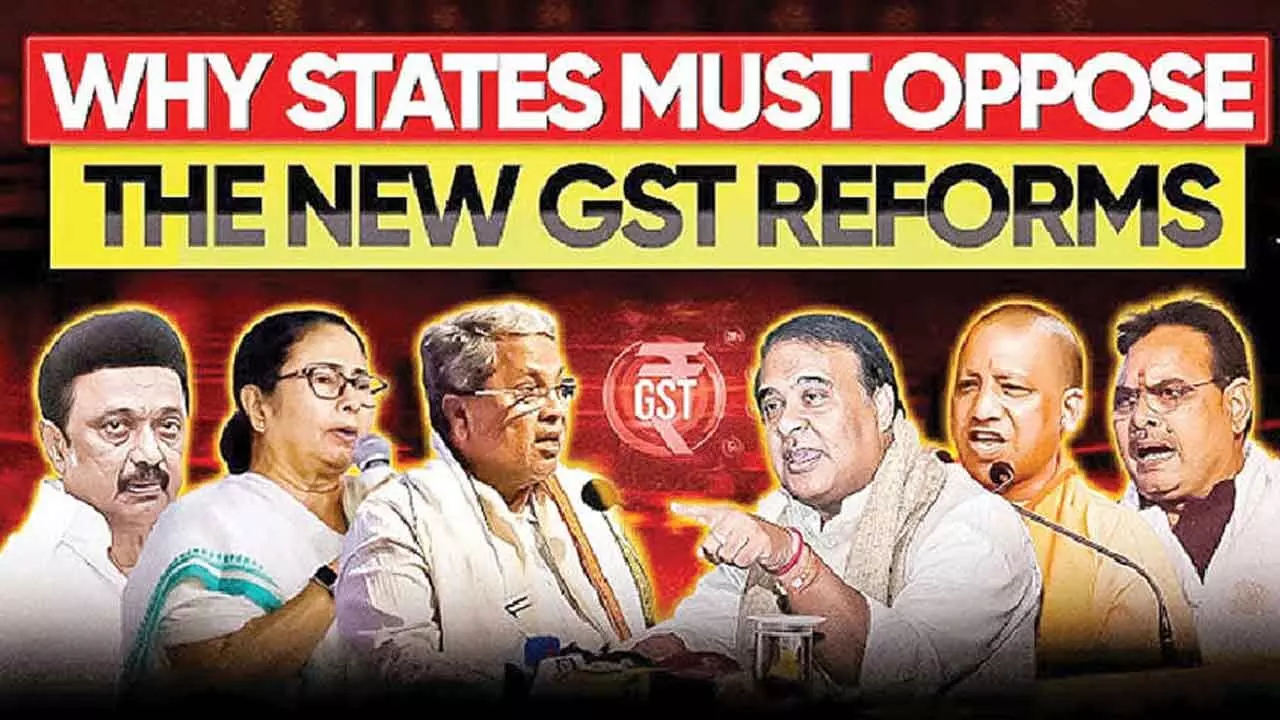
Finance Ministers and representatives from eight opposition-ruled states have come together to raise strong objections to the central government’s proposed restructuring of GST rates
In a significant development ahead of the crucial Goods and Services Tax (GST) Council meeting scheduled for September 3–4, finance ministers and representatives from eight opposition-ruled states have come together to raise strong objections to the central government’s proposed restructuring of GST rates. The meeting, attended by officials from Himachal Pradesh, Jharkhand, Karnataka, Kerala, Punjab, Tamil Nadu, Telangana and West Bengal, concluded with a consensus that the changes could inflict severe losses on state revenues and threaten their financial stability.
Karnataka Finance Minister Krishna Byre Gowda, who briefed the media after the discussions, said that the new tax structure being suggested by the Centre could reduce state revenues by as much as 15 to 20 percent. According to his estimate, the collective loss for states could range between ₹1.5 lakh crore and ₹2 lakh crore. He cautioned that such a reduction would strike at the core of state finances and, unless adequately compensated, would directly impact developmental and welfare programmes.
“When GST was introduced, the revenue growth rate for states was projected at 14.4 percent. After subsequent rationalization of rates, it fell to around 11 percent. If the Centre’s new proposal is implemented, this figure could drop further to nearly 10 percent. Such a situation is unsustainable, and the Union government must take responsibility for protecting the revenue interests of states. We demand compensation for at least five years to offset this loss,” Gowda stated.
The Centre has put forward a plan to restructure GST into two major slabs of 5 percent and 18 percent, while reserving a higher rate of 40 percent for luxury goods. While some states have expressed support for rationalization in principle, they stressed the importance of concrete safeguards. Himachal Pradesh minister Rajesh Dharmani remarked that while he was in favour of simplifying the structure, any move must be backed by a firm guarantee of compensation. Punjab’s Finance Minister added that the benefits of such changes should reach the common people and urged the creation of a robust mechanism to curb profiteering by businesses.
Currently, GST revenues flow to states through two channels-State GST (SGST) and Integrated GST (IGST). In cases of intra-state trade, the tax collected is divided equally between the Centre and the state. For inter-state transactions, IGST is levied and initially collected by the Centre, which then transfers a share to the state where the goods or services are consumed.


