






- ‘PM doesn’t do it’: Sam Pitroda on Rahul Gandhi’s phone tap claim
- Trinamool MP Abhishek Banerjee appears before Kolkata Police for questioning over CEC post
- Thanjavur farmers carry water in pots to save withering Samba crops
- Elon Musk Joins 43,000 Signatures Seeking Jensen Huang’s Return to Nvidia
- Happy Children's Day 2026: History, Significance, Wishes and Quotes
- Petrol and diesel prices today in Hyderabad, Delhi, Chennai and Mumbai on 14 November 2026
- US grounds flights nationwide over air traffic communication outage
- 2nd day of Chhath Puja: Devotees prepare to observe 'Kharna' ritual
Rahul Bets on Gandhi’s ‘Satya and Ahimsa’ to Unseat Modi in 2029
In Short
Addressing the Bharat Summit in Hyderabad on Saturday, Leader of the Opposition Rahul Gandhi said they had realised that they could not fight “fascists” by expressing hatred, anger or resorting to violence.

Share :
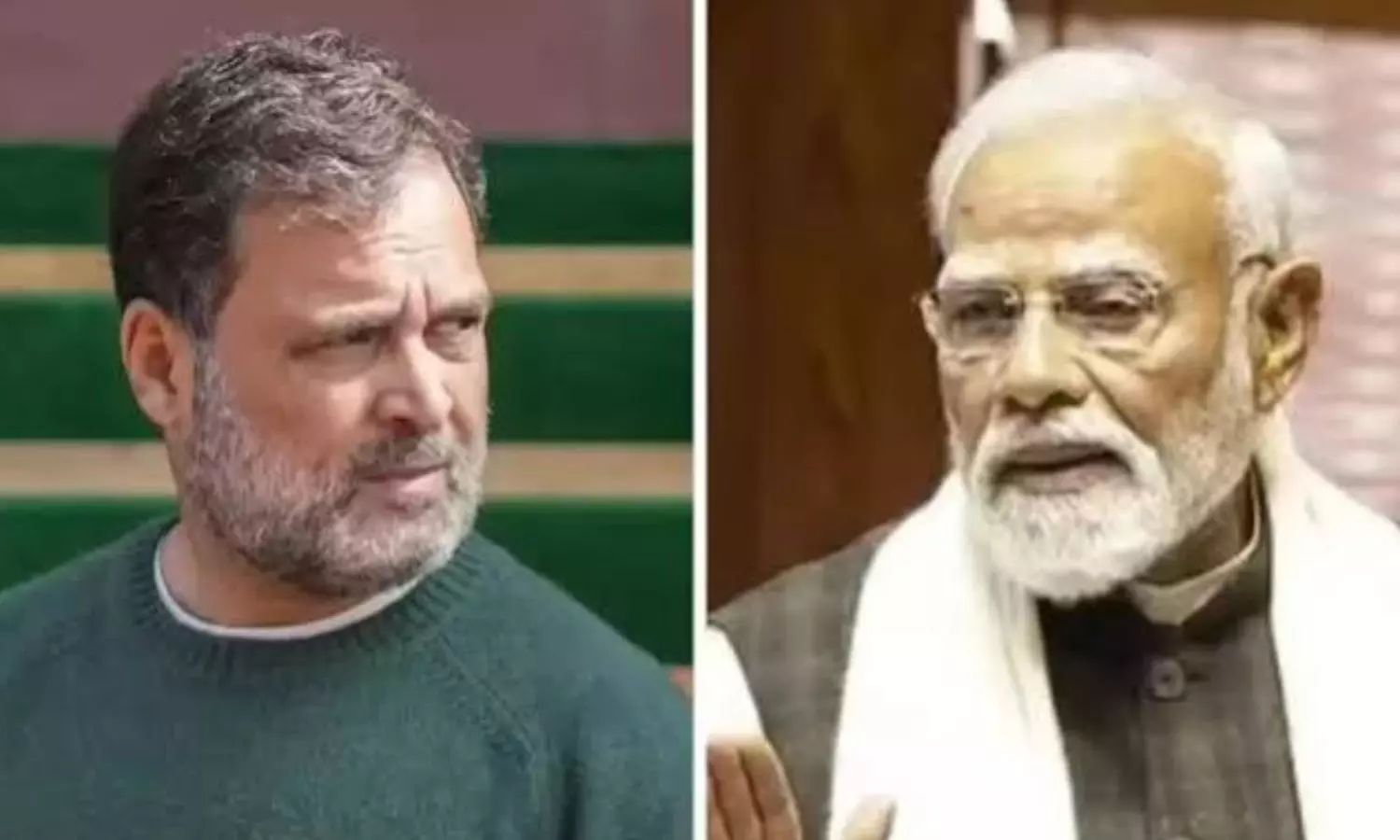
Rahul Bets on Gandhi’s ‘Satya and Ahimsa’ to Unseat Modi in 2029
The Congress party and the Opposition have apparently found a new roadmap to defeat the “fascist” BJP in the 2029 Lok Sabha elections.
Addressing the Bharat Summit in Hyderabad on Saturday, Leader of the Opposition Rahul Gandhi said they had realised that they could not fight “fascists” by expressing hatred, anger or resorting to violence. Nor would holding press conferences, giving media interviews or taking to social media help them in any significant way. All these approaches, he admitted, had failed to yield results.
Rahul said this realisation had dawned on them following the padayatra he undertook across the country. He claimed that direct interaction with people, showering love on them, embracing them and showing compassion had brought about a tremendous change in their outlook. According to him, people had begun to recognise how the BJP had turned into a dictatorship and how Prime Minister Narendra Modi was winning elections through alleged illegal means.
Rahul alleged that the Modi-led government had captured all democratic institutions, from the Election Commission to the judiciary, and was running the country in a fascist manner. He claimed that the BJP believed it could win elections by misleading people, but asserted that such tactics would not work indefinitely. “You cannot lie every time,” he said.
The LoP said they had realised that a concerted effort to decimate the Opposition had begun after the party lost the Assembly elections held soon after the 2024 Lok Sabha polls. He claimed that the Opposition's performance in the Lok Sabha elections had sent shivers down the BJP's spine and alleged that the ruling party had subsequently resorted to adding around three million new voters who voted in its favour.
It was then, he said, that the Opposition began suspecting that the government was using the Special Intensive Revision (SIR) exercise as a pretext to delete genuine voters.
Rahul said that a detailed study had convinced them that Mahatma Gandhi's principles of “Satya and Ahimsa” remained the two most powerful tools even today. They, therefore, decided to establish direct contact with people, change their political language and embrace them with compassion. This, he claimed, had made the politics of truth a much more effective approach.
Expressing confidence about the 2029 Lok Sabha elections, Rahul declared that the BJP would be defeated.
He said the impact of the lessons learnt during the padayatra was now visible on the streets of Delhi, where the Opposition had begun exposing the government.
Maintaining that violence, hatred and anger were not their way of doing politics, Rahul said they would continue to speak the truth and defeat the BJP. He also sought people's support in this endeavour.
Alleging that Modi had established a nexus with industrialist Gautam Adani, Rahul claimed that Adani's fortunes had soared from being the world's 600th richest person to the second richest. He alleged that the government had handed over ports, airports and infrastructure projects to Adani, who, in return, financially supported Modi and the BJP.
List of top 10 Best Selling Compact SUVs for the month of October this Year
India commits over 7 million euros to Elettra 2.0 project in Italy: Dr Jitendra Singh
Sam Bhai Again Defends Narendra Bhai on Rahul’s Phone-Tapping Charge: “PM Doesn’t Do It”
Does WhatsApp sell your data? Here’s what users need to know
Sam Bhai Again Defends Narendra Bhai on Rahul’s Phone-Tapping Charge: “PM Doesn’t Do It”
Delhi govt imparts e-commerce training to 19,900 entrepreneurs in 5 months
Rahul Bets on Gandhi’s ‘Satya and Ahimsa’ to Unseat Modi in 2029
No merger, no NDA: Supriya Sule
No injustice to Mahadevappa or our family, will remain in party: Cong MP Sunil Bose on Karnataka politics
'Compete in politics, cooperate in development': Karnataka CM Shivakumar on bonhomie with PM Modi


