






- Tribals most affected by Maoist violence; earlier govts remained mute spectators, says PM Modi
- India must become a developer of advanced technologies: Rajnath Singh
- CM Vijay to honour Class 10, 12 toppers in Chennai on November 18
- Five private buses catches fire at a garage in Hyderabad
- Vaccinate on time and stay protected for a lifetime: Dr Bharath Reddy
- Dumping yard on Ravvala Konda to be shifted soon
- Collector Himanshu Shukla issues panchayat poll guidelines
- SP encourages students to focus on studies, maintain discipline and aim high
Rahul's US Visit Triggers Fresh BJP Attack: Will Vote Chori and India's Politics Take Centre Stage
In Short
According to Sam Pitroda, chairman of the Indian Overseas Congress (IOC), there is no predetermined agenda. Only a series of meetings and interactions have been lined up for Rahul Gandhi.

Share :
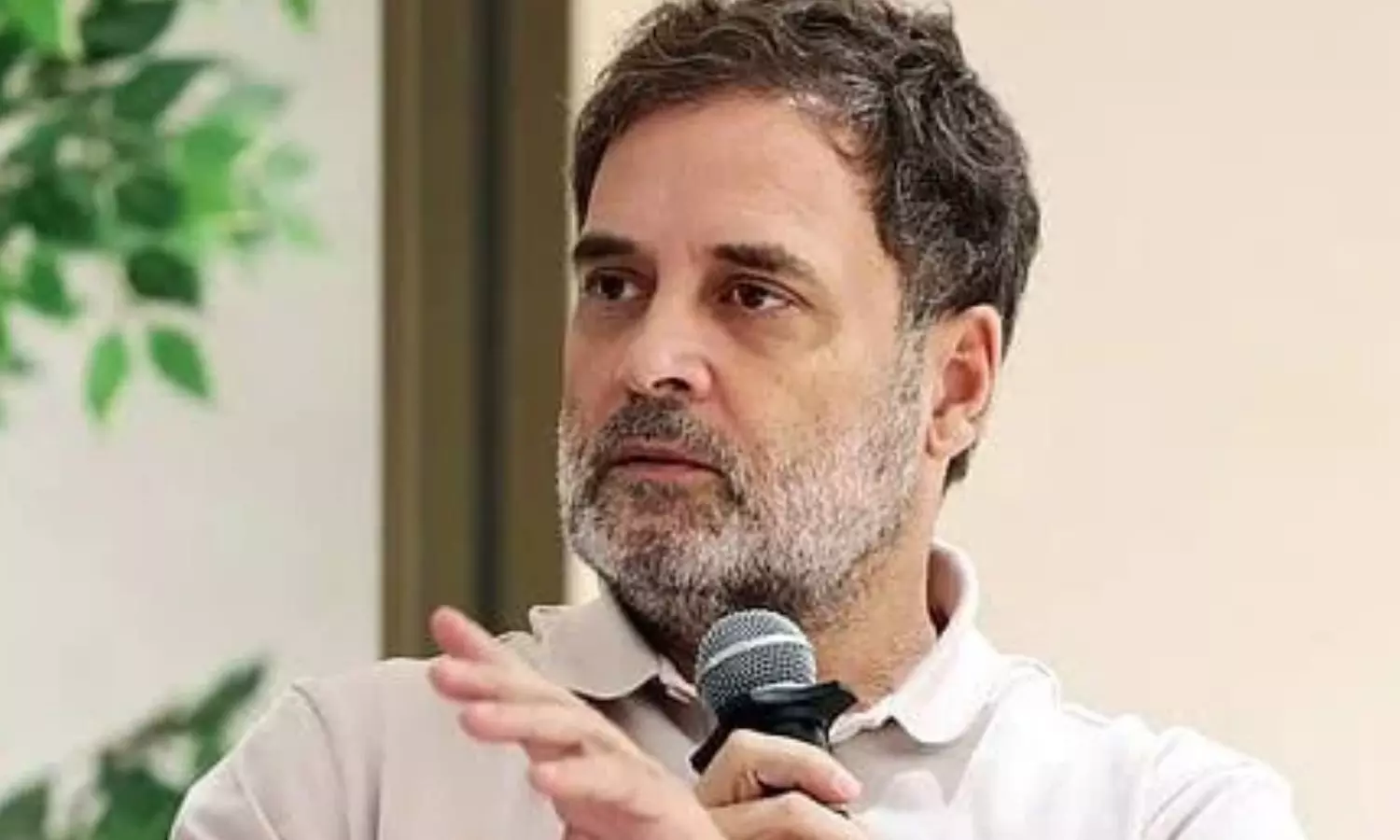
Rahul Gandhi's two-day visit to Columbia University and the University of Chicago from November 17.
All eyes are now on Leader of the Opposition Rahul Gandhi's two-day visit to Columbia University and the University of Chicago from November 17. Political circles, particularly the BJP, view the visit as part of a series of foreign trips allegedly aimed at running down India on international platforms.
But what is the real agenda?
According to Sam Pitroda, chairman of the Indian Overseas Congress (IOC), there is no predetermined agenda. Only a series of meetings and interactions have been lined up for Rahul Gandhi.
On the first day, Rahul will address students and academicians at Columbia University. The programme will be a fireside chat covering student movements, democracy, education, employment and the economy.
He will then travel to Chicago, where he will interact with Dr Robert A Pape, Professor of Political Science at the University of Chicago and founding director of the Chicago Project on Security and Threats (CPOST). Pape's areas of expertise include geopolitics, international security, terrorism and political violence.
Pitroda said Rahul would also address around 350 students on global issues, including the Iran war and student protests across the world.
Asked whether the discussion could include protests in Bangladesh and Nepal, where demonstrations had called for regime change, Pitroda said there was no written script. The programme would have a moderator, and the questions would depend on the course of the interaction. Bangladesh, too, could figure in the discussion, he indicated.
He pointed out that student protests had taken place in Indonesia, France, Germany, Italy, Spain, Portugal, Albania and India. The discussion, he said, would focus on why such unrest was occurring across countries.
According to Pitroda, Gen Z believes that present governments are leaving behind huge debt burdens for future generations. They are not creating enough jobs but are spending substantial amounts on wars, leaving young people to bear the burden of repaying the debt.
The argument sounds reasonable in theory. However, it also raises the possibility that the recent protests in India, including those in Delhi, could figure prominently in the interactions. Rahul Gandhi and other Opposition leaders have repeatedly accused the BJP government of failing to create adequate employment opportunities and of leaving behind a huge debt burden for future generations.
The issue of 'Vote Chori' could also come up, particularly if Rahul Gandhi uses the interactions to explain his allegations of electoral manipulation and his criticism of the present government.
Such discussions could provide fresh ammunition to the BJP to attack Rahul Gandhi and the Congress after his return.
The BJP has already alleged that Rahul Gandhi used the Bharat Summit, attended by representatives from several countries, including those critical of India's policies, to attack the Modi government and reiterate his 'Vote Chori' allegations. It believes he could use the platforms at Columbia and Chicago to pursue a similar line of argument while interacting with academicians, students and think-tank representatives.
While the discussions may begin with student unrest and global developments, the focus could eventually shift to India and its domestic politics, political observers feel.
The BJP has questioned the purpose of Rahul Gandhi's forthcoming US visit, particularly his engagements at Columbia University and the University of Chicago. Its criticism has centred on three issues: his frequent foreign trips, his alleged associations with individuals critical of India, and his repeated allegations of electoral manipulation.
BJP spokesperson and Rajya Sabha MP Sudhanshu Trivedi challenged Rahul Gandhi to clarify whether he was travelling to the US to interact with students or with "anti-India forces".
Trivedi also alleged that Rahul Gandhi had never spent even 15 days campaigning in a poll-bound state. Excluding the Covid period, he claimed, there had never been a stretch of 25 consecutive weeks when Gandhi had not travelled abroad.
Meanwhile, speaking to a national television channel, Pitroda dismissed the BJP's allegations. He said that when Rahul came to the US for two days, they would discuss several issues. He firmly rejected the suggestion that their interactions would involve people hostile to India.
"There is no way I would do anything against my country," he said.
Pitroda reiterated that the engagements had been planned well in advance and were intended to discuss facts and international developments. He said there was no fixed agenda for his discussions with Rahul Gandhi.
"We don't meet enemies of the nation. It is my country also. No way I would do anything against my country," he added.
When Kader Khan shared that Asrani had a massive contribution in his comedy
Rahul's US Visit Triggers Fresh BJP Attack: Will Vote Chori and India's Politics Take Centre Stage
Air India restores non-stop New York flights as airspace restrictions ease
Football: India men fall to NZ in Christchurch friendly
IndiGo Flight To Guwahati Returns To Pune After Landing Gear Snag, All 192 On Board Safe
Bharat Summit Turns into Political Battleground
Rahul's US Visit Triggers Fresh BJP Attack: Will Vote Chori and India's Politics Take Centre Stage
'Working to ensure lack of resources doesn't become obstacles for youth': CM Adityanath
NITI Aayog to launch national workshop series on lessons from 25 years of PM Modi’s leadership
Telangana CM Revanth Reddy meets Modi over Telangana projects


