






- 2027 UP polls: SP to release manifesto today; PDA to remain focus
- US clears SpaceX plan for 1 million AI satellites
- ECI releases draft graduate voter rolls
- Wow! India’s AI-powered police stn to make debut at Panjagutta
- TGiCCC organises cancer screening camp for police personnel
- Hyd police take pledge to protect women’s rights
- HERIF launched to boost funding for Telangana universities
- TVK govt defied SC order on Deepam, alleges Tamilisai
Rural Areas Worst Affected By Inflation: Jairam Ramesh on BJP
In Short
The BJP-led NDA government came under sharp attack from the Congress party on Thursday. Congress general secretary Jairam Ramesh said the villages were worst affected due to the burden of inflation.

Share :
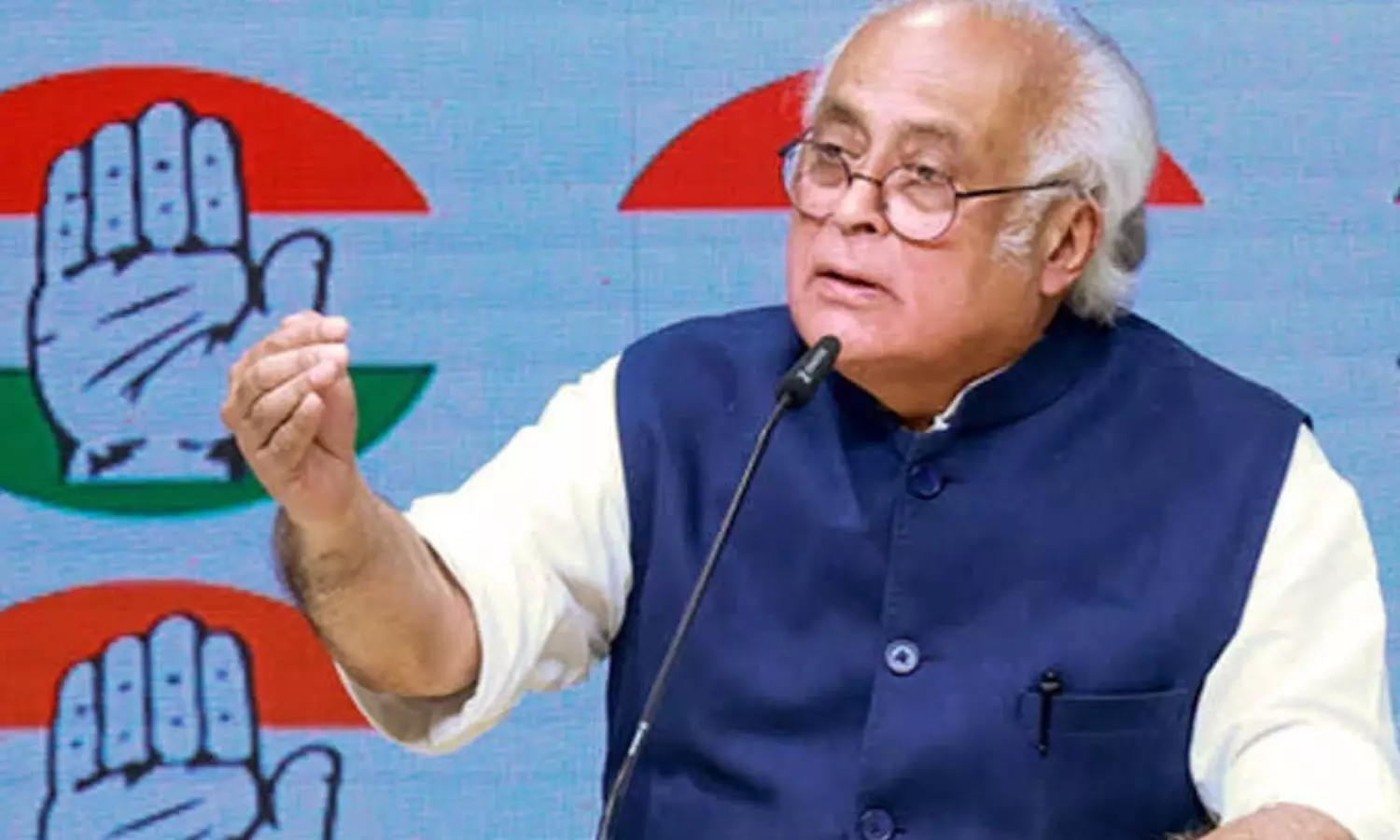
Congress general secretary Jairam Ramesh
The BJP-led NDA government came under sharp attack from the Congress party on Thursday. Congress general secretary Jairam Ramesh said the villages were worst affected due to the burden of inflation.
On his X handle, Jairam Ramesh said, "The entire nation is reeling under the burden of inflation, but its impact on rural India is far more severe -- it is in a state of acute distress. There is a lack of sufficient employment opportunities, incomes are stagnant, and on top of that, the cost of daily necessities continues to climb due to inflation," he said.
According to him, people in villages were finding it increasingly difficult to cope with rising prices because their incomes were already limited. He said the decline in purchasing power was more pronounced in rural areas compared to urban centres.
"Just imagine -- how does a farmer's or an agricultural labourer's family manage to survive? From basic food items like salt, sugar, lentils, spices, onions and mustard oil to cooking gas, children's education, medical expenses and transportation -- the cost of every single necessity is rising. Skyrocketing prices are placing an unrelenting burden on their pockets," he said.
The Congress general secretary said that as a result of the economic policies of this government, families were being pushed into a situation where they had to either compromise on essential needs or borrow money to meet their daily expenses. Inflation was affecting socially and economically marginalised communities the most, as they often lacked savings, stable employment, and adequate financial resources to deal with unexpected economic difficulties, he said.
He alleged that the scheme to provide employment security to rural households has been dismantled. He was referring to the government's handling of the Mahatma Gandhi National Rural Employment Guarantee Act (MGNREGA).
He also claimed that rural India is "seething with anger" over the inflation situation. The pain and discontent were clearly visible in the recent Panchayat Raj elections in Rajasthan.
Prime Minister Narendra Modi on Thursday once again used the term ‘Dimagi Naxal’, saying that while armed Naxalism had been eliminated, people with such an ideology continued to pose a challenge to the country's growth.
Sharing his Op-Ed on the occasion of the Constitution Day, the Prime Minister said: "For decades, in several parts of India, particularly in tribal areas, Naxalites used the might of the gun to deny the poorest people the rights guaranteed to them by our Constitution. The successful elimination of Naxalism this year is particularly heartwarming because it has ensured that the poorest of the poor can finally exercise their constitutional rights without fear. Now, we are left only with ‘Dimagi Naxals’, far removed from the realities of our times but persistent in their efforts to derail our growth trajectory."
This is not the first time PM Modi has used the expression. He had used the phrase during his Independence Day address from the Red Fort on August 15, while speaking about the decline of armed Naxalism and warning that what he described as an ideological threat continued to exist.
The term ‘Dimagi Naxal’ does not have an official legal definition. In the context of the Prime Minister's remarks, it refers to people whom he described as having a Naxal or Maoist mindset, rather than armed Naxalites operating in forest areas. PM Modi did not name any individuals or provide a detailed list of those he was referring to during his Independence Day speech.
The expression subsequently triggered a political debate, with Union Minister Kiren Rijiju offering further context on the government's position. Opposition leaders and critics, including former Union Minister P. Chidambaram, questioned the use of the phrase.
The controversy also found its way onto social media, with an Instagram account named ‘Dimagi Naxal Party’ attracting hundreds of thousands of followers.
PM Modi again used the term on October 31 while addressing the Rashtriya Ekta Diwas celebrations marking the 151st birth anniversary of Sardar Vallabhbhai Patel at Ekta Nagar in Gujarat.
On that occasion, he had warned that ‘Dimagi Naxals’ continued to pose a threat and were attempting to create unrest. He had urged people to remain vigilant against forces allegedly spreading misinformation and seeking to divide the country.
AP Panchayat and ULBs elections live updates: Polling begins for first phase
Tribute To Tussle; Modi, Rahul Trade Barbs on Who Is the Real ‘Samvidhan Rakshak’
‘Nation saw where his heart was’: Gujarat Dy CM targets Rahul Gandhi over 'party' after Mumbai attacks
AP sees 53.86% polling in Panchayat elections by 11 am
Apple Kukatpally: First store In Hyderabad to open on 10 Dec at 5pm
Karthigai Deepam Row: Priests Contradict Trust, Govt Cornered; Will ‘Samvidhan Savers’ Speak Up?


