




- AI flights to Riyadh, Jeddah cancelled till Oct 20
- What are the Benefits of Petrol Cars?
- CM Will Face Suspicion if Sting Operation Is Not Seriously Investigated: Basavaraj Bommai
- OpenAI ChatGPT Chrome Extension Gets Work Mode: Find Details
- Who is Journalist in Digital Age? SC Raises Concern
- WhatsApp Storage Full? Free Up Space Without Deleting Chats
- YSRCP-TDP clashes in Punganur, several injured
- Two Killed in Suryapet after Bolero vehicle hits three people
SC seeks govt reply on guidelines for all forms of talaq
In Short
Supreme Court issued notice to the Centre on a plea seeking uniform safeguards for all forms of Muslim divorce and challenging Talaq-e-Hasan and unregulated polygamy.

Share :
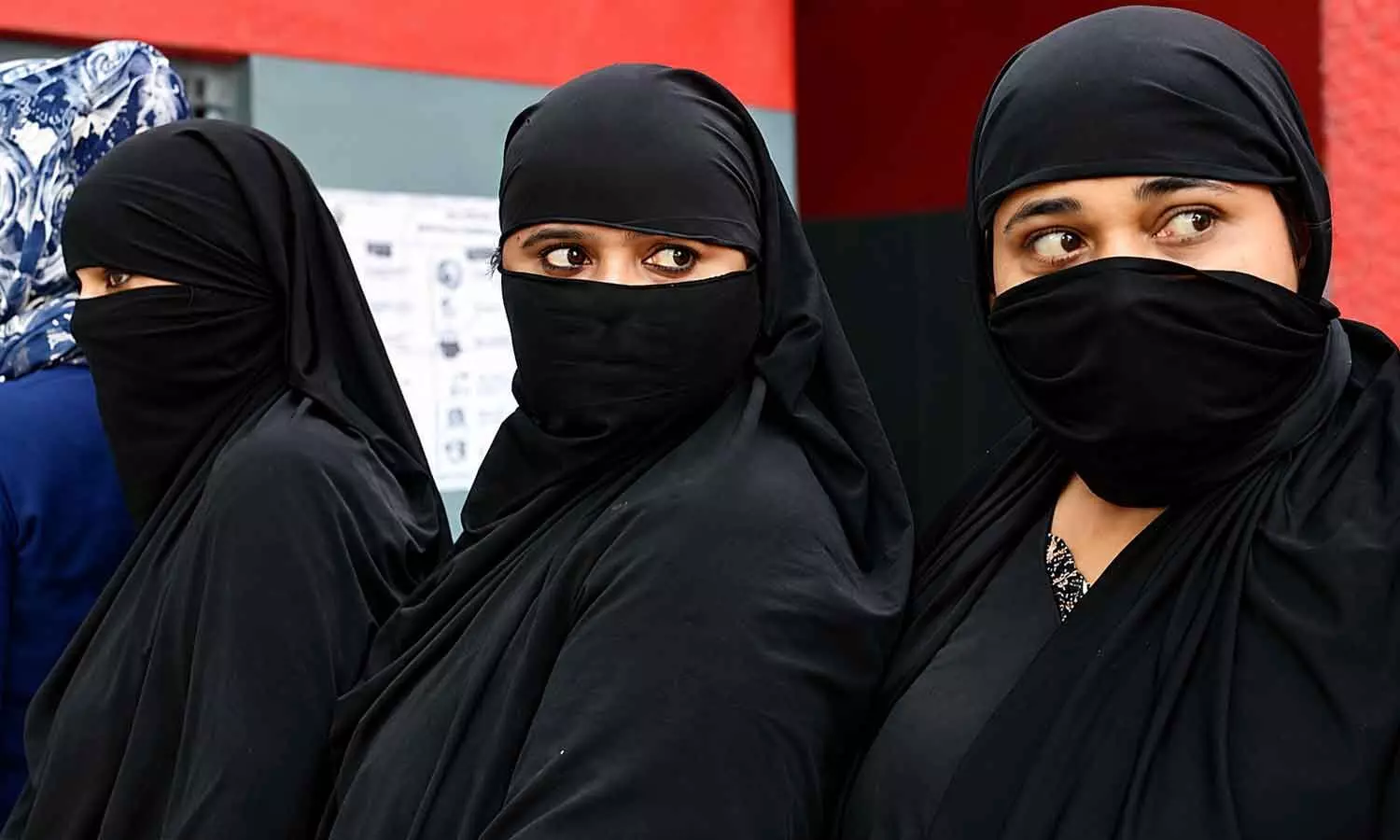
SC seeks govt reply on guidelines for all forms of talaq
NEW DELHI: The Supreme Court on Friday sought responses from the Centre and others on a plea seeking a direction to frame and implement uniform procedural safeguards and guidelines governing all forms of talaq (divorce) under Muslim personal law.
A bench of Chief Justice of India (CJI) Surya Kant and Justice Joymalya Bagchi was told by the counsel appearing for the petitioner that they have also challenged the validity of Talaq-e-Hasan.
Talaq-e-Hasan is a form of divorce among Muslims where a man can dissolve a marriage by pronouncing the word talaq once every month over a three-month period.
The bench tagged the plea with a separate pending petition filed by a Muslim woman, who has challenged the validity of Talaq-e-Hasan given by her husband.
Challenging Unilateral Divorce Practices
The fresh plea has sought a direction to the authorities to declare Talaq-e-Hasan and other forms of unilateral extra-judicial talaq an evil that needs to be banned.
It sought a direction to the authorities to provide, in a retrospective and continuing manner, adequate economic and social protection measures for divorced women and their children affected by arbitrary forms of talaq. It also sought a direction to the Centre to 'frame and implement uniform procedural safeguards and legally enforceable guidelines governing all forms of talaq/divorce under Muslim personal law, so as to ensure fairness, reconciliation, transparency and protection of the fundamental rights of women guaranteed under Articles 14, 15 and 21 of the Constitution'.
The plea has sought to declare Section 2 of the Muslim Personal Law (Shariat) Application Act, 1937, unconstitutional insofar as it seeks to recognise and validate Talaq-e-Hasan as a valid form of divorce.
It also sought a direction to the Centre to frame comprehensive, gender-just and religion-neutral procedural safeguards governing dissolution of marriage, including divorce under personal laws, in conformity with Articles 14, 15 and 21 of the Constitution.
While Article 14 pertains to equality before law, Article 15 deals with prohibition of discrimination on grounds of religion, race, caste, sex or place of birth. Article 21 pertains to protection of life and personal liberty.
The plea has sought to declare that 'absence of statutory safeguards regulating polygamy under Muslim personal law, insofar as it permits a Muslim man to contract multiple marriages without ensuring equality, dignity, informed consent, financial security and constitutional protection to the existing wife/wives, is arbitrary, discriminatory and violative of Articles 14, 15 and 21 of the Constitution'.
It also sought a declaration that contracting a subsequent marriage without the free, prior and informed consent of the existing spouse, by concealing or suppressing such intention, is arbitrary and unconstitutional. Under Talaq-e-Hasan, a divorce gets formalised after the third utterance of the word talaq in the third month if cohabitation has not resumed during this period.
However, if cohabitation resumes after the first or second utterance of talaq, the parties are assumed to have reconciled.
In 2017, the top court declared triple talaq, also a form of divorce prevalent among the Muslim community, as unconstitutional after finding it to be arbitrary and violative of the fundamental rights of women.


