




- CNC demands Codavaland autonomy
- iPhone 16 Drops to Rs 71,999 on Amazon during Great Indian Festival sale
- Karnataka MLC polls: NDA candidate set for hat-trick win in West Graduates' seat, says Vijayendra
- 'Borewell Suraksha Abhiyan' to make Karnataka free of open borewells, says govt
- Bihar teachers, graduates will vote for change in MLC polls: Prashant Kishor
- J&K govt enhances retirement age of judicial officers from 60 to 62 years
- High on energy, low on egos: Trinamool's Derek O'Brien on INDIA bloc protest
- Tipra Motha Party dominates Tripura tribal bodies' polls, wins 74.61 pc of 4,594 seats
Vote Chori: INDIA Bloc Protest Was More About Optics and Symbolism
In Short
What started as a united fight against the Chief Election Commissioner, Gyanesh Kumar, demanding his resignation, finally turned out to be a mere Congress show culminating in a dharna by LoP Rahul Gandhi and Priyanka Vadra along with a few Congress leaders and activists.

Share :
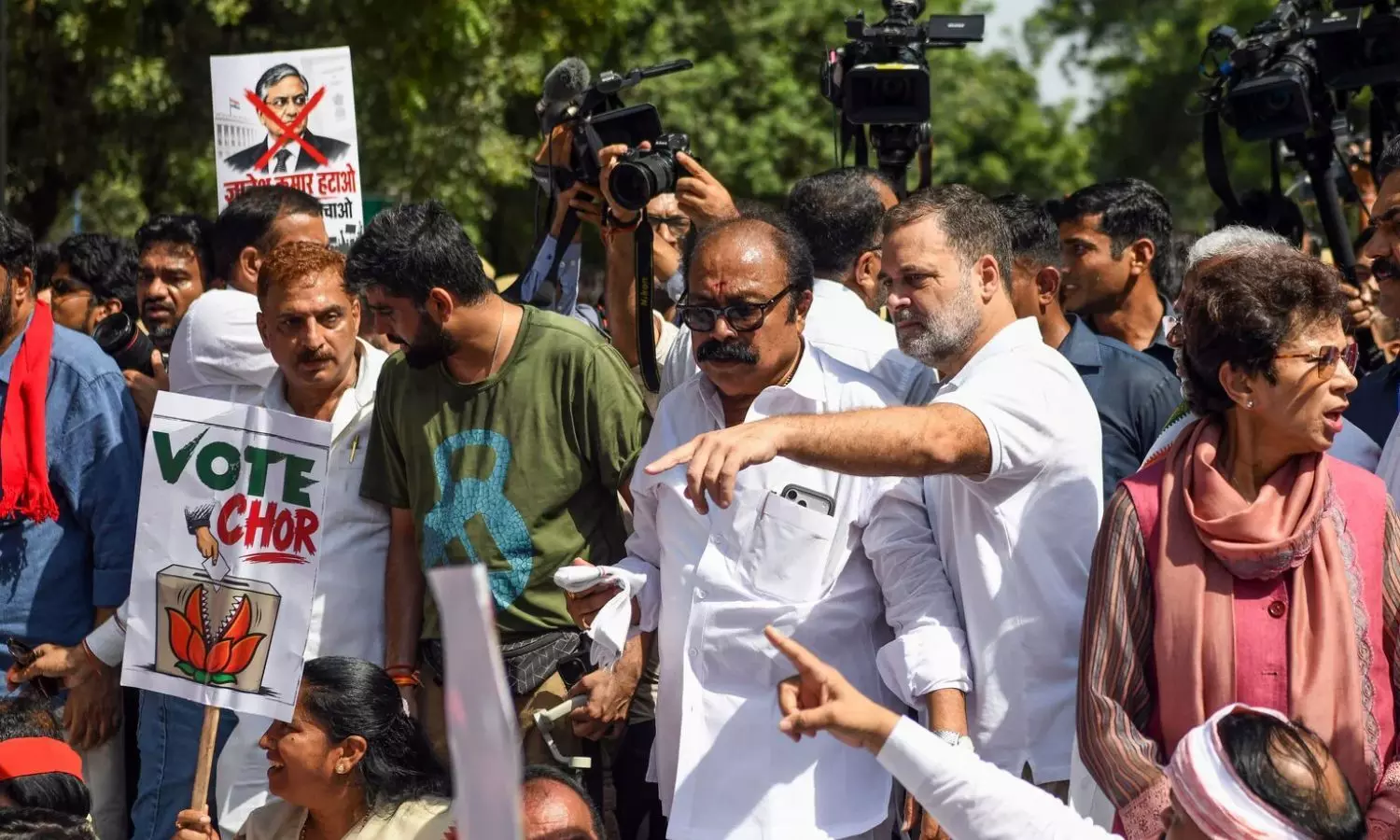
What started as a united fight against the Chief Election Commissioner, Gyanesh Kumar, demanding his resignation
What started as a united fight against the Chief Election Commissioner, Gyanesh Kumar, demanding his resignation, finally turned out to be a mere Congress show culminating in a dharna by LoP Rahul Gandhi and Priyanka Vadra along with a few Congress leaders and activists.
It was more of a day of high drama good enough for headlines in newspapers and a day-long live telecast for electronic media and a good time for social media, but it did not seem to have made any impact at the ground level.
By-elections for Assembly in Tamil Nadu, West Bengal and Puducherry, and Nagaon Lok Sabha in Assam were held peacefully, and the turnout has been around 68 to 70%. As far as Tamil Nadu is concerned, it would be a sort of reflection on the performance of the TVK government led by Joseph Vijay. If they win, their strength would go to 118, and if DMK wins, their numbers would go to 60. The by-elections had taken place as DMK MLAs of Maduranthakam and Dharapuram in Tamil Nadu quit the party and joined TVK. Similarly, in West Bengal, by-polls were held in Nandigram and Rejinagar as TMC members quit and joined BJP.
Amidst this situation, the INDIA bloc rally proved to be more of a symbolic one. Till 11 am, it was a good show of strength with 19 out of 24 members of the INDIA bloc MPs converging at the Makar Dwar of Parliament House and then taking out a rally towards Sansad Marg.
But soon after that, the MPs, along with activists of the Congress and Samajwadi Party, were stopped by the Delhi Police in front of Akashvani Bhavan. The police detained the MPs and activists and sent them to different places by buses.
Rahul Gandhi and Priyanka Gandhi also boarded the bus, but while the party activists were blocking the road, they managed to jump out of the bus, and Rahul, pushing aside the private security men at gate No. 2 of Akashvani Bhavan, entered inside, followed by Priyanka Gandhi and some Congress leaders. From then till late in the evening, both the brother and sister sat under the banyan tree with snacks, tea, soft drinks, and bottled water being supplied to them. Around 6 pm, mattresses were also brought, and Rahul said that they will not leave the place till they got an appointment from the CEC to meet along with 300 MPs.
As the standoff continued, Priyanka Gandhi made some mediation with the Union Home Secretary. She also contacted Samajwadi President Akhilesh Yadav and asked if he could join them at Akashvani Bhavan. But Akhilesh had by then already left for Lucknow. She also contacted Mohua Moitra, but no one joined them at Akashvani Bhavan.
The BJP, meanwhile, reacted, saying that being in the LoP was the best place for him to tear into the government is Parliament and through street shows. He had earlier staged a similar protest near the PM's house. It appears to be more of a credit-chori exercise and competing with CJP, they added.
However, Congress said it was their democratic right to protest and highlight Vote Chori about which Rahul Gandhi has been consistent.
'SP's agenda is to confuse people': UP ministers on Akhilesh's '403 seats' target
Rahul Gandhi, Priyanka Detained After INDIA Bloc Sit-In Over Gyanesh Kumar Row
Vote Chori: INDIA Bloc Protest Was More About Optics and Symbolism
PM Modi marks a milestone in India, records name among few global leaders
Bengal bypolls: Candidate from Mamata Banerjee-led Trinamool faction seeks re-polling in Rejinagar
Udhayanidhi Stalin seeks immediate appointment of full-time agriculture secretary in Tamil Nadu


