




- ASBM University hosts 6th Law Symposium
- Horticulture hub in the making
- Getting down to the nitty-gritty of horticulture devpt roadmap
- Karnataka mulls 35% hike in property guidance values
- Wow! Drought-prone region to blossom into global fruit bowl!
- CM DK Shivakumar calls for strengthening Central Police Command
- Sunnam Cheruvu temple marks Bathukamma Silver Jubilee
- 34 farmers to fly to Delhi for talks on sugarcane support price
ASBM University hosts 6th Law Symposium
In Short
Keynote speaker K Vidyullatha Reddy traced the evolution of technology and justice from the Industrial Revolution to today, noting that technology now challenges human intellect rather than just physical labour.

Share :
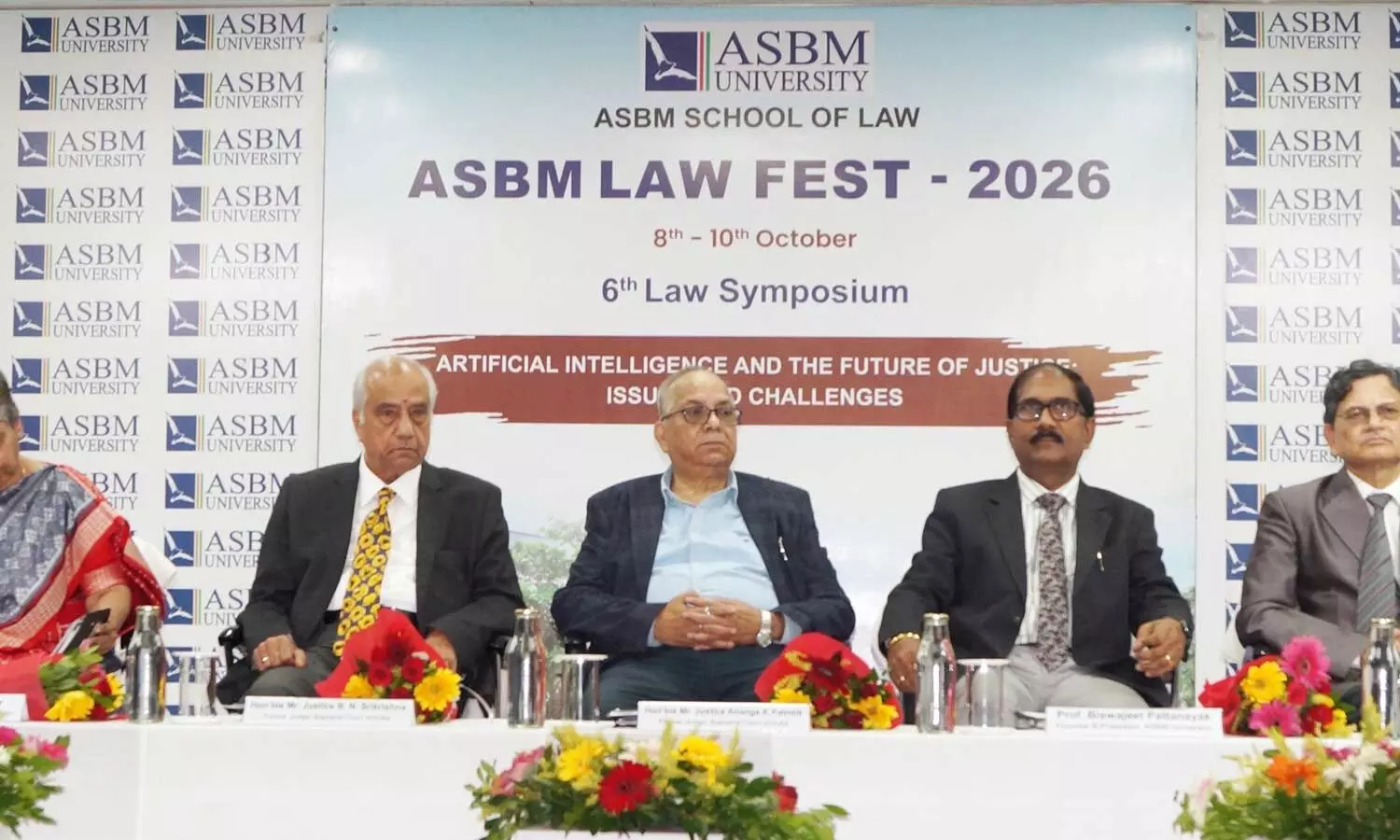
ASBM University hosts 6th Law Symposium
Bhubaneswar: At the 6th Law Symposium on ‘Artificial Intelligence and the Future of Justice: Issues and Challenges,’ ASBM University Founder-President Biswajeet Pattanayak emphasised that technology must serve as a tool, not the goal. He stated that the future of justice relies on a partnership where AI augments human capability while human wisdom retains moral and constitutional authority.
Keynote speaker K Vidyullatha Reddy traced the evolution of technology and justice from the Industrial Revolution to today, noting that technology now challenges human intellect rather than just physical labour. She highlighted the growing gap between rapid, borderless technological progress and slow, territorial legal frameworks, stating, “Technology is fast, and governance is secondary.” Citing the Perplexity–Amazon legal dispute, she questioned who should be held accountable in the digital age: the individual or the intermediary institution.
Chief Guest Justice B N Srikrishna highlighted the ethical and constitutional challenges of AI in the justice system, famously observing that “Natural honesty does not go to artificial intelligence.” He raised critical concerns regarding transparency, algorithmic bias, and equitable access to justice. Specifically, he warned that automated tools and generative AI used for legal drafting risk reproducing data biases due to algorithmic opacity. Finally, invoking the landmark Justice K S Puttaswamy vs Union of India judgment, he underscored the urgent need to safeguard privacy and fundamental rights within a tech-driven legal landscape.
Justice Ananga Kumar Patnaik cautioned against over-relying on AI as a shortcut to learning, warning that it undermines independent thinking, human judgment, and critical reasoning. Speaking on the evolving legal landscape, he emphasised that human intelligence is the foundation of AI, which is currently transforming the justice system through digitisation, live-streaming, and automated legal research.
Haldia Law College, West Bengal, won the 2nd National Moot Court Competition, with Birla School of Law finishing as the runner-up. Rara Kar of FM University was named Best Mooter at the closing ceremony.
Modi, Shah turning Goa into a ‘drug hub’, alleges Revanth
Power bank triggers fire on Delhi-Chennai flight
Man from Hyderabad killed in attack on Riyadh Airport
Sanna biyyam, doddu dara! Rice prices skyrocketing in TG amid export push
Govt must engage with protesters, not suppress them
21 years of right to information law – Achievements and bottlenecks


