




- Shivraj Singh Chouhan flays Cong, alleges party spreading confusion after multiple electoral defeats
- PM Modi, US President Trump hold 'productive conversation', review bilateral cooperation across key sectors
- Google Fitbit Air hits shelves in India on 2 October
- Flydubai Flight Scare: Passengers Recall Screams, Blood After Reported Cockpit Fight
- Government Prepares D2M Rollout: Watch TV on Mobile Without Internet
- Suma Kanakala Gets Emotional Over SS Rajamouli’s Heartfelt AV
- WhatsApp Business Messages to Be Paid From October 1: India Pricing Explained
- High Court Rejects Bail Pleas Of Umar Khalid, Sharjeel Imam
Modi Healthcare marks a paradigm shift in health management
In Short
As Chief Minister, Modi addressed systemic vulnerabilities by prioritising public health infrastructure, sanitation, financial risk protection, and maternal safety. A key milestone came in 2012 with the launch of the Mukhyamantri Amrutam (MA) scheme, which provided low-income households with cashless tertiary care coverage of up to Rs 2 lakh. This initiative ultimately served as the technological and operational blueprint for India’s national health insurance architecture.

Share :
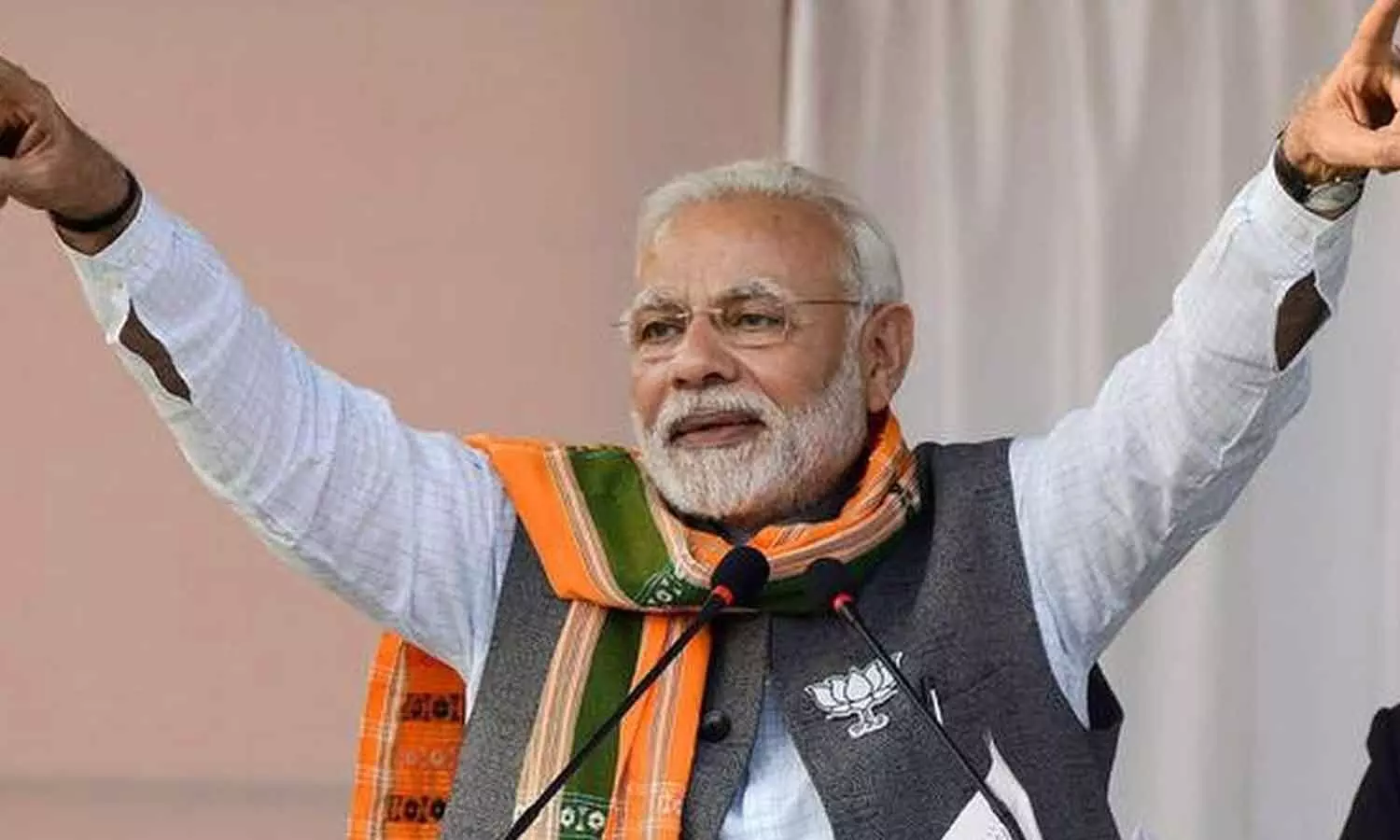
Narendra Modi
Over the past 25 years (2001–2026), first as the Chief Minister of Gujarat and later as Prime Minister, Narendra Modi reshaped India’s healthcare landscape from a fragmented system into a proactive, holistic wellness model centered on ‘Antyodaya.’ His strategy involved pioneering grassroots initiatives in Gujarat and scaling them into the world’s largest public health programmes.
As Chief Minister, Modi addressed systemic vulnerabilities by prioritising public health infrastructure, sanitation, financial risk protection, and maternal safety. A key milestone came in 2012 with the launch of the Mukhyamantri Amrutam (MA) scheme, which provided low-income households with cashless tertiary care coverage of up to Rs 2 lakh. This initiative ultimately served as the technological and operational blueprint for India’s national health insurance architecture.
The Chiranjeevi Yojana and Nirmal Gujarat Abhiyan successfully transformed public health by leveraging strategic partnerships and community-focused infrastructure. Through the Chiranjeevi Yojana, the State partnered with private obstetricians to provide free delivery services for tribal and below-poverty-line families, which dramatically scaled up institutional deliveries. Complementing this medical initiative, the Nirmal Gujarat Abhiyan integrated sanitation directly into the public health framework. By establishing decentralised waste management systems, this programme targeted the root causes of environmental health hazards, significantly reducing waterborne and vector-borne diseases.
By attaching new medical colleges to district hospitals, the State initially expanded its capacity for medical students and resident physicians. Upon becoming Prime Minister, Modi scaled this model nationally, anchoring India’s healthcare policy on affordability, accessibility, infrastructure, and preventive care.
Launched in 2018, Ayushman Bharat (PM-JAY) is the world’s largest publicly funded health assurance programme, providing Rs 5 lakh annual free health insurance per family for secondary and tertiary care. The scheme has issued over 48.5 crore Ayushman Cards, facilitated more than 13 crore hospital admissions, and saved low-income families over Rs 2.03 lakh crore. In 2024, coverage was expanded to include all senior citizens aged 70 and above, regardless of income.
Ayushman Arogya Mandirs transformed primary care by converting over 1,86,000 sub-centres into Health and Wellness Centres for rural diagnostics. Medical education expanded significantly, increasing medical colleges from 387 to 858, boosting MBBS seats past 1,36,000, and growing the AIIMS network to 22 campuses. Additionally, over 10,000 Janaushadhi pharmacies cut medicine costs by 70 per cent to 90 per cent, while the Ayushman Bharat Digital Mission digitised medical histories for paperless care through 97.8 crore active ABHA IDs.
Prime Minister Modi’s governance strategy has transformed public health by addressing clean water, sanitation, and digital health delivery. Through the Swachh Bharat Mission, the construction of 12 crore toilets significantly reduced childhood stunting and diarrhoeal outbreaks. Simultaneously, the Jal Jeevan Mission delivered clean tap water to over 15 crore households, while the digital CoWIN platform facilitated the domestic rollout of 220 crore COVID-19 vaccine doses. Together, these structural reforms have built a resilient, digitised, and accessible healthcare ecosystem.
Green energy scheme ‘big push’ towards achieving 900 GW non-fossil capacity by 2035: PM Modi
Will Govt Alter MDR Rate on UPI Transactions Above Rs 2,000?s
Big Challenges Ahead for BJP
CM Revanth Reddy urges govt employees to ensure welfare schemes delivered grassroots
INDIA Bloc Meeting: Another Attempt to Re-launch Rahul - BJP
Flydubai Flight Scare: Passengers Recall Screams, Blood After Reported Cockpit Fight


