




- Apple Hardware Chief Explains Why He Dislikes iPhone Screen Protectors
- AJUP chief Humayun Kabir appears before police in audio case, fears arrest
- Indian Naval ships arrive in Philippines for ASEAN Defence Ministers' meet-plus maritime activity
- Powerful testament to ambition of New India: Nitin Nabin on Delhi-Meerut Expressway
- Karnataka BJP demands week-long special Assembly session, seeks debate on drought
- J&K Assembly erupts over power tariff, NHM employees' issues; NC and BJP trade slogans
- GST rate cuts neutralised by inflation, says Jairam Ramesh
- UP CM Yogi holds Janta Darshan, instructs officials for prompt action on people's problems
Apple Hardware Chief Explains Why He Dislikes iPhone Screen Protectors
In Short
Apple’s hardware chief explains the engineering behind Ceramic Shield 2, while highlighting the balance between scratch resistance and long-term durability.

Share :
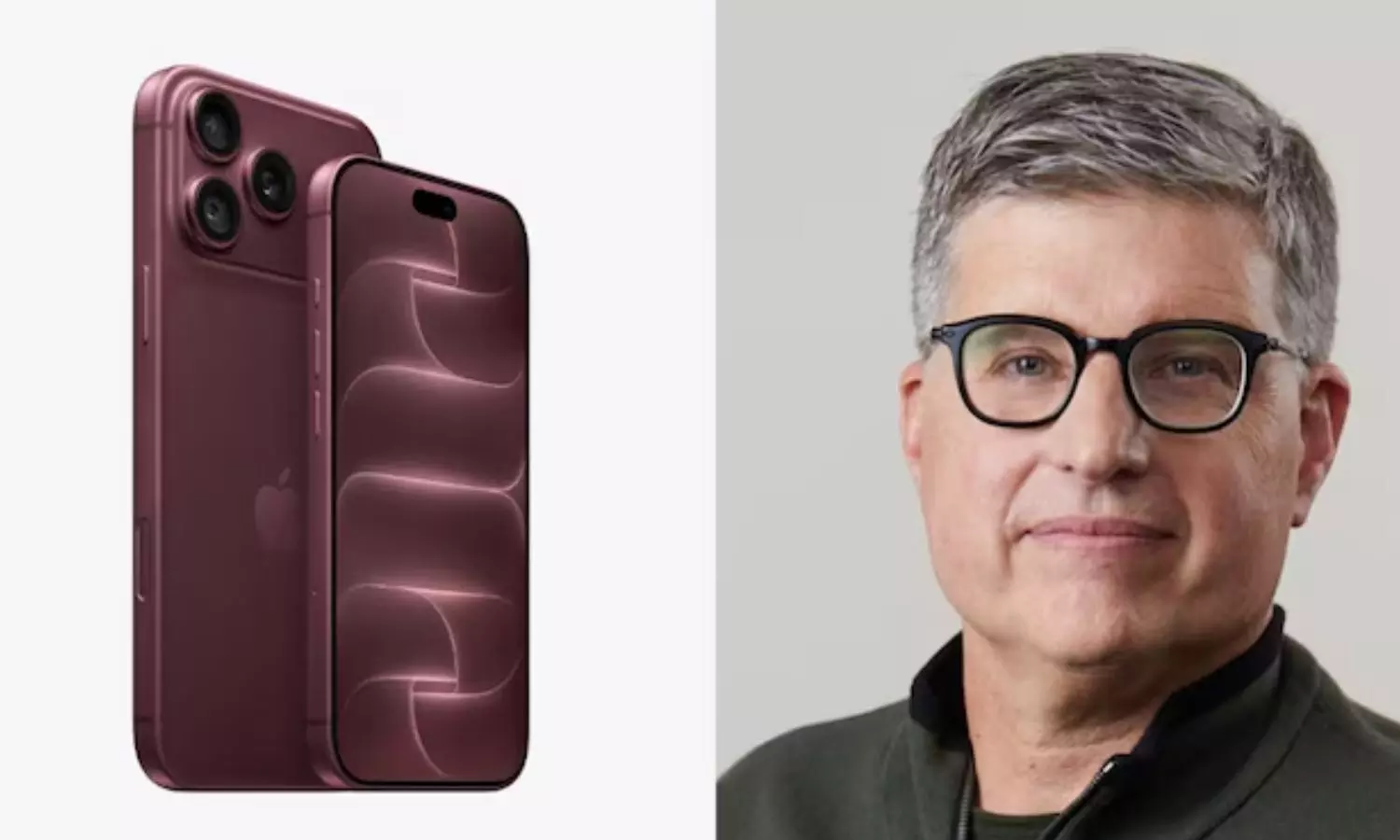
Apple Hardware Chief Explains Why He Dislikes iPhone Screen Protectors
In a recent interview with a famous publication, Marieb shared his views on users applying protective glass to their iPhone displays. He admitted that he dislikes seeing screen protectors on Apple’s devices, particularly because of the work that goes into designing the original display.
"Personally, when I see someone put a screen protector on their iPhone, it makes my skin crawl,” he told.
Marieb took over as Apple’s hardware engineering chief after John Ternus, who previously held the position, succeeded Tim Cook as CEO.
Why Apple’s Hardware Chief Prefers the Original Display
Explaining his stance, Marieb said Apple invests considerable effort in developing its smartphone screens and improving their durability. He believes adding a screen protector can interfere with the experience Apple intends to deliver through its display technology.
“because we work so hard to make beautiful front screens.”
A key part of Apple’s approach is Ceramic Shield 2, the protective glass introduced with the iPhone 17 series in September 2025. The technology is also used on the iPhone 18 Pro models and the outer display of the iPhone Duo, Apple’s first foldable iPhone.
According to Marieb, Apple focused on balancing scratch resistance with protection against long-term surface wear. He explained that increasing one characteristic could affect the other, making the development process a matter of finding the right balance.
"We could have made it more scratch-resistant, but it would have been a little less wear-resistant. It’s the long life we’re looking for against both of those loads over time," he said.
Apple claims that Ceramic Shield 2 provides up to three times better scratch resistance than the original Ceramic Shield used on older models, including the iPhone 16. The company has also described the latest glass as “tougher than any smartphone glass,” although it has not provided a comparable numerical improvement for drop resistance.
Apple Tests Displays for Real-World Usage
Marieb also discussed how Apple evaluates the durability of its smartphone screens. Rather than relying exclusively on traditional industry testing standards, the company attempts to recreate situations that users encounter in everyday life.
"We try to say, ‘How are customers actually using this? What exactly are they exposing it to in the real world?’ And we make tests that mimic those things," he explained.
He added that Apple aims to simulate several years of usage within a much shorter testing period, allowing engineers to evaluate how displays perform over extended periods.
The hardware executive also highlighted the challenge of protecting screens from sharp objects while ensuring that the surface remains durable during repeated daily use.
“We worry about scratching, which is obviously very dependent on having -(material that can withstand-) very sharp things going into the screen,” Tom Marib added. “But we also worry about wear over time; as people use the screen, whether they’ll wear away that surface. And it turns out that those things are a little counter indicated in a lot of materials.”
Should iPhone Users Stop Using Screen Protectors?
Despite Marieb’s preference for using the original iPhone display, his comments do not mean that users should immediately remove their screen protectors. A protective accessory can still offer an additional layer of defence against scratches and accidental impacts.
The quality of a screen protector also matters, as poorly designed products may affect touch responsiveness, clarity or the overall viewing experience.
Marieb’s remarks come shortly after Apple launched the iPhone 18 Pro and iPhone 18 Pro Max, which feature upgrades such as a variable-aperture main camera and larger vapour cooling chambers. The iPhone 18 Pro starts at Rs 1,64,900 in India, while the iPhone 18 Pro Max is priced from Rs 1,79,900.
Apple is also expected to launch the iPhone Duo in India next month, with a starting price of Rs 2,99,900.

Apple Hardware Chief Explains Why He Dislikes iPhone Screen Protectors
Japan feels 10-15 years ahead of time, excited for tomorrow’s game, says Washington Sundar
Rajasthan civic polls: BJP wins Ajmer, Pali despite Congress lead; INC takes Bikaner
Govt launches science quiz to mark CSIR’s 85th Foundation Day
Imran Khan’s Sisters Arrested in Pakistan
Vande Mataram Row Again in Karnataka Assembly
'Rs 370 biryani' remark: SC issues notice on comedian Pranit More's plea seeking clubbing of FIRs
UP Parties in Poll Mode, Step Up Alliance Talks Ahead of 2027
IIT Bombay Apologises Over Sahil Wakode Statement, Deletes Professor Post; Director Shireesh Kedare Stays
Rajasthan civic polls: BJP wins Ajmer, Pali despite Congress lead; INC takes Bikaner


