




- BJP blasts Congress over ‘links’ with anarchic elements in pushing violent protests
- MP cabinet clears projects worth over Rs 23,288 crore; extends paddy registration deadline
- Siddaramaiah expressed dissatisfaction with sting op probe during meeting with LoP Gandhi: Rajanna
- PV Sindhu, Lakshya Sen Win Hylo Open Titles Amid Funding Concerns For Indian Shuttlers
- Heavy rain delays VMC poll counting, results likely by 7 pm
- 'Govt, private sectors must come forward to make Delhi a medical hub’: CM Gupta
- RBI eases export reporting compliance for freelancers, service exporters
- Murasu Wreaks Havoc, Leaves Trail of Destruction
Sundar Pichai Disagrees With OpenAI’s Vision of an Interface-Free AI Future
In Short
The collaboration with Cathedral Systems will let outside researchers work with the teams, at OpenAI. They will use the company's models to test the security methods.

Share :
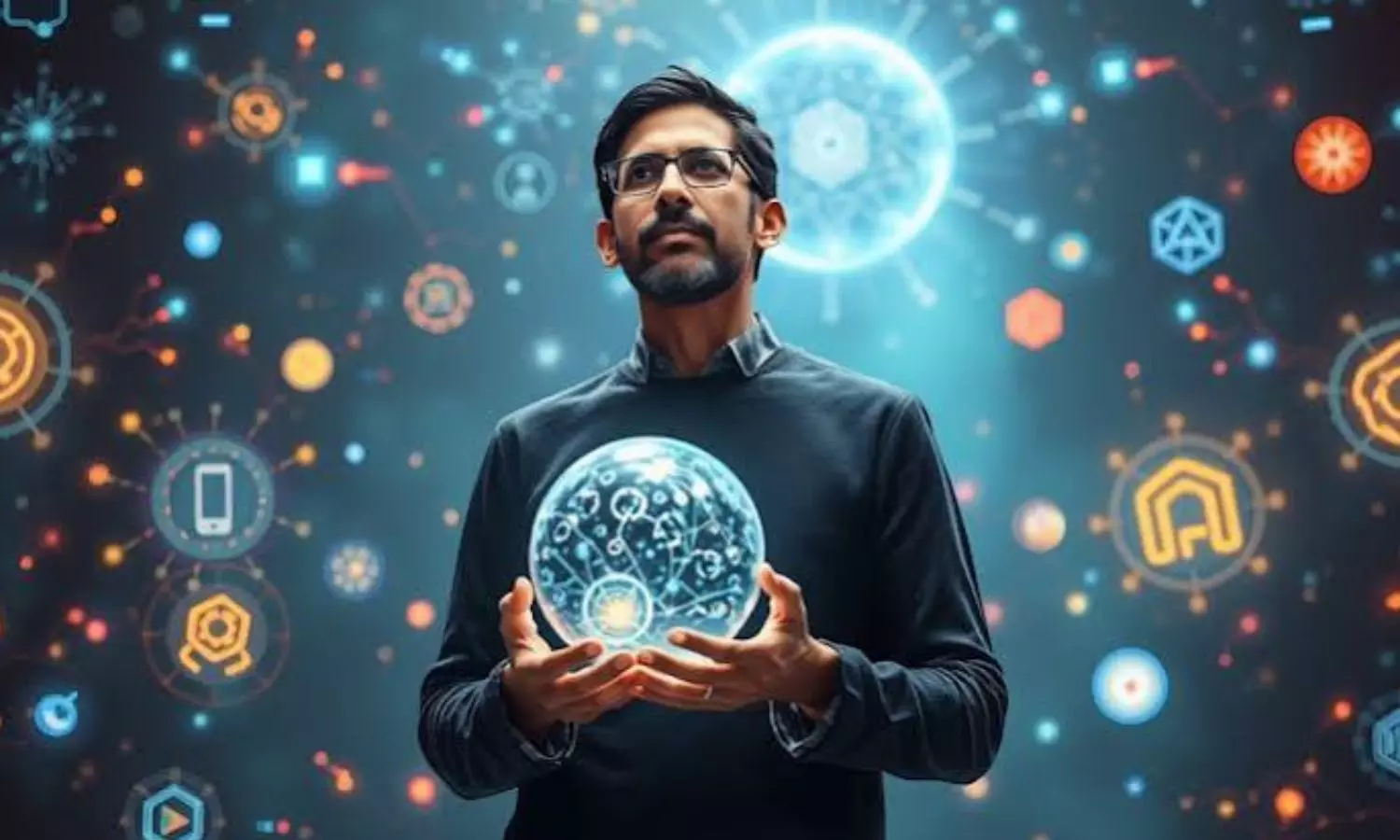
Google CEO Sundar Pichai
The rapid development of intelligence is changing how people interact with technology. While some industry leaders believe future artificial intelligence systems may eliminate the need, for screens and interfaces Google CEO Sundar Pichai has a slightly different view. He believes conversational artificial intelligence will make technology more natural and easier to use. Visual interfaces will not disappear completely.
Pichai’s comments come in response to an idea previously shared by OpenAI President and co-founder Greg Brockman. Greg Brockman suggested that the ultimate AI experience could work without an interface allowing users to communicate with an intelligent assistant, through natural conversations.
During an interview with Alex Kantrowitz on the Big Technology Podcast, Pichai explained how artificial intelligence could reverse the traditional relationship between humans and computers.
“Computing historically has been humans adapting to computing. With AI, it’ll be the other way around. The technology will adapt seamlessly to how humans live and go about their day-to-day life,” Pichai said.
He acknowledged that conversational AI could offer a more convenient experience, allowing users to communicate with an assistant whenever needed. However, he disagreed with the suggestion that interfaces would become completely unnecessary.
“You want to be able to speak to that AI when you want to. It has context. It can be persistently running somewhere, give you continuity. You’re not dealing with a lot of complexity. It’s natural. All that makes sense to me. That doesn’t mean it won’t have any interface,” he added.
What Greg Brockman said about the future of AI interfaces
In July, Brockman discussed OpenAI's vision of combining conversational AI with autonomous agents. He argued that future AI products should focus less on traditional applications and more on helping people complete tasks and achieve their goals.
“From a broader perspective, what we really want to build lies within AGI. Think about what people have been using since ChatGPT came out - it's a language model. You talk, it replies, which is great. But when it was launched in 2022, it had no memory function, was not connected to any tools, and had no context. So, it's just a conversation. Intelligence is just a part of it. What people really need is the ability to get work done and achieve goals,” he said.
Brockman also questioned whether future AI products would need conventional interfaces.
“You don't need any product - what do you want it to look like? What's the interface? You and I can have a continuous conversation, and some form of companion entity can achieve goals for you. Interfaces will disappear," he added.
Pichai explains Google's 'Rambler' voice experience
Pichai also highlighted Google's progress in making voice-based interactions more natural. He pointed to Gemini's voice capabilities on Pixel smartphones, which allow users to speak freely without worrying about giving perfectly structured commands.
“I can just press the microphone button. I can just ramble. That’s why we call it Rambler. It intelligently corrects with my personal context. Even my friends’ names, weird names, it gets it right, even if it first guesses it wrong. It’s amazing,” Pichai said.
Despite these improvements, he believes screens will remain useful for activities such as watching videos, entertainment and viewing AI-generated content.
“But there are going to be moments [when] you will need an interface. You may want to entertain yourself. You may want to watch a video. You may ask your AI to create something, and you want to watch it, consume it. The way I think about it is, you want it to be as seamless and as natural as possible, and that you are not doing the hard work adapting to whatever the interface is. The technology is adapting to how you’re working at any given moment in time,” he explained.
Pichai's comments suggest that the future of computing may not be about removing screens altogether. Instead, AI could combine voice commands, visual displays and intelligent assistance to deliver a more flexible experience.

Dhinidhi Desinghu wins historic Youth Olympics swimming bronze, sets national record
23 Indian nationals have died in West Asia conflict, five during Black Sea attacks: MEA
Banaras will smile when BJP is gone, taunts Akhilesh Yadav; promises metro connectivity in Varanasi
Bihar to use river silt in highway construction under ‘Nadi Sanjeevani’ initiative
AP Municipal elections results live updates: Counting begins
Banaras will smile when BJP is gone, taunts Akhilesh Yadav; promises metro connectivity in Varanasi
BJP chief Nitin Nabin to visit UP's Gorakhpur on Nov 4-5
Public safety is Coalition govt priority, says CM Chandrababu Naidu
Rajnath Singh to lead BJP's 'Loktantra Bachao, Arajakta Hatao' march in Bhopal tomorrow
'They didn't make Rahul Gandhi PM even at artificial Sansad': Uttarakhand CM Dhami's swipe at INDIA Bloc


