
A Year-by-Year Breakdown of Every iPhone Ever Made (2007–2025)

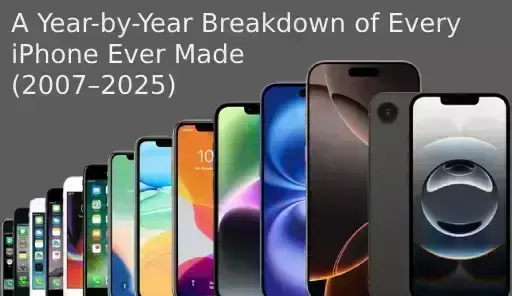
The iPhone has been a long way since its debut in 2007. Since its debut we've seen more than 42 iPhone models. This is a look into how this OG touchscreen phone has grown
If you've been keeping track of the Apple iPhone lineup since its beginning you'll be reminded of the days where iPhones were released in a simple, easy-to-follow numerical pattern. For instance, the iPhone 4 followed the iPhone 3GS and so on. But things became more complex with the growing iPhone models list from 2007 to 2025—especially when Apple introduced the ‘Plus’ versions, starting with the iPhone 6, which added another layer to the Apple iPhone models year-wise
2007 - iPhone
First iPhone was released to great acclaim in 2007, revolutionizing the industry of smartphones and focussed on the touchscreen aspect.
2008 - iPhone 3G
The iPhone was then followed by the iPhone 3G in the year following in 2008, and as the name implies included support for 3G networks. The overall style of the phone was retained in many aspects.
2009 - iPhone 3GS
The iPhone 3GS emphasised improved performance; while it retained the same design and 3G features as its predecessor, it was nearly twice as fast as earlier iPhone models.
2010 - iPhone 4
Apple released the iPhone 4 in 2010 which featured a major redesign including its unique glass-and-steel "glass sandwich" structure and a larger 4-inch display representing a complete iPhone timeline history.
2011 - iPhone 4s
The design that was a staple that came with iPhone 4 was every iPhone ever released. iPhone 4 was repeated with the iPhone 4s, which included slightly improved specifications and also the introduction of Siri virtual assistant.
2012 - iPhone 5
The iPhone became even larger when it was upgraded to the iPhone 5 however, it offered a display that was 4 inches in diagonal, using an aspect ratio quite close to 16:9. It still had the classic glass sandwich feel, but the new dual-tone colours gave it a fresh, stylish edge.
2013-- iPhone 5s series, iPhone 5c
The design of the iPhone 5 was identical to its predecessor, the iPhone 5, Apple threw the faster chip. Apple also adopted an entirely new approach when it launched in the iPhone release history iPhone 5c's polycarbonate shell available in various colors like the unimaginably vivid yellow, green, and pink.
2014. - iPhone 6 series
The iPhone 6 introduced a sleek new metallic design and was the first in the series to come in two sizes: the standard iPhone 6 with a 4.7-inch screen and the larger iPhone 6 Plus with a 5.5-inch display.
2015. - Series iPhone 6s
The trend of having a bigger Plus version was a trend that continued in the new iPhone 6s. Both the iPhone 6s and iPhone 6s Plus featured a similar design, however with improved performance due to the A9 chip that was introduced.
2016--iPhone 7 series
With a slight change in style iPhone 7 and the iPhone 7 and the iPhone 7 Plus had been offered with new colours including jet black and matte black. They were also the first iPhones to do away with the 3.5mm headphone jack.
2017 - iPhone X, iPhone 8 series
In the year 2017, Apple completely changed the design of iPhone X, a completely new design. The bezels that were thick and the distinctive home button were gone, replaced by an almost-bezel-less display, and s an edge on top, which included the front camera and an Infrared sensor mechanism that was new to enable FaceID.
2018--iPhone XR, iPhone XS series
Since 2018, the brand new bezel-less FaceID design was Apple's top priority. This is why three iPhone launch dates by year were introduced that all featured the appearance of the. The flagship phones were the iPhone XS and iPhone XS Max and an entry-level iPhone XR.
2019 -- iPhone 11 series
The iPhone 11 series replaced the previously confusing lineup with a more streamlined selection, where the iPhone 11 served as the entry-level model.
2020 -- iPhone 12 series
The iPhone 12 series in 2020 offered four models in place of the three. The basic iPhone 12, the 12 Pro and 12 Pro Max succeeded the iPhone 11 series, a new iPhone 12 mini, with the screen size of 5.4 inch screen, was added to offer a smaller version of the other models that had the 6.1-inch (or larger) screen.
2021-- iPhone 13 series
iPhone 13 series also had four different models that were all directly akin to iPhone 12 series. iPhone 12 series. The iPhone 13 series improved the series' performance, and also reduced the dimensions of its notch.
2022 -- iPhone 14 series
Apple changed its lineup slightly in the past year, with Apple's iPhone 14 series. The Plus model substituted the mini and buyers can also purchase a larger, smaller non-Pro iPhone 14 Plus.
2023 -- iPhone 15 series
Apple launched their newest iPhone 15 series in 2023 which consists of the iPhone 15, 15 Plus, 15 Pro, and the highest-end 15 Pro Max.
Despite maintaining the design of the iPhone 14 models the newest iPhones feature significant improvements including USB-C charging capability and titanium frames with Pro versions including an advanced A17 Pro chip suitable for console-grade gaming with real-time ray tracing.
2024--iPhone 16 series
Apple has also revealed the launch of the new iPhone 16 series in September 2024. It will introduce a variety of new features to the line. There are still four iPhone variations namely the iPhone 16 Plus, and the iPhone 16 Plus and the iPhone 16 Pro and the iPhone 16 Pro Max, all four versions now have the brand new Camera Control mechanism, which provides new and intuitive ways to access the camera app and snap photos quickly.
2025 - iPhone 16e
The logical successor to the SE series, the iPhone 16e, launched in 2025, to mixed reviews. Many were thrilled by the reality that this iPhone evolution timeline offered features such as Apple's Apple A18 chipset, Apple Intelligence and an impressive 48-megapixel Fusion camera for a relatively low cost of Rs. 59,900.
Many have criticised the 16e's dated 60Hz refresh speed display absence in MagSafe charging and the only rear camera. It could be an excellent iPhone release list from 2007 for users looking to upgrade to iOS or Apple users who want upgrading from the old iPhone 11 or 12.


