




- Second US judge blocks $100,000 H-1B fee
- SIR row: Karnataka CEO directs action against applicants filing false voter claims and objections
- RBI eases approval process for subsequent bank share acquisitions by funds
- Tamil Nadu CM Vijay to hold roadshow in Madurantakam tomorrow
- Bihar: Prashant Kishor welcomes Anant Singh’s support for Jan Suraaj
- 5th Kautilya Economic Conclave to be held in Delhi from Oct 3 to 5
- SC's written order on e-challans does not include linking traffic fines to electricity bills
- Amit Shah to visit Karimnagar on Oct 4th
Food Safety Inspection: Kitchen Hygiene, Storage and Pest Control
In Short
A thorough food safety inspection covers kitchen hygiene, raw materials, storage conditions, pest-control arrangements and waste disposal to ensure cleanliness and compliance with food safety standards.

Share :
Food Safety Inspection: Kitchen Hygiene, Storage and Pest Control
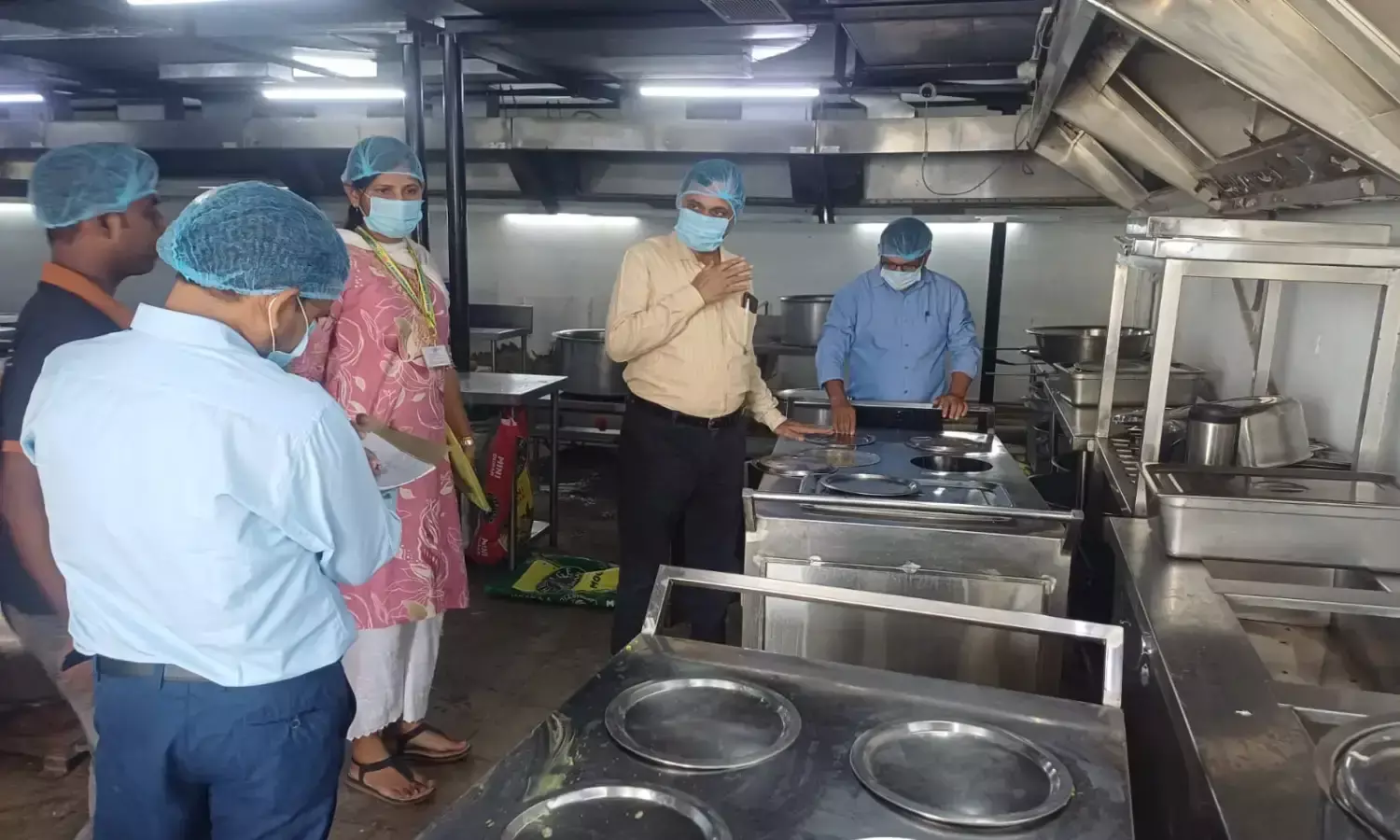
Lucknow, 01 October: Under the leadership of Chief Minister Yogi Adityanath, as part of efforts to strengthen public health arrangements in the state, the food safety and drug administration department conducted a statewide special campaign on the occasion of Gandhi Jayanti to ensure the food safety of meals being provided to patients in government hospitals and medical colleges. Putting into practice Mahatma Gandhi's values of cleanliness, service and public health, departmental teams carried out special inspections of the kitchens and canteens attached to government hospitals and government medical colleges in all 75 districts of the state.
Under the campaign the plans at kitchens and canteens connected to, around 42 government colleges and 150 district and other government hospitals were checked. At these places food is. Given out not just for patients who are staying in the hospital but also for the people who take care of them. Of just looking at the food itself the department checked the whole process from when the food is made to how it is kept how it is stored how it is taken to the right place and how it is given to the patient against food safety rules.
Why safe food for patients is essential
A patient admitted to a hospital depends on the hospital administration for their treatment arrangements. In the state of illness, their dietary requirements may also differ from those of an ordinary person. In such a situation, the quality, hygiene and safe handling of food are matters directly linked to the patient's health and treatment.
Therefore, the objective of the campaign was not merely to see whether the food was of good quality, but also to ensure how clean the kitchen where the food is being prepared is, whether the raw material is safe, how the food is being kept, and whether its food safety is maintained until it reaches the patient.
Inspection at every level, from kitchen to patient's plate
During the inspection, the following were checked: cleanliness of the food preparation area, storage and preservation of food items, personal hygiene of the staff preparing the food, quality of raw materials, pest control, transportation and distribution of prepared food, drinking water, cleanliness of utensils and equipment, drainage and waste disposal, and arrangements for food in accordance with patients' medical needs. In many kitchens, the arrangements were found satisfactory and the necessary basic facilities were available. However, at some places, points needing improvement also emerged. During the inspection, unhygienic conditions were found in kitchens and food storage areas at some places. At some places there were drainage leakages, while at others some problems in the basic infrastructure were noticed. At some places, the need for pest control was felt. These shortcomings were considered improvable, both for food safety and for the basic infrastructure of the kitchens.
Improvement within 14 days, follow-up inspection thereafter
The department has clarified that the objective of the campaign is not merely to record shortcomings, but to ensure their timely and effective resolution. In this connection, the Chief Medical Superintendent (CMS) or Director of the concerned hospital is being formally informed about the major shortcomings. Hospitals have been given 14 days to remove the identified shortcomings. After this, follow-up inspections will be conducted by the food safety department's teams. If the expected improvement is not found in the re-inspection, action will be taken to suspend the licence and registration of the concerned food business operator. If it is not possible to complete the necessary repairs or basic improvements in any kitchen within two weeks, an alternative arrangement will have to be made without affecting the supply of food to patients. If required, the work of preparing food may be temporarily shifted to some other safe, clean and suitable premises.
SIR row: Karnataka CEO directs action against applicants filing false voter claims and objections
Food Safety Inspection: Kitchen Hygiene, Storage and Pest Control
Emirates’ London flight diverted to Frankfurt after medical emergency onboard
RBI eases approval process for subsequent bank share acquisitions by funds
FRCA Should Not Become a Fraud on Parliament: Congress MP Seeks JPC Extension
Aviation Security Needs a Relook: Pilot Checks Must Be Strengthened
Emirates’ London flight diverted to Frankfurt after medical emergency onboard
Building Araku into a premier global coffee destination: Chandrababu Naidu
National Voluntary Blood Donation Day 2026: Significance, Benefits And Why Regular Donation Matters
BSNL Recharge Plans: Check Data, Validity and Prices of All Prepaid Plans


