




- Congress names 25 MLAs for corporation, board posts
- Kerala orders vigilance probe against CEC in 2006 case
- Former AIADMK MLA Murugumaran joins TVK
- TN bypolls: Left parties turn to social media to reach voters
- Tamil Nadu ministerial team to visit Kerala for talks today
- FIR against Udhayanidhi for involving child in campaign
- Hydroponic ganja worth Rs 5.2 cr seized at Chennai airport
- Indian Navy sailor held for leaking classified data to Pak operative
AP takes BC quota battle to SC
In Short
Govt challenges HC verdict

Share :
AP takes BC quota battle to SC
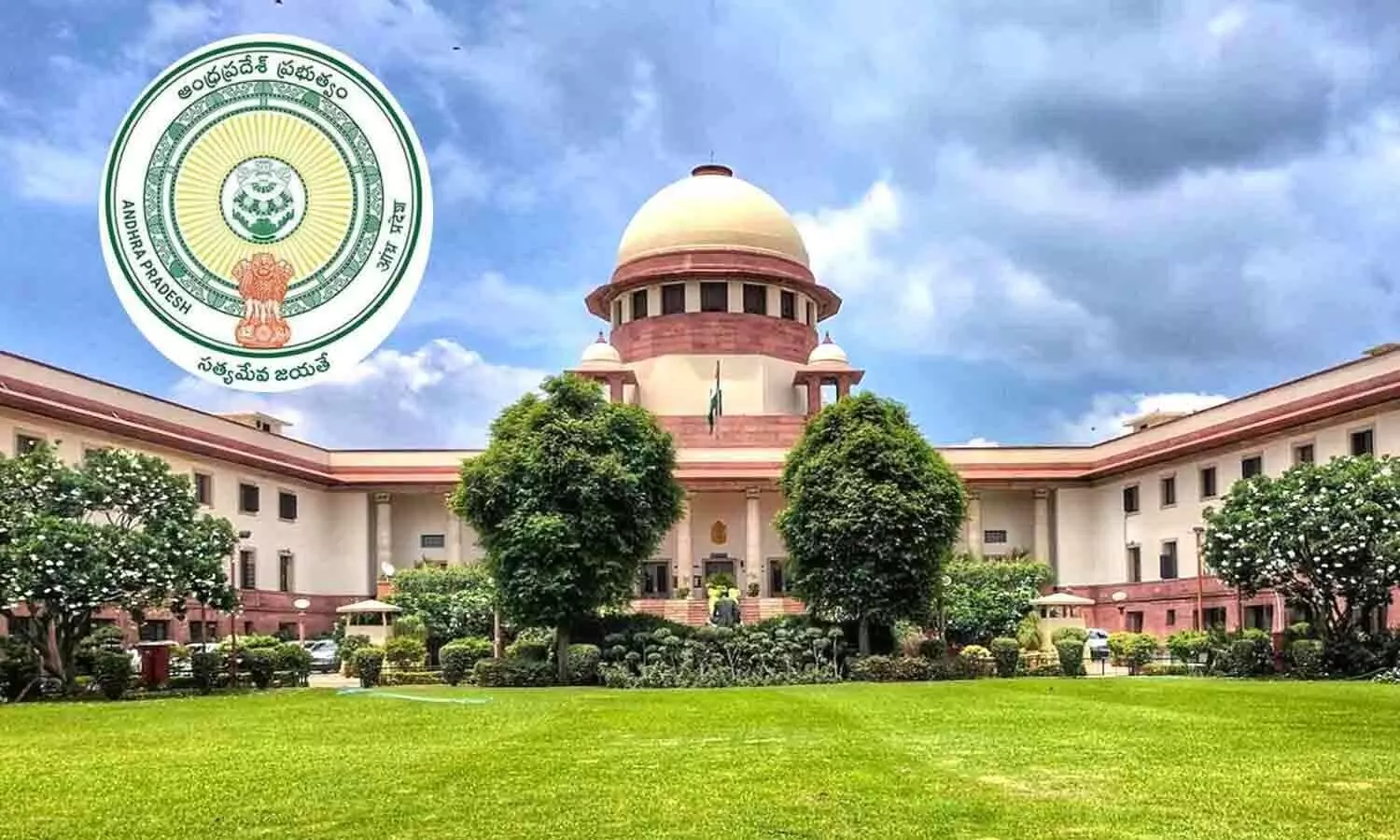
Amaravati: The Andhra Pradesh government has moved the Supreme Court challenging the High Court verdict that struck down two Government Orders providing 34 per cent reservation to Backward Classes (BCs) in local body elections, thus opening a fresh legal and political battle over the NDA coalition government’s key electoral commitment.
The petition, filed on Saturday, seeks appropriate orders to enable implementation of the 34 per cent BC quota and effectively overturn the High Court’s decision. The case is presently before the Supreme Court Registry, which will examine the petition before deciding its listing.
With the issue carrying considerable political significance, the government expects an early hearing.
The High Court had struck down the two GOs after holding that the reservation arrangement could not breach the 50 per cent ceiling laid down in Supreme Court judgments. The government’s appeal in the Supreme Court, however, goes beyond merely questioning the High Court order. Its central argument is that the High Court did not adequately consider Supreme Court precedents permitting reservation arrangements to be tailored to local conditions.
The State maintains that the 34 per cent quota was determined after taking into account the demographic composition and specific circumstances of Andhra Pradesh. It has also cited judgments relating to Tamil Nadu and other States in support of its position.
But the principal legal hurdle remains the 50 per cent ceiling. The Supreme Court’s jurisprudence, particularly the principles flowing from the 1992 Indra Sawhney judgment, treats 50 per cent as the general ceiling on reservations, while recognising that “extraordinary circumstances” can justify a departure. Consequently, the State will have to do more than establish a substantial BC population. It will have to demonstrate why the circumstances in Andhra Pradesh are sufficiently exceptional to warrant crossing the ceiling.
This brings the ‘triple test’ into sharper focus. A dedicated commission is required to examine and substantiate the need for political reservation for Backward Classes in local bodies.
The State says it constituted the Rajiv Mishra Commission and acted on its recommendations. The crucial question before the Supreme Court will be whether the material produced by the State adequately establishes the factual basis for the 34 per cent quota and satisfies the constitutional requirements.
Providing greater representation to BCs in local bodies was one of the Chandrababu government’s prominent electoral commitments. The government’s decision to immediately challenge the High Court verdict signals that it does not intend to allow the issue to disappear with the court ruling. Instead, it is taking the fight to the apex court in an attempt to find a legal route for implementing the promised quota before the local body elections.
The opposition, meanwhile, has questioned the basis of the government’s move, arguing that the present GOs do not materially differ from the reservation orders issued during the previous YSRCP government.
Critics contend that both governments attempted to provide BC reservation in excess of the 50 per cent ceiling without securing a legal framework capable of sustaining it. They have also questioned the government’s reliance on the Rajiv Mishra Commission and alleged that the Commission’s report and the data underpinning the reservation have not been made public. These are political allegations and will ultimately have to be distinguished from the legal material placed before the Supreme Court.
The dispute also raises a larger constitutional question. Tamil Nadu’s 69 per cent reservation, protected through its inclusion in the Ninth Schedule following the 76th Constitutional Amendment, is frequently cited in the broader debate over reservation beyond 50 per cent. Several States have sought similar constitutional protection for their reservation policies.
For Andhra Pradesh, however, the immediate issue is different. The government has chosen to defend the 34 per cent quota through litigation rather than seeking constitutional protection. The Supreme Court will therefore have to examine whether the State can sustain the quota within the existing constitutional framework and judicial precedents.
The High Court has directed that the local body election process be completed within six weeks. Unless the Supreme Court intervenes or grants a stay, the schedule would require the elections to be completed by the second week of November.
Thus, the Supreme Court petition has acquired a significance extending beyond the fate of two GOs. It will determine whether the State can establish the constitutional basis for 34 per cent BC political reservation, whether the alleged extraordinary circumstances withstand judicial scrutiny, and whether the coalition government can translate its political commitment into an enforceable reservation before the local body elections.
Decriminalising GST regime augurs well
Justice must not only be done but also remain beyond doubt
A tale of two cities: Unmasking the reality of Hyderabad’s urban boom
CBI begins probe into Kaleshwaram project?
Haryana CM studies facilities of convention centre in Singapore
India, Uzbekistan discuss judicial cooperation, AI, digital technologies


